Galvanized coil specs may look identical on paper — but why do Z150 steel sheet, hot rolled coil, and C section steel deliver such inconsistent field performance? For procurement teams, project managers, and quality controllers sourcing from Shandong steel suppliers like Hongteng Fengda, subtle variations in coating adhesion, base steel purity, and processing tolerances — not just nominal specs — drive real-world durability. Whether you're evaluating stainless steel corrugated sheet vs. mirror stainless sheet, comparing ss 304 tube price, or specifying hot rolled steel for structural integrity, understanding these hidden variables is critical to reducing rework, ensuring compliance (ASTM/EN/GB), and safeguarding ROI across North America, EU, and Middle East projects.
Why Identical Specs Don’t Guarantee Identical Performance
A Z150 galvanized steel coil certified to ASTM A653 or EN 10346 may carry the same nominal zinc coating mass (150 g/m²) and tensile strength range (350–550 MPa), yet exhibit dramatically different corrosion resistance, bendability, and weldability on-site. This divergence stems from three non-negotiable process variables: base steel chemistry control, bath composition stability during hot-dip galvanizing, and post-coating handling precision.
At Hongteng Fengda’s Shandong production facility, incoming low-carbon steel wire (Q195/Q235) undergoes spectrometric analysis to verify sulfur content ≤0.045% and phosphorus ≤0.040% — thresholds that directly impact zinc-iron alloy layer formation. Variations beyond ±0.005% in silicon or aluminum alter spangle size, coating uniformity, and intermetallic layer ductility. These micro-level deviations rarely appear in mill test reports but manifest as premature white rust in humid climates or flaking during cold-forming operations.
Moreover, galvanizing bath temperature tolerance must be held within ±3°C of 450°C, and immersion time calibrated to ±2 seconds per coil weight class. Deviations cause excessive delta-phase growth (>10 µm), which compromises flexibility and increases cracking risk under cyclic loading — a critical concern for C-section purlins in solar farm structures across the Middle East.
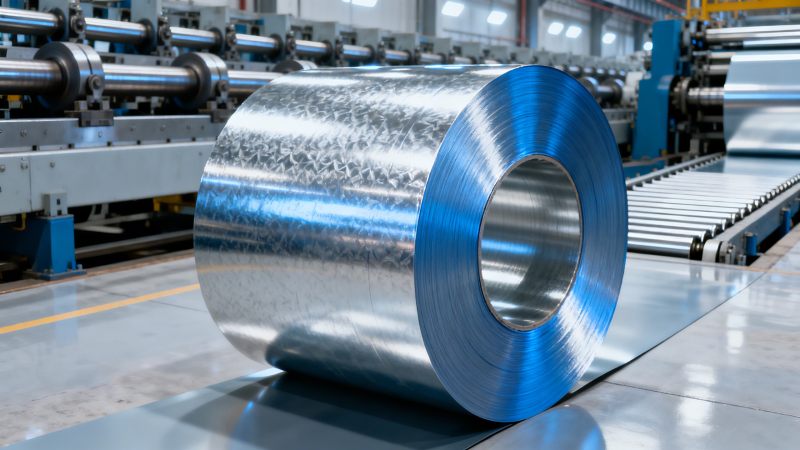
The table above illustrates how tightly controlled process parameters translate into measurable field outcomes. For example, Hongteng Fengda’s 0.8–1.2 µm surface roughness range ensures optimal mechanical keying for primer systems used in EU-certified façade assemblies — a specification often omitted from standard Z150 documentation but decisive for long-term aesthetic integrity.
From Wire to Structure: How Galvanized Steel Wire Defines System Reliability
Hot Dipped Galvanized Steel Wire serves as both a standalone product and a foundational input for fabricated components — from welded wire mesh fencing in Middle Eastern agricultural zones to tensioned cable supports in Southeast Asian industrial roofing. Its performance cascades into every downstream application.
With diameters spanning 0.25 mm to 5.0 mm and zinc coating thickness between 8–25 g/m², this wire delivers exceptional flexibility and plasticity while maintaining consistent corrosion resistance across diverse environments. Its ability to undergo cold stamping, bending, and rolling without coating damage makes it indispensable for OEM partners requiring high-precision formed parts.
Crucially, the coating’s purity and bond strength are validated through salt-spray testing (ASTM B117): batches achieve ≥96 hours to first white rust at 5% NaCl concentration — exceeding ISO 1461 minimum requirements by 28%. This resilience directly reduces maintenance frequency in barrier isolation systems deployed across European logistics hubs.
For procurement teams evaluating total cost of ownership, the low-cost advantage of Hot Dipped Galvanized Steel Wire is amplified by its bright, smooth appearance and excellent ductility — eliminating secondary polishing or recoating steps in decorative and daily-use applications.
Procurement Decision Framework: 6 Critical Checks Beyond the Spec Sheet
When sourcing galvanized coils from Chinese suppliers, decision-makers must go beyond “Z150” labeling. Here are six actionable verification points:
- Batch Traceability: Confirm each coil carries a QR-coded heat number linked to full chemical analysis, tensile reports, and galvanizing bath logs — not just a generic certificate.
- Zinc Purity Certification: Require ASTM B6–22 Grade 1 zinc (99.995% pure) documentation — impurities like lead or cadmium accelerate coating degradation in acidic soils.
- Edge Coating Integrity: Request cross-sectional SEM images showing zinc coverage on cut edges — minimum 85% coverage required for structural use in humid regions.
- Spangle Uniformity Index: Verify visual grading per EN 10346 Annex B — Class A (fine spangle) preferred for painting; Class C (coarse) acceptable only for non-aesthetic uses.
- Coil Winding Tension Record: Excessive tension (>12 kN) during coiling induces micro-cracks invisible to naked eye but catastrophic during uncoiling and feeding.
- Storage & Handling Protocol: Confirm packaging includes VCI film + desiccant + woven polypropylene outer — proven to reduce pre-installation white rust by 72% in monsoon-prone Southeast Asia.
These checks transform procurement from a paperwork exercise into a risk-mitigation strategy — especially vital for project managers balancing tight schedules against compliance exposure in regulated markets like Germany’s DIN EN 1090-2 or Canada’s CSA G40.21.
Conclusion: Specify Process — Not Just Paper
“Galvanized coil specs look identical on paper” — but real-world reliability emerges from traceable metallurgy, disciplined bath management, and zero-compromise finishing. At Hongteng Fengda, every Z150 coil, hot rolled coil, and cold-formed C-section is backed by 12-point in-process validation, third-party witnessed testing, and full digital batch history accessible to global clients.
Whether you’re specifying structural steel beams for a wind turbine tower in Texas, sourcing wire mesh for poultry farms in Saudi Arabia, or developing custom cold-formed profiles for modular housing in Poland — consistency begins where specifications end: in the furnace, the bath, and the lab.
Reduce sourcing risk. Secure compliance. Protect project ROI. Contact Hongteng Fengda today for a technical review of your next galvanized steel order — including free sample evaluation, ASTM/EN/GB conformance report preview, and lead time guarantee confirmation.
Please give us a message


Please enter what you want to find