Choosing the right galvanized steel for construction can directly affect project durability, maintenance costs, and delivery schedules.
For structural performance and budget control, galvanized steel offers a practical balance of corrosion resistance, strength, and long service life.
From structural frames and purlins to support systems and fabricated components, understanding its best applications helps reduce sourcing risks.
This guide explains where galvanized steel for construction delivers the greatest value in modern building and industrial projects.
What Is Galvanized Steel for Construction?
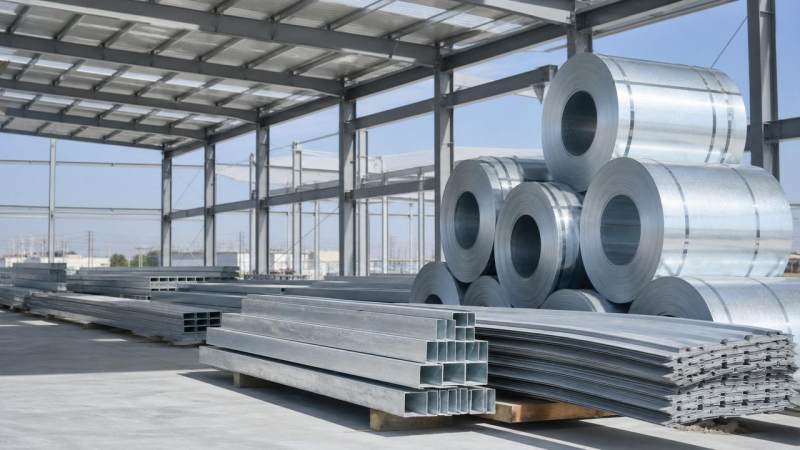
Galvanized steel for construction is carbon steel protected by a zinc coating.
The zinc layer slows corrosion by blocking moisture, oxygen, and aggressive outdoor elements.
It also provides sacrificial protection when small scratches or cut edges appear during fabrication.
This makes galvanized steel suitable for structures exposed to humidity, rain, condensation, and changing temperatures.
In construction, the material is valued because it combines formability, weldability, strength, and predictable surface protection.
Common formats include coils, sheets, strips, profiles, tubes, beams, angles, and custom fabricated components.
Hot-dip galvanized steel usually offers a thicker zinc layer for demanding environments.
Pre-galvanized steel is often selected for indoor systems, light framing, and controlled service conditions.
Where Is Galvanized Steel for Construction Most Useful?
Galvanized steel for construction performs best where strength and corrosion resistance must work together.
It is widely used in warehouses, commercial buildings, factories, logistics centers, roofing systems, and infrastructure support works.
The best application depends on exposure level, load demand, fabrication method, and maintenance expectations.
Structural framing and secondary members
Purlins, girts, bracing, light columns, and roof supports commonly use galvanized steel for construction.
These members often face condensation, roof leakage, or semi-outdoor airflow.
A zinc-coated surface reduces rust risk and supports longer service intervals.
Roofing, cladding, and envelope systems
Roof panels, wall panels, flashing, and drainage components need stable corrosion resistance.
Galvanized steel for construction helps protect exposed surfaces against rain, ultraviolet cycles, and polluted air.
Painted or coated finishes may be added when appearance and extra durability are required.
Support systems and building accessories
Cable trays, solar mounting frames, guardrails, brackets, and service platforms benefit from zinc protection.
These parts are often thin, detailed, and exposed at edges or connection points.
Galvanized steel for construction helps reduce replacement frequency in these repetitive components.
How Do You Choose the Right Grade and Zinc Coating?
Choosing galvanized steel for construction starts with the service environment.
Indoor dry spaces need different protection from coastal warehouses, chemical plants, or open-air platforms.
Zinc coating mass, steel grade, thickness, and standard compliance should be reviewed together.
For coil-based fabrication, Steel Coil Galvanized supports construction components requiring corrosion protection and processing flexibility.
Available grades include DX51D+Z, DX52D+Z, DX53D+Z, SGCC, SGC340, S350GD+Z, and S550GD+Z.
Typical thickness ranges from 0.12mm to 3.5mm, with widths from 600mm to 1500mm.
Lengths such as 508mm and 610mm can be supplied, while customization supports specific fabrication needs.
Zinc coating options include hot galvanizing from 60 to 275g/m² and pre-galvanized coating from 80 to 275g/m².
Relevant standards may include ASTM, EN, JIS, GB, DIN, AISI, and other recognized specifications.
Higher coating mass generally improves corrosion resistance, but it may also affect forming, welding, and total cost.
When Is Galvanized Steel Better Than Painted or Black Steel?
Galvanized steel for construction is often preferred when corrosion protection must be built into the material.
Black steel may need painting, coating, or frequent maintenance after installation.
Paint systems can perform well, but surface preparation and application quality become critical.
Galvanized steel provides a more consistent protective layer when supplied under controlled manufacturing conditions.
However, galvanized steel is not always the highest-performing option in every environment.
Highly acidic, alkaline, or chloride-heavy sites may need duplex coatings, stainless steel, or special protection systems.
What Common Mistakes Should Be Avoided?
The first mistake is selecting galvanized steel for construction by price alone.
Low initial cost may create higher repair costs if coating mass or grade is unsuitable.
Another mistake is ignoring cut edges, drilled holes, and welded zones.
These areas may need zinc-rich repair paint, sealants, or post-fabrication treatment.
Design details also matter because trapped water accelerates corrosion.
Good drainage, ventilation, and accessible inspection points improve service performance.
- Confirm the required steel grade before ordering.
- Match zinc coating mass to the exposure environment.
- Check bending radius for formed parts.
- Plan welding methods and coating repair procedures.
- Avoid water traps in structural design.
- Request mill certificates and standard references.
How Does Galvanized Steel Affect Cost, Delivery, and Maintenance?
Galvanized steel for construction may cost more than untreated steel at purchase.
Its value appears through reduced maintenance, fewer coating operations, and longer replacement cycles.
Using galvanized coils or standard profiles can also shorten fabrication schedules.
Standard grades and common sizes usually support faster production and more stable delivery.
Custom profiles, special zinc coating, and strict export standards may require longer preparation time.
Reliable supply is especially important when construction sequences depend on steel frames, purlins, and cladding systems.
Hongteng Fengda supplies structural steel products and customized solutions for global construction and industrial projects.
Products include angle steel, channel steel, steel beams, cold formed profiles, and customized structural components.
Production follows major international standards, including ASTM, EN, JIS, and GB.
How Should a Project Specify Galvanized Steel for Construction?
A clear specification reduces disputes, delays, and quality variation.
It should define steel grade, zinc coating, dimensions, tolerances, surface finish, and inspection requirements.
For load-bearing parts, mechanical properties such as yield strength, tensile strength, and elongation are essential.
For formed parts, bending performance and coating adhesion should also be confirmed.
For export orders, packing, labeling, certificates, and delivery schedule should be stated early.
These details help galvanized steel for construction arrive ready for fabrication or installation.
- Define the application and exposure category.
- Select the steel grade and coating weight.
- Confirm dimensions, tolerances, and surface requirements.
- Review fabrication methods before final approval.
- Request certificates and shipment documentation.
Final Takeaway: Best Applications and Next Step
Galvanized steel for construction is best used where corrosion resistance, structural reliability, and maintenance control are all important.
It is especially effective for purlins, roofing systems, cladding supports, brackets, frames, and outdoor service structures.
The right choice depends on grade, zinc coating, exposure, fabrication process, and applicable construction standards.
Before ordering, compare project conditions with coating requirements and mechanical performance needs.
For stable sourcing, choose a supplier able to provide standard products, OEM solutions, quality control, and dependable lead times.
With proper specification, galvanized steel for construction can improve durability and support efficient project completion.
Please give us a message


Please enter what you want to find