In galvanized steel for construction, early corrosion often begins at cut edges, weld zones, fastener points, and damaged coatings—areas that can quietly raise maintenance risk and steel rebar cost over time. For buyers, engineers, and project teams, understanding these failure points is essential to selecting reliable steel plate for construction and controlling galvanized steel price without compromising durability.
Where does early corrosion usually start in galvanized steel for construction?
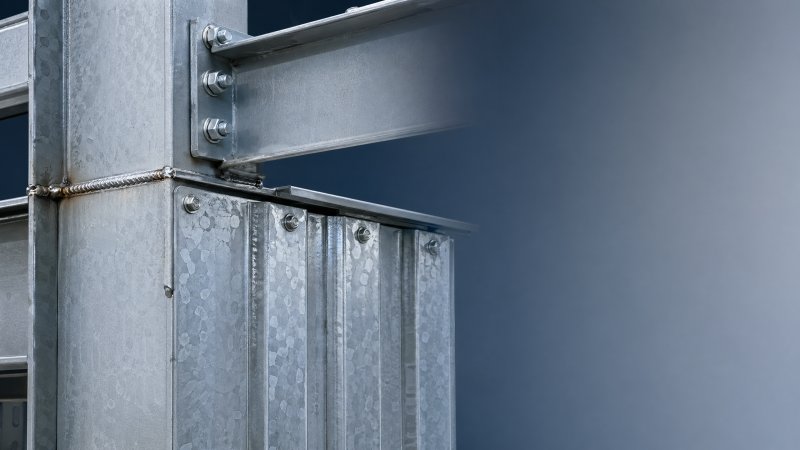
Early corrosion rarely begins on intact, properly coated surfaces. In most construction steel applications, it starts at discontinuities created during fabrication, transport, storage, or installation. Common examples include sheared edges, drilled holes, welded joints, scratched areas, and contact points where water, chloride, or industrial dust remain trapped for long periods.
For project managers and quality teams, this matters because corrosion does not only affect appearance. It can shorten maintenance cycles from a planned 10–15 years to a much earlier intervention window if detailing, coating selection, and site handling are poor. In humid coastal zones or industrial environments, the first visible red rust can emerge faster at vulnerable points than many procurement plans assume.
For procurement personnel, the key issue is not simply buying the lowest galvanized steel price. The better question is whether the product, processing method, and coating system match the real service conditions. A lower initial purchase cost may lead to higher repainting, replacement, labor, and shutdown costs over a 3–5 year period.
For distributors, fabricators, and end users, early corrosion also creates claim risk. If material selection, coating damage, edge protection, or moisture exposure during storage is not controlled, it becomes difficult to separate product issues from processing or site issues. That is why corrosion risk should be reviewed across the full chain, from mill supply to final installation.
The 5 most common initiation points
- Cut edges: the zinc or aluminium-zinc coating no longer fully wraps the exposed steel edge, so local corrosion may begin first, especially where standing water remains.
- Weld zones: welding heat can damage nearby protective layers and create uneven surfaces that hold moisture or contaminants.
- Fastener points: washers, bolts, and screw penetrations can break coatings, generate crevices, or introduce incompatible metals if selection is poor.
- Handling damage: scratches from forklifts, slings, stacking, or site cutting often become hidden starting points for rust.
- Poor drainage details: lap joints, horizontal ledges, and unsealed overlaps can keep water on the surface for extended periods.
For structural steel buyers sourcing from China or other export markets, early corrosion prevention should be discussed before the order is confirmed. Hongteng Fengda supports global construction and industrial customers with structural steel supply, standard specification production, and OEM-oriented coordination, helping reduce avoidable risk in both material choice and processing details.
Why do cut edges, welds, and fasteners fail earlier than flat coated areas?
The answer lies in how galvanized steel for construction works. Zinc-based and aluminium-zinc coatings protect steel through a barrier effect and, depending on the system, sacrificial behavior. However, that protection is strongest when the coating remains continuous and undamaged. Once fabrication interrupts the surface, the steel becomes more exposed to oxygen, moisture, and corrosive agents.
Cut edges are especially important in thin-gauge building products, roofing panels, wall systems, and formed sections. If edge exposure is frequent and the environment includes rainwater retention, salt, or chemical emissions, corrosion can begin locally even while the main panel still looks sound. This is why detailing, orientation, and drainage matter as much as base metal selection.
Weld zones fail earlier because heat changes both the micro-area around the joint and the coating condition. In many practical projects, the weld area requires cleaning, post-treatment, or a repair coating. If that step is skipped, the zone can become one of the first visible corrosion points within the first service years, especially under outdoor cyclic wet-dry exposure.
Fastener locations often combine three risks at once: coating penetration, crevice formation, and water concentration. If installers over-tighten fasteners, use the wrong washer material, or leave metal debris on the surface after drilling, corrosion may initiate around the connection long before larger structural sections show any issue.
Risk comparison by location
The table below helps technical evaluators and purchasing teams compare where early corrosion usually starts, what triggers it, and what control action is typically needed during fabrication or installation.
This comparison shows why corrosion control should be embedded in 4 stages: material selection, fabrication planning, site storage, and installation inspection. When one stage is ignored, early corrosion can start in small hidden areas and expand into a maintenance issue that affects project cost, warranty discussion, and schedule reliability.
Three practical checks before approval
- Review whether the design includes repeated cut edges, lap joints, or water traps in outdoor service.
- Confirm whether welding or field modification will require post-fabrication coating repair.
- Check whether fasteners and accessories are compatible with the main galvanized or coated steel system.
These 3 checks are simple, but they often influence whether a project experiences stable service life or avoidable corrosion claims within the first few seasons of operation.
How should buyers compare galvanized steel, galvalume, and processing conditions?
Not every construction application requires the same protective system. Buyers often compare traditional galvanized steel for construction with aluminium-zinc coated alternatives for roofing, wall cladding, modular buildings, appliance housings, and light industrial components. The right decision depends on forming demand, exposure category, heat reflectivity, and whether the product will be cut, punched, bent, or welded after delivery.
In the middle of this evaluation, many teams look for a balance between corrosion resistance, processability, and supply consistency. One relevant option is DX53D Galvalume Steel Coil , which is used in construction applications such as roofs, walls, garages, pipes, and modular houses, while also serving automotive, appliance, and agricultural uses.
From a technical perspective, this material combines a low-carbon steel substrate with an aluminium-zinc coated surface. Typical mechanical data provided for the grade range include yield strength of 270–300 MPa, tensile strength of 350–450 MPa, and elongation after fracture not less than 24%. Those figures are useful for teams assessing forming behavior, profile production, and service suitability.
For purchasing and commercial review, the available dimensions also matter. Common thickness range is 0.4mm–3mm, width options include 1000mm, 1250mm, and 1500mm, and cut-to-length processing may support lengths from 200mm–3000mm. This gives flexibility for OEM fabrication, roll forming, and project-based supply planning.
Technical and selection snapshot
The table below is designed for technical evaluators, procurement teams, and project decision-makers who need a fast comparison between coating behavior, fabrication demand, and common construction use.
This does not mean one option is always better than another. The key is to match the coating system to the actual use condition. If your project involves repeated forming, exposed roofing, sound walls, modular structures, or appliance-like panels, the combination of corrosion resistance, heat reflectivity, and formability may justify a different choice than a standard structural member application.
When this type of coated coil is worth evaluating
- When the project needs a 2-in-1 balance of corrosion resistance and profile forming performance.
- When buyers want standard widths with flexible cut-to-length processing for different module sizes.
- When the supply chain must support multiple export-market standards across North America, Europe, the Middle East, or Southeast Asia.
Hongteng Fengda works with global buyers that need structural steel and coated steel products aligned with practical fabrication and delivery requirements. That includes standard specifications, custom dimensions, and communication around compliance references rather than only price comparison.
What should procurement, QC, and project teams check before placing an order?
A reliable purchase decision for galvanized steel for construction should not stop at thickness and price. At minimum, teams should evaluate 5 key areas: exposure environment, coating type, fabrication method, dimensional tolerance, and inspection plan. These factors influence whether the supplied steel will perform well after cutting, drilling, welding, forming, transport, and site installation.
For technical assessment personnel, standards alignment is also essential. Many global projects reference ASTM, EN, JIS, or GB frameworks. The purchasing document should clearly define what standard basis applies to chemical composition, mechanical properties, coating type, dimensional tolerance, and inspection records. Ambiguity at this stage often leads to disputes later.
For finance approvers and commercial managers, the most useful way to control cost is not always to choose the lowest unit rate. Instead, compare total project cost over 3 layers: material cost, fabrication or installation loss, and expected maintenance burden. A product with more stable coating quality and better dimensional consistency may reduce field waste, rework hours, and delayed acceptance.
For site users and safety personnel, delivery and packaging also matter. Moisture during storage, poor coil edge protection, direct ground contact, and damaged banding can all contribute to early surface issues before the material is even installed. Good supply practice should therefore include both production quality and shipping protection.
A 6-point procurement checklist
- Confirm the service environment: inland, coastal, industrial, agricultural, or high-condensation indoor use.
- Define whether the steel will be cut, bent, punched, welded, or roll formed after delivery.
- Specify dimensions clearly, including thickness range, width, length, and cut tolerance where required.
- Request relevant quality documents linked to the agreed standard basis and order specification.
- Check packaging, storage, and shipment method for export or long-distance delivery cycles of 2–6 weeks.
- Clarify whether custom processing, OEM supply, or sample support is needed before volume production.
This checklist is particularly useful for distributors, project contractors, and overseas buyers sourcing from China. Hongteng Fengda supports these purchasing steps with structural steel manufacturing capability, custom solution coordination, and quality control focused on consistency, lead time stability, and risk reduction across export projects.
Common mistakes that increase corrosion risk and cost
- Selecting by price alone without checking whether the coating system suits the real service environment.
- Ignoring field cutting and welding, then assuming factory coating alone will protect all exposed areas.
- Using incompatible fasteners or accessories that create local corrosion at contact points.
- Storing steel outdoors without ventilation, elevation, or waterproof cover management during 7–30 day site staging.
Avoiding these errors improves not only durability, but also inspection acceptance, budget control, and supply-chain accountability.
FAQ: practical questions from buyers, engineers, and end users
Below are common questions raised during sourcing, technical review, and project execution. They are useful for information researchers, operators, technical evaluators, and business decision-makers who need fast answers before shortlisting suppliers or confirming specifications.
How can I reduce early corrosion after cutting or welding?
Start by minimizing unnecessary field modification. Where cutting or welding is unavoidable, define a repair and inspection method in advance. In most practical construction workflows, 3 steps are essential: clean the area, inspect for coating damage, and apply a suitable repair treatment where required. Also make sure the detail does not trap water after installation.
Is galvanized steel always the best choice for outdoor construction?
Not always. It depends on environment, design detail, and processing. For some roofing, cladding, and formed applications, aluminium-zinc coated products may be more suitable because buyers also value reflectivity, appearance, and forming performance. For structural members, the decision may be different. The correct approach is to compare use condition, fabrication route, and maintenance expectation together.
What documents should be confirmed before purchase approval?
At a minimum, buyers should confirm the agreed grade or model, dimensions, applicable standard basis, and inspection or quality documents required by the order. For export projects, also review packaging method, shipment terms, and lead time. Many organizations use a 4-part approval path: technical confirmation, commercial review, quality confirmation, and delivery planning.
What is a realistic lead-time discussion for construction steel supply?
Lead time depends on product type, quantity, processing depth, and export destination. Standard items may move faster than OEM components or cut-to-length orders. In practical procurement planning, buyers often evaluate production plus logistics in a combined window of 2–6 weeks or longer for more complex requirements. Early confirmation of dimensions and standards usually helps avoid schedule drift.
Why choose us for structural steel and coated steel supply?
For buyers comparing structural steel manufacturers and exporters from China, the real value lies in more than product availability. Hongteng Fengda supports global construction, industrial, and manufacturing projects with angle steel, channel steel, steel beams, cold formed steel profiles, customized structural steel components, and coordinated supply for standard and OEM requirements.
Our working focus is practical: stable production capacity, strict quality control, compliance communication around ASTM, EN, JIS, and GB references, and dependable lead-time coordination for customers in North America, Europe, the Middle East, and Southeast Asia. This helps reduce sourcing risk, improve consistency, and support efficient project completion.
If you are reviewing galvanized steel for construction, steel plate for construction, coated coil options, or customized structural sections, you can contact us for 6 specific topics: parameter confirmation, grade and model selection, application matching, delivery schedule review, certification reference discussion, and sample or quotation support. This is especially useful when your project must balance corrosion performance, budget, and installation practicality.
You can also consult us when you need support on custom dimensions, OEM processing, export packaging, or comparing alternatives for different exposure environments. A clear early discussion often prevents later issues at cut edges, weld zones, fastener points, and other places where early corrosion tends to start.
Please give us a message


Please enter what you want to find