Choosing the right galvanized steel wire for fencing requires more than comparing price. For technical evaluators, coating thickness, tensile strength, corrosion resistance, and compliance with international standards directly affect service life and project reliability. This guide explains how wire coating and mechanical strength influence fencing performance, helping buyers assess specifications, reduce sourcing risk, and select suitable products for demanding industrial and construction applications.
What technical evaluators are really judging when selecting fencing wire
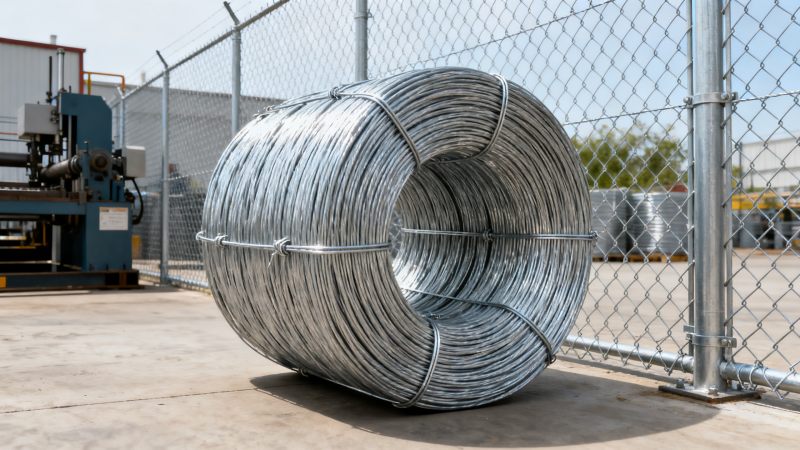
When buyers search for galvanized steel wire for fencing, they usually want more than a product definition. They need a practical way to compare specifications, predict field performance, and avoid premature corrosion or wire failure.
For technical evaluation teams, the core question is simple: which wire specification will deliver the required service life under real environmental and mechanical loads, without creating unnecessary procurement cost or installation risk?
That means the most useful assessment criteria are not generic marketing claims. The decision should focus on zinc coating mass, base steel quality, tensile strength, elongation, wire diameter tolerance, and conformity with recognized standards.
If one conclusion comes first, it is this: coating quality usually determines how long the wire resists corrosion, while mechanical strength determines whether the fence can survive tensioning, impact, and long-term structural stress.
Why coating thickness matters more than many buyers expect
In fencing applications, galvanization is the main corrosion defense. The zinc coating acts as a barrier and also provides sacrificial protection, helping the steel resist rust when the surface experiences scratches or minor damage.
However, not all galvanized coatings perform the same way. A thin coating may look acceptable at delivery, yet fail much earlier in outdoor service, especially in humid, coastal, agricultural, or polluted industrial environments.
Technical evaluators should therefore ask for measurable coating data, not vague descriptions such as “heavy galvanized” or “high-quality zinc.” Reliable suppliers should provide coating weight, test method, and relevant standard references.
Coating is commonly specified by zinc mass per square meter or by approximate coating thickness. In practice, higher zinc mass generally means longer corrosion resistance, provided the coating is uniform and well adhered.
For low-risk inland projects, a standard coating may be sufficient. For high-exposure sites, such as livestock fencing, roadside barriers, or marine-adjacent installations, thicker galvanization is often the better lifecycle choice.
Another key point is coating consistency. Uneven galvanization creates local weak spots, and those points usually become the first locations for red rust, especially where wires are bent, tied, or mechanically stressed during installation.
How to compare electro-galvanized and hot-dip galvanized wire for fencing
One of the most common sourcing mistakes is treating all galvanized wire as equivalent. In reality, electro-galvanized wire and hot-dip galvanized wire can differ significantly in coating thickness, corrosion performance, and fencing suitability.
Electro-galvanized wire generally has a smoother finish and a thinner zinc layer. It can work for light-duty, short-life, or indoor applications, but it is often less suitable for long-term external fencing in harsh climates.
Hot-dip galvanized wire usually carries a thicker coating and better long-term corrosion resistance. For perimeter fencing, chain link systems, field fence, gabion assembly, and industrial boundary protection, this is often the preferred option.
That does not mean hot-dip is automatically the right answer for every project. Evaluators should still match coating level to environment, expected service life, and total project cost rather than defaulting to the highest specification.
If fencing will be installed in corrosive agricultural settings, near fertilizer storage, or in coastal wind exposure, hot-dip galvanized steel wire for fencing usually offers a better risk-adjusted performance profile over time.
Strength matters, but the “highest tensile” option is not always best
Mechanical strength is the second major selection factor. A fence wire must tolerate installation tension, wind loads, animal pressure, accidental impact, and repeated stress without breaking or losing structural integrity too quickly.
Buyers often focus only on high tensile values, assuming stronger always means better. In technical terms, that is incomplete. A very high tensile wire may be harder to work with and more sensitive to cracking during bending.
The better evaluation method is to consider tensile strength together with ductility, elongation, and the intended fence design. Different applications place different demands on the wire’s balance between rigidity and formability.
For example, barbed wire and high-tension agricultural fencing may require stronger wire to maintain line tension over distance. Welded mesh, tie wire, and general perimeter fencing may benefit from a more workable mechanical profile.
Technical teams should request full mechanical property data, including nominal tensile strength range and, where relevant, elongation performance. This makes it easier to predict installation behavior and long-term service reliability.
How environment changes the right specification
The same wire can perform very differently depending on site conditions. Environmental exposure should therefore be a primary input in technical selection, not an afterthought after price comparison and nominal specification review.
In dry inland locations, moderate coating and standard tensile properties may provide an acceptable balance. In coastal zones, chloride exposure accelerates corrosion, making heavier zinc coating and stricter quality control more important.
Agricultural sites create another challenge. Livestock contact, manure gases, fertilizers, and regular moisture can increase corrosion risk. In these conditions, coating durability often becomes more important than minor differences in initial purchase price.
Industrial areas may include acidic or alkaline airborne contaminants. In such projects, evaluators should consider whether standard galvanized steel wire for fencing is sufficient or whether upgraded protection should be specified.
Temperature variation also matters. Repeated thermal cycling, combined with tension and moisture, can gradually weaken lower-quality wire or expose coating defects that were not obvious during incoming inspection.
What standards and inspection documents should be requested
For technical evaluators, compliance is not just a formality. It is the basis for objective comparison between suppliers and a safeguard against receiving inconsistent material under the same commercial description.
Ask suppliers which standards apply to wire diameter tolerance, zinc coating, tensile properties, and test procedures. Depending on destination market and project type, references may include ASTM, EN, JIS, or GB requirements.
Mill test certificates should clearly state chemical or mechanical information where applicable, along with wire size, coating data, and test results. If the supplier cannot provide traceable documents, evaluation risk increases immediately.
It is also worth confirming inspection methods for coating adhesion, wrapping performance, diameter consistency, and surface quality. A wire that passes strength tests but fails during twisting or bending can still cause serious field problems.
For larger projects, many buyers request pre-shipment inspection or sample verification. This is especially important when service life expectations are high or the project cannot tolerate rework and replacement costs.
How to assess quality beyond the datasheet
Datasheets are necessary, but they rarely tell the whole story. Technical evaluators should also examine manufacturing consistency, supplier process control, packaging quality, and the producer’s ability to maintain stable output across batches.
Key questions include whether the wire is produced from consistent rod material, how galvanizing parameters are controlled, and whether the supplier maintains reliable dimensional inspection throughout production.
Surface appearance can offer clues, although it should not replace formal testing. Severe ash buildup, bare spots, peeling zinc, excessive roughness, or visible inconsistencies may suggest process instability or poor handling.
Packaging also affects delivered quality. Poorly packed coils may suffer abrasion, deformation, or moisture exposure in storage and transport. For export projects, corrosion protection during shipment should be reviewed carefully.
At this stage, buyers often benefit from comparing the supplier’s broader manufacturing capability. Companies serving construction and industrial sectors usually understand traceability, standards compliance, and custom specification control more effectively.
For example, manufacturers with wider steel processing experience may also support adjacent project materials. In some building applications, teams sourcing fencing systems may simultaneously evaluate cladding solutions such as Color Coated Galvanized Roof Sheet PPGI.
That product is available in PPGI and PPGL, with thickness from 0.2mm to 1.2mm and widths from 600mm to 1250mm. Its corrosion resistance, heat resistance above 300 degrees, and service life above 25 years suit many building envelopes.
For technical buyers, this matters because a supplier able to manage coated steel quality across multiple applications often demonstrates stronger process discipline, coating control, and export documentation capability across the full project supply chain.
How to match wire specification to common fencing applications
Different fence systems require different performance priorities. A useful technical review starts by identifying whether the project needs perimeter security, agricultural containment, construction site control, infrastructure protection, or industrial segregation.
Chain link fencing typically requires wire with good tensile strength, acceptable ductility for weaving, and dependable coating performance at intersections and exposed cut ends. Uniform diameter and workable forming behavior are especially important.
Welded mesh fencing places emphasis on dimensional consistency and coating performance after fabrication. If welding occurs before galvanizing or after coating, the manufacturing route must be reviewed because it changes corrosion protection outcomes.
Barbed wire applications often prioritize tensile capacity and outdoor durability. For agricultural and remote boundary use, long service life and low maintenance usually justify selecting stronger wire with sufficient galvanization.
Field fencing and livestock barriers need a balance of strength, flexibility, and corrosion resistance. The wire must endure tension, animal movement, and environmental exposure without becoming too brittle during installation.
Gabion and retaining applications may impose additional structural demands. In these cases, wire quality affects not only corrosion resistance but also the ability of the mesh system to retain shape under stone load and site movement.
Common sourcing risks and how technical teams can reduce them
The first common risk is buying only by nominal diameter and price. Two wires with the same diameter can perform very differently if the zinc coating, tensile range, or base steel quality is inconsistent.
The second risk is unclear specification language. Terms like “galvanized” or “fencing wire” are too broad for technical procurement. Purchase documents should define diameter, tolerance, coating class, tensile range, packaging, and inspection requirements.
The third risk is overlooking installation conditions. Even a compliant product can underperform if selected without considering strain points, post spacing, environmental exposure, or expected maintenance intervals.
To reduce risk, buyers should request representative samples, confirm standards in writing, review test certificates, and compare suppliers on process capability rather than unit price alone. Total cost of ownership usually matters more than initial savings.
Reliable lead time is another overlooked factor. In large projects, mixed batches or delayed replacement coils can disrupt installation sequencing and create hidden costs. Stable supply capability should therefore be part of technical evaluation.
A practical selection checklist for galvanized steel wire for fencing
Before approving a supplier, technical evaluators can use a simple checklist. Start with application type, site environment, expected service life, and loading condition. These four factors define most of the specification logic.
Next, confirm wire diameter, tolerance, tensile strength range, elongation where relevant, and zinc coating data. Make sure the product matches the fabrication method and installation requirements of the selected fence system.
Then verify compliance documents, inspection methods, and packaging standard. Check whether the supplier can provide consistent export quality, traceable batches, and support for custom or project-specific requirements.
Finally, compare offers based on lifecycle value. A slightly higher-priced wire with better coating uniformity and dependable mechanical performance often reduces maintenance, replacement, and project risk enough to justify the difference.
Conclusion: evaluate coating and strength together, not separately
For technical buyers, the best galvanized steel wire for fencing is not simply the cheapest, the thickest, or the strongest. It is the one that fits the site environment, fence design, expected service life, and installation conditions.
As a rule, coating quality drives corrosion life, while mechanical properties drive structural performance and workability. If either side is poorly matched, the fence may fail early even if the basic product description appears correct.
That is why specification-based sourcing is essential. By checking coating mass, tensile range, standards compliance, and supplier consistency together, evaluators can make more confident decisions and reduce downstream project risk.
For industrial, construction, and infrastructure projects, that approach turns galvanized steel wire for fencing from a commodity purchase into a controlled technical decision with measurable long-term value.
Please give us a message


Please enter what you want to find