For technical evaluators, understanding galvanized steel sheet specifications is essential to selecting the right material for strength, corrosion resistance, coating performance, and fabrication needs.
From thickness and zinc coating weight to tolerances and standards, every parameter influences service life, forming behavior, and overall cost control in steel-related construction and industrial projects.
When reviewing galvanized steel sheet specifications, a clear comparison framework helps connect laboratory data with real use conditions, transport environments, and fabrication demands.
Understanding the Core of Galvanized Steel Sheet Specifications
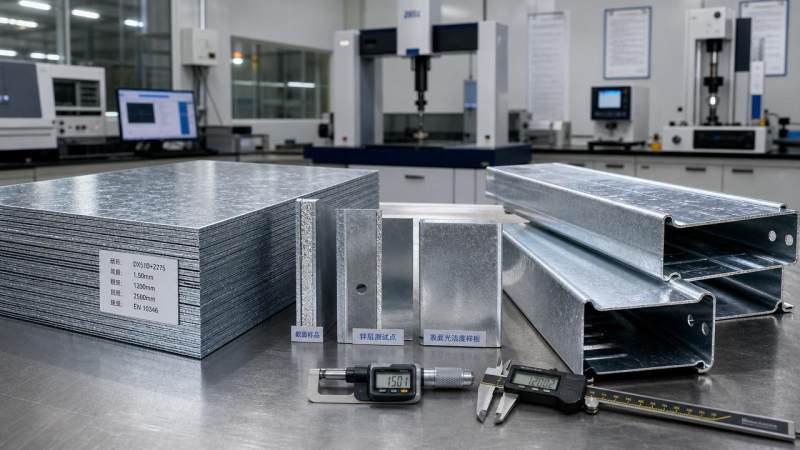
Galvanized steel sheet is carbon steel protected by a zinc coating. The coating delays corrosion and extends use in humid, outdoor, or chemically exposed environments.
The most important galvanized steel sheet specifications usually include base steel grade, sheet thickness, width, length, coating mass, surface finish, tolerance, and compliance standard.
These specifications are not isolated figures. They work together to determine formability, weldability, bending limits, structural behavior, and appearance consistency.
In practical terms, correct galvanized steel sheet specifications reduce mismatch during roll forming, cutting, punching, and assembly in downstream steel fabrication.
Key parameters normally reviewed
- Base metal thickness and dimensional tolerance
- Zinc coating weight or coating thickness
- Mechanical properties such as yield and tensile strength
- Surface condition, spangle type, and finish
- Applicable ASTM, EN, JIS, or GB standard
Industry Focus Areas Behind Specification Selection
Current market attention is not only on anti-corrosion life. It also focuses on processing stability, standard consistency, and predictable supply for large engineering schedules.
Galvanized steel sheet specifications matter more when material must pass through profiling machines, welding lines, or prefabrication systems without unstable dimensional behavior.
For structural steel applications, these concerns often connect sheet material with formed sections, support systems, and customized fabricated members.
How Specifications Affect Use Value in Real Projects
Thickness is one of the first galvanized steel sheet specifications to verify. It affects stiffness, section capacity, screw holding, and expected behavior during bending or roll forming.
Zinc coating weight is equally important. A heavier coating usually improves corrosion resistance, but it may also influence cost, surface appearance, and some fabrication steps.
Tolerance control matters in repetitive production. Even small thickness variation can affect profile accuracy, assembly fit, and downstream waste rates.
Mechanical properties determine whether the sheet can be formed into structural profiles while retaining the needed load-bearing characteristics after shaping.
In many building systems, galvanized sheet is processed into cold formed members. A useful example is C Sections Steel, widely used in purlins, wall beams, roof trusses, brackets, and light industrial components.
This type of formed section often uses grades such as Q195, Q235, Q345, A36, SS400, and S235JR, with galvanized coated surfaces for added protection.
Typical processing routes include hot roll, cold roll, and cold drawn methods, while common thickness ranges can extend from 1mm to 12mm, depending on design needs.
Where standardized installation is required, length options such as 6m, 9m, and 12m support efficient transport and project planning.
Tolerance near ±1% helps support fit-up quality. Certification references such as CE, SGS, BV, and ISO add confidence for international project documentation.
Typical Specification Categories and Their Main Uses
Not all galvanized steel sheet specifications serve the same purpose. Some are mainly structural, while others support appearance, corrosion life, or processing compatibility.
Practical Evaluation Points Before Final Selection
A specification sheet should always be checked against the real service environment. Indoor dry use and coastal outdoor use require very different corrosion allowances.
Review whether the galvanized steel sheet specifications match the intended fabrication path. Punching, perforation, bending radius, and welding all influence final material choice.
Recommended checks
- Confirm base steel grade and required mechanical values
- Verify coating designation and expected exposure class
- Check thickness tolerance and flatness limits
- Review edge condition, including mill edge or slit edge
- Request certificates aligned with project standard requirements
- Assess whether custom lengths reduce cutting loss
If the material will be formed into channels or framing members, dimensions should also support automation and stable machine settings.
For example, perforated and non-perforated options may change installation speed, accessory compatibility, and design flexibility in steel structure buildings.
Standards, Supply Stability, and Long-Term Control
Reliable galvanized steel sheet specifications are more than numbers on paper. They should be supported by manufacturing control, inspection records, and repeatable output quality.
For international steel supply, compliance with ASTM, EN, JIS, and GB helps reduce approval delays and eases technical comparison across regions.
Stable production capacity is also important. Incomplete consistency between batches can cause fabrication adjustments, installation delays, and hidden waste.
A structured supplier review should include coating control, dimensional inspection, lead time reliability, and ability to provide customized structural steel solutions.
Hongteng Fengda, a structural steel manufacturer and exporter from China, supports global construction and industrial projects with standard and customized steel products.
Its product scope includes angle steel, channel steel, steel beams, cold formed profiles, and tailored components with quality control aligned to major international standards.
Next-Step Guidance for Specification Review
When comparing galvanized steel sheet specifications, start with use environment, then align thickness, coating, grade, tolerance, and standard to the fabrication method.
This approach improves technical fit while controlling waste, corrosion risk, and downstream processing problems in structural steel and industrial applications.
If a project involves cold formed framing, purlins, wall beams, or custom members, prepare a detailed specification list before requesting quotations or samples.
Clear specification review leads to better sourcing decisions, more stable project execution, and stronger long-term value from galvanized steel materials.
Please give us a message


Please enter what you want to find