A galvanized steel conduit pipe is widely used to protect electrical wiring in construction, industrial facilities, and infrastructure projects where mechanical strength and corrosion resistance are essential. For technical evaluators, understanding its performance advantages, installation requirements, and practical limitations is key to selecting the right conduit system. This article reviews the major uses of galvanized steel conduit pipe, explains where it performs best, and highlights the conditions where alternative materials or additional protection may be required.
What Should Technical Evaluators Confirm First?
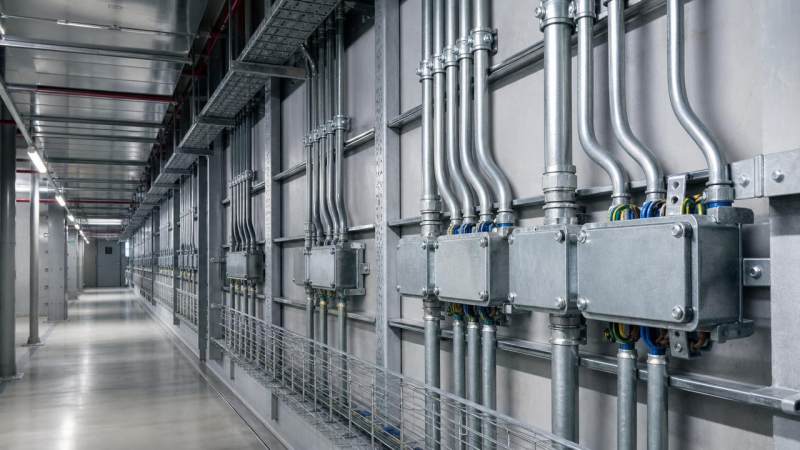
Before comparing prices, evaluators should define the duty condition of the galvanized steel conduit pipe. The same product can perform differently indoors, outdoors, underground, or near chemicals.
A conduit system is not only a tube. It is part of electrical safety, cable service life, fire control, maintenance access, and project compliance.
- Confirm whether the conduit will face impact, vibration, moisture, salt spray, concrete contact, or high traffic installation zones.
- Check if the design requires rigid metal conduit, intermediate metal conduit, or a lighter protective steel raceway.
- Review local electrical codes, grounding requirements, coating expectations, bending radius limits, and fitting compatibility.
- Separate technical acceptance criteria from commercial preferences, especially when multiple suppliers quote different wall thicknesses.
For steel procurement teams, the most common problem is specification ambiguity. A galvanized steel conduit pipe quote should clearly state material grade, coating method, dimension tolerance, length, thread condition, and packaging.
Where Does Galvanized Steel Conduit Pipe Perform Best?
The main advantage of galvanized steel conduit pipe is the balance between mechanical protection and zinc-based corrosion resistance. It suits demanding routes where plastic conduit may deform or crack.
In steel-intensive projects, conduit selection often interacts with structural members, cable trays, brackets, supports, and embedded parts. This makes dimensional consistency important.
The following table summarizes common application environments and the evaluation focus for galvanized steel conduit pipe in construction and industrial projects.
This evaluation should not be reduced to pipe diameter only. Service exposure, installation route, and cable maintenance needs often decide whether galvanized steel conduit pipe is the correct choice.
Key Performance Factors Behind Reliable Use
A galvanized steel conduit pipe must protect cables without creating installation failures. Evaluators should review mechanical strength, zinc coating condition, dimensional accuracy, and connection integrity together.
Mechanical strength and impact resistance
Steel conduit offers better crush and impact resistance than many non-metallic alternatives. This is valuable in factories, warehouses, substations, tunnels, and exposed utility corridors.
However, strength depends on wall thickness and manufacturing consistency. A low-cost galvanized steel conduit pipe with inadequate wall control may fail during bending or threading.
Corrosion resistance and coating continuity
Galvanizing forms a zinc layer that slows corrosion by barrier protection and sacrificial action. This improves service life in normal outdoor and humid environments.
Cut edges, threaded sections, welded zones, and damaged surfaces require attention. Protective repair coatings or compatible fittings may be necessary after field fabrication.
Electrical continuity and grounding
Metal conduit can support grounding continuity when installed with proper couplings and bonding. Poor threads, loose fittings, or painted interfaces may compromise electrical performance.
- Inspect coupling engagement and thread cleanliness before energizing the electrical system.
- Avoid mixing incompatible metals where galvanic corrosion may accelerate at contact points.
- Specify coating repair requirements when conduit is cut, bent, drilled, or welded on site.
How Does It Compare With Alternative Conduit Materials?
Selecting galvanized steel conduit pipe is usually a trade-off between durability, installation effort, corrosion exposure, and lifecycle cost. No single conduit material fits every project.
The comparison below helps technical evaluators identify when steel is justified and when another conduit option may reduce cost or installation complexity.
If the route is exposed to vehicle impact, frequent maintenance, or structural vibration, galvanized steel conduit pipe usually offers stronger risk control than lighter materials.
If the route is highly corrosive, permanently submerged, or chemically aggressive, stainless steel, coated steel, or non-metallic conduit may be more suitable.
Procurement Checklist for Specification and Supplier Review
Procurement of galvanized steel conduit pipe should combine engineering review and supplier capability assessment. A technically attractive price can become costly if documentation is incomplete.
Hongteng Fengda supports global buyers with structural steel products and customized steel solutions for construction, industrial, and manufacturing projects.
The company supplies angle steel, channel steel, steel beams, cold formed steel profiles, and customized components under common international standards including ASTM, EN, JIS, and GB.
- Define nominal size, wall thickness, length tolerance, end finish, threading requirement, and zinc coating expectation before requesting a quotation.
- Ask for production standard references, inspection records, packing method, and traceability documents aligned with the destination market.
- Check whether the supplier can coordinate conduit-related steel supports, brackets, channels, or OEM fabricated steel parts.
- Evaluate delivery reliability, export experience, loading plan, and communication speed when project schedules are tight.
For technical teams, supplier review should reduce uncertainty. Stable production capacity and clear quality control are as important as the quoted unit price.
When Related Steel Products Influence Conduit System Design
Electrical protection routes are often installed beside structural steel, walkways, bridges, rail systems, and industrial platforms. Related steel products can affect spacing, fixing, and maintenance access.
For infrastructure and industrial buyers also sourcing track materials, Hongteng Fengda provides Rail products for railway rail, bridge railings, deck railings, and handrail applications.
Available materials include carbon steel and medium manganese steel, with models such as U74, U71Mn, PD2, PD3, Q235, 55Q, 50Q, U71, and 45Mn.
Typical specifications include 12m to 30m lengths, 3mm to 24mm thickness, 134mm to 170mm rail height, and tolerance around ±1%.
The following table shows why coordinated steel sourcing may help evaluators manage drawings, interfaces, and project delivery more efficiently.
Coordinating galvanized steel conduit pipe with broader steel packages can reduce interface errors. It is especially useful when drawings include supports, rails, beams, and embedded components.
Practical Limits: Where Extra Protection May Be Required
A galvanized steel conduit pipe is durable, but it is not immune to all conditions. Overlooking limits can increase maintenance cost and shorten service life.
Aggressive corrosion environments
Marine atmospheres, chemical plants, wastewater areas, and high chloride exposure can consume zinc faster. In these cases, additional coatings or alternative materials should be evaluated.
Underground or concrete-embedded installation
Direct burial requires careful soil assessment, moisture control, and coating protection. Concrete embedment may also require compatibility review depending on local specifications.
Complex bending and field modification
Repeated bending, poor tooling, or excessive force may crack coating or deform the conduit. Evaluators should specify acceptable bending practice and inspection after fabrication.
- Do not assume galvanizing replaces drainage design in outdoor conduit routes.
- Do not ignore cut-end protection, especially near junction boxes or threaded connections.
- Do not select only by weight if the electrical code requires a specific conduit type.
Standards, Documentation, and Acceptance Points
Technical evaluators often face different code systems across regions. A galvanized steel conduit pipe order should align with the applicable project specification and destination requirements.
The table below outlines common documentation concerns. It is not a substitute for local electrical codes, but it supports a structured supplier discussion.
Good documentation does not complicate procurement. It makes technical comparison clearer and helps buyers reject unsuitable galvanized steel conduit pipe before shipment.
FAQ: Questions Buyers Often Ask Before Ordering
Is galvanized steel conduit pipe suitable for outdoor use?
Yes, it is widely used outdoors when zinc coating, drainage, sealing, and fittings are properly selected. Severe marine or chemical exposure may need extra protection.
What should be checked before comparing quotations?
Compare wall thickness, length, coating method, tolerance, threading, packing, standards, and inspection documents. A lower price may hide reduced steel weight or weaker coating control.
Can galvanized steel conduit pipe be bent on site?
It can be bent with suitable tools and correct radius control. After bending, inspect coating damage, ovality, and cable-pulling clearance before installation.
When should alternatives be considered?
Consider alternatives when weight reduction, extreme corrosion resistance, non-conductive routing, or complex underground installation is more important than mechanical strength.
Why Choose Hongteng Fengda for Steel Procurement Support?
Choosing galvanized steel conduit pipe is easier when the supplier understands both steel manufacturing and project delivery. Hongteng Fengda serves buyers across North America, Europe, the Middle East, and Southeast Asia.
As a structural steel manufacturer and exporter from China, the company supports standard specifications and OEM solutions for construction, industrial, and manufacturing applications.
Technical evaluators can discuss parameter confirmation, product selection, delivery schedules, custom steel components, certification requirements, sample support, and quotation details before committing to bulk orders.
If your project requires galvanized steel conduit pipe together with structural steel profiles, brackets, beams, channels, or related fabricated parts, coordinated sourcing can reduce risk and improve schedule control.
- Send drawings or specifications for dimensional review, coating discussion, and standard alignment.
- Request support for export packing, documentation, lead time planning, and batch quality control.
- Clarify application conditions so the recommended steel solution matches actual installation risks.
A well-specified galvanized steel conduit pipe can protect electrical systems reliably. A well-managed supplier relationship helps protect budget, compliance, and project delivery at the same time.
Please give us a message


Please enter what you want to find