Galvanized pipe for plumbing remains a common choice in water supply systems, valued for durability and corrosion resistance, yet it also comes with limitations that buyers and engineers should understand. Whether you are comparing ss pipe for water supply, reviewing stainless steel pipe specifications, or sourcing from a galvanized pipe manufacturer, knowing the real pros and cons helps you make safer, more cost-effective project decisions.
For project managers, procurement teams, technical reviewers, distributors, and end users, pipe selection affects more than installation cost. It influences service life, water quality, maintenance frequency, code compliance, and replacement planning. In steel-related supply chains, galvanized pipe is also part of a broader decision framework that includes coating quality, base steel consistency, dimensional tolerance, and supplier reliability.
This article explains where galvanized plumbing pipe performs well, where it creates risk, how it compares with stainless steel and other alternatives, and what practical checkpoints matter before purchase. For global buyers working with Chinese steel manufacturers and exporters, the goal is not simply to find the lowest unit price, but to reduce lifecycle cost and sourcing uncertainty over 5, 10, or even 20 years of service.
Why Galvanized Pipe Is Still Used in Plumbing Systems
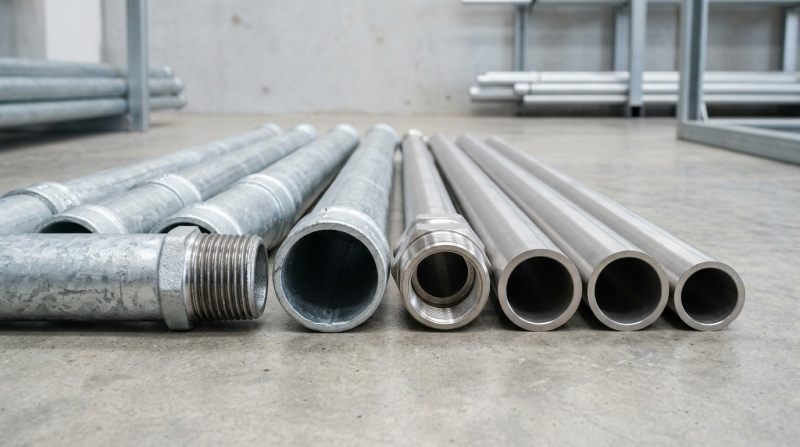
Galvanized pipe is carbon steel pipe coated with zinc, usually through hot-dip galvanizing. The zinc layer acts as a barrier against moisture and oxygen, slowing rust formation on the pipe surface. In plumbing applications, this made galvanized steel a standard choice for many decades, especially in residential, light commercial, and utility systems where moderate corrosion protection was needed at a controlled budget.
One reason galvanized pipe remains relevant is mechanical strength. Compared with some non-metallic materials, steel pipe tolerates impact, external loads, and jobsite handling better. In exposed installations, risers, service lines, and retrofit sections, that strength still matters. Typical galvanized pipe systems can remain functional for 20–50 years depending on water chemistry, wall thickness, coating integrity, and maintenance conditions.
Another factor is supply familiarity. Many contractors, inspectors, and maintenance teams understand threaded steel pipe assemblies, fittings, and repair practices. For industrial users and facility operators, this reduces training needs and simplifies stock planning for spare connectors, unions, and couplings. In some regions, galvanized steel also remains easier to source than premium stainless grades, particularly for standard diameters and medium-volume orders.
Key performance characteristics
When evaluating galvanized pipe for plumbing, decision-makers usually focus on four technical dimensions: corrosion resistance, pressure performance, internal scaling behavior, and installation method. The zinc layer improves exterior and early-stage interior protection, but performance changes over time as water chemistry gradually attacks the coating. Hard water, dissolved oxygen, and fluctuating pH can accelerate deterioration.
The table below summarizes the practical reasons galvanized pipe continues to appear in project specifications and maintenance planning.
Please give us a message


Please enter what you want to find