For outdoor electrical and infrastructure work, galvanized conduit pipe plays a critical role in protecting wiring from moisture, impact, and corrosion.
In construction and industrial steel projects, material choice affects safety, service life, maintenance frequency, and installation efficiency.
A properly specified galvanized conduit pipe helps reduce exposure risks, supports code compliance, and improves long-term cost control in demanding environments.
This article explains the basics, industry concerns, application value, common outdoor scenarios, and practical selection guidance for dependable field performance.
Basic Overview of Galvanized Conduit Pipe
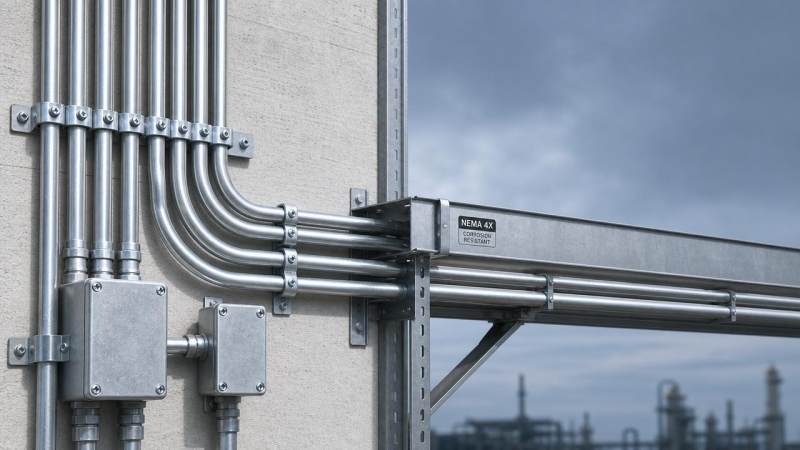
Galvanized conduit pipe is a steel conduit protected by a zinc coating that improves resistance to rust and surface degradation.
It is widely used to route and shield electrical cables in outdoor, exposed, or semi-corrosive conditions.
Compared with uncoated steel, galvanized conduit pipe offers better durability where rain, humidity, UV exposure, and mechanical contact are common.
The zinc layer acts as a protective barrier and also provides sacrificial corrosion protection if the surface is lightly damaged.
Outdoor systems often use rigid steel conduit or intermediate metal conduit, depending on structural demands and installation methods.
Selection should consider environmental severity, expected service life, load conditions, and local project specifications.
Industry Background and Current Material Priorities
Outdoor projects now face tighter expectations for durability, safety, and lifecycle performance across utility, transport, commercial, and industrial sites.
As a result, galvanized conduit pipe is often evaluated beyond initial price alone.
Key industry priorities include:
- Corrosion resistance in wet, coastal, or polluted environments
- Mechanical strength against vibration, impact, and accidental contact
- Compliance with ASTM, EN, JIS, or GB related requirements
- Stable dimensions for easier threading, joining, and field installation
- Reliable supply for large projects with phased delivery schedules
The steel supply chain also matters because inconsistent coating thickness or poor tube forming can shorten conduit life.
Quality control in manufacturing directly affects fit-up, corrosion behavior, and long-term performance outdoors.
Key Evaluation Signals in Outdoor Steel Conduit Supply
Application Value in Outdoor Installations
The main value of galvanized conduit pipe is dependable cable protection under real field conditions.
Outdoor electrical runs are exposed to weather cycles, dirt, standing water, and physical wear from site activity.
A durable steel conduit system helps maintain circuit integrity and lowers the risk of insulation damage.
Galvanized conduit pipe also performs well where structural support is needed for long exposed runs.
Its rigidity can limit deformation, especially in areas with equipment movement, wind loading, or maintenance access.
In some projects, supplementary corrosion-resistant materials are considered for adjacent process systems.
For example, petroleum, chemical industry, and mechanical equipment sectors may also specify 316L stainless steel pipe for fluid or process lines.
That material includes molybdenum, offering improved corrosion resistance, high-temperature stability, and strong mechanical properties in chloride-rich environments.
This comparison highlights an important principle: outdoor conduit selection should match the actual exposure level and service function.
For electrical protection applications, galvanized conduit pipe remains a practical and widely accepted steel solution.
Typical Outdoor Scenarios and Selection Paths
Different sites place different demands on galvanized conduit pipe, so selection should follow actual operating conditions.
Common Decision Factors
- Exposure to water, salt, chemicals, or industrial emissions
- Above-ground or partially sheltered installation layout
- Required impact resistance and support interval
- Compatibility with couplings, boxes, and accessories
- Inspection and maintenance access after commissioning
Practical Guidance for Material Selection and Installation
Successful use of galvanized conduit pipe depends on both material quality and installation discipline.
Before ordering, verify the required standard, conduit type, size range, wall thickness, and surface condition.
Request mill data when needed, especially for projects with formal quality documentation requirements.
Inspect delivered galvanized conduit pipe for coating damage, end condition, straightness, and dimensional accuracy.
During installation, avoid unnecessary surface damage from improper cutting, dragging, or tool misuse.
Use compatible fittings and sealing methods in wet locations to reduce water ingress at joints.
Support spacing should match conduit size, run configuration, and expected external loads.
In corrosive areas, inspection schedules should be defined early instead of waiting for visible deterioration.
Where projects require dependable steel sourcing, manufacturing strength also becomes a technical consideration.
Hongteng Fengda supplies structural steel products and customized solutions with modern facilities and strict quality control.
Its experience in international standards, stable production, and export support helps reduce sourcing uncertainty for global projects.
Checklist Before Final Specification
- Confirm the installation environment and corrosion level.
- Match galvanized conduit pipe type to load and exposure conditions.
- Verify standards, tolerances, and coating expectations.
- Check fitting compatibility and support layout.
- Review supplier quality systems and delivery reliability.
Next-Step Considerations for Outdoor Steel Projects
Galvanized conduit pipe remains a trusted choice for outdoor cable protection because it balances strength, corrosion resistance, and installation practicality.
The best results come from aligning conduit specification with site conditions, compliance needs, and long-term maintenance planning.
When evaluating outdoor steel materials, compare not only price, but also coating quality, dimensional consistency, and production reliability.
A clear technical review at the sourcing stage can prevent premature corrosion issues, installation delays, and replacement costs later.
For projects requiring stable structural steel support, customized specifications, and export-ready supply, a qualified Chinese steel partner can improve execution confidence.
Please give us a message


Please enter what you want to find