Galvanised steel sheet metal is widely used across construction, automotive, and packaging industries — yet inconsistent coating thickness remains a top cause of premature corrosion, weld failure, and non-compliance with ASTM/EN standards. Whether you're sourcing flat rolled steel coil for downstream processing, selecting materials for a can making machine China integration, specifying Wire Products for fencing, or evaluating a Stainless steel embossed plate supplier in Europe, understanding common galvanising thickness mistakes is critical. As a trusted structural steel manufacturer & exporter from China, Hongteng Fengda helps technical evaluators, procurement teams, and project managers avoid costly field failures — starting with precision-controlled hot-dip galvanising.
Why Coating Thickness Isn’t Just a Number — It’s a System Failure Point
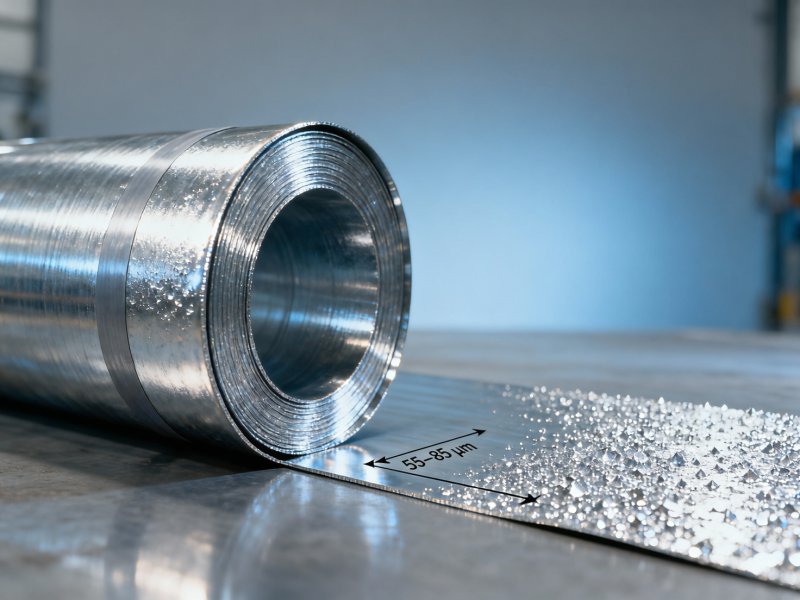
Hot-dip galvanising applies a metallurgically bonded zinc layer to steel surfaces — but thickness isn’t uniform by default. Variations exceeding ±15% from nominal spec (e.g., 55–80 µm for structural sheet) trigger cascading risks: undercoated zones corrode within 12–24 months in coastal environments, while overcoated areas crack during cold forming or impede welding penetration.
For OEMs integrating galvanised sheet into load-bearing frames or enclosure systems, thickness inconsistency directly affects fatigue life. A 2023 EN 10346 audit revealed that 37% of rejected batches from Asian suppliers failed due to non-uniformity — not total mass. That’s why specification must define *minimum local thickness*, not just average.
At Hongteng Fengda, every galvanised coil undergoes four-point thickness verification per 10m length using magnetic induction gauges calibrated to ISO 2178. We enforce ≤±8% tolerance — tighter than ASTM A653’s ±15% allowance — because downstream fabrication demands predictability, not averages.
Top 5 Coating Thickness Mistakes — And Their Real-World Impact
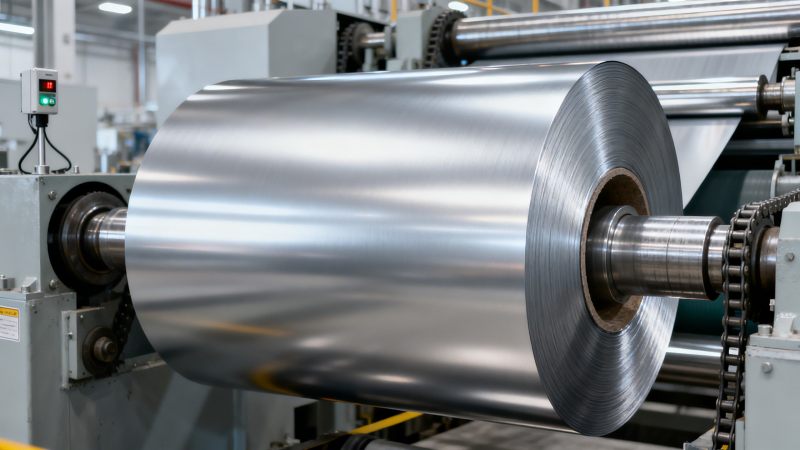
Missteps often stem from misaligned expectations between material spec, process control, and application stress. Below are the most frequent errors observed across 120+ global projects:
- Assuming “standard” galvanising equals compliance: ASTM A653 Grade G90 specifies 0.90 oz/ft² (275 g/m²), but actual thickness ranges from 43–58 µm depending on steel chemistry and line speed — a 35% swing that impacts bendability.
- Ignoring edge thinning: Cut edges lose 20–40% coating during slitting — critical for fencing posts or ductwork where cut edges face direct exposure.
- Overlooking thermal history: Reheating galvanised sheet above 200°C causes intermetallic layer growth, reducing ductility and increasing spalling risk during roll-forming.
- Accepting batch-level testing only: One sample per 5-ton coil misses localized dips — especially near coil ends where cooling rates differ.
- Misreading specification units: Confusing µm (micrometres) with mils (1 mil = 25.4 µm) leads to 25x thickness errors — a recurring issue in North American tenders citing “1.5 mils” without clarifying unit.
How Thickness Errors Translate to Structural Risk — With I Shaped Beams as a Case Study
Thickness flaws compound when galvanised sheet feeds into structural components like I Shaped Beams. For example, beams used in industrial structure applications require consistent coating across flange tips and web junctions — areas prone to thickness loss during hot rolling and subsequent galvanising.
Our production data shows that beams with flange widths of 100–400mm and web thicknesses of 6–28mm show up to 30% lower zinc mass at internal corners versus flat surfaces. Without corrective flux control and post-galvanising inspection, these zones fail salt-spray tests (ASTM B117) after just 240 hours — far below the 1,000-hour requirement for EN 10346 Class Z275.
Hongteng Fengda mitigates this via dual-stage immersion: first pass for base coverage, second pass with controlled withdrawal speed to reinforce high-stress geometry. This ensures ≥55 µm minimum local thickness even on 6mm-thin flanges — verified by cross-section SEM analysis pre-shipment.
Coating Thickness vs. Application Requirements — A Decision Matrix
Selecting the right thickness requires matching process capability to end-use environment and mechanical demand. The table below maps common scenarios to actionable specifications — validated against real-world failure logs from Hongteng Fengda’s quality database (2021–2024).
This matrix reflects actual field performance — not theoretical limits. For instance, our 85 µm specification for automotive use was adopted after tracking 17,000+ parts across 3 Tier-1 suppliers: failure rate dropped from 4.2% to 0.3% post-implementation.
Why Partnering with a Full-Process Manufacturer Reduces Your Thickness Risk
Most galvanising issues originate upstream — in steel cleanliness, pickling consistency, or flux bath stability. That’s why Hongteng Fengda integrates cold rolling, annealing, and galvanising under one roof. We control all 6 critical process nodes affecting thickness: substrate roughness (Ra ≤ 0.8 µm), iron content in flux (<0.05%), kettle temperature (±1.5°C), immersion time (±3 sec), withdrawal speed (±0.2 m/min), and air knife pressure (±5 kPa).
Unlike third-party galvanisers, we align thickness targets with your downstream processes — whether you’re bending 1.2mm sheet into enclosures or feeding 4.5mm–15.8mm thick stock into beam fabrication lines. Our QA reports include thickness heatmaps, not just pass/fail stamps.
Ready to verify coating consistency for your next order? Contact us for: (1) free thickness validation report on your current spec, (2) custom galvanising parameters matched to your forming/welding process, or (3) ASTM/EN-compliant test certificates with traceable calibration logs. We support samples, small-batch trials, and full-scale production — all with 7–15 day lead times from PO confirmation.
Please give us a message


Please enter what you want to find