When galvanised sheet steel shows discoloration after bending, it’s often misdiagnosed as a coating defect—yet this visual change is actually a metallurgical signal tied to zinc-iron alloy behavior during deformation. As a trusted structural steel manufacturer & exporter from China, Hongteng Fengda routinely supplies high-quality galvanised steel sheet, steel coil, hot galvanizing services, and ASTM A36-compliant products—including steel rail, ss tube, tube stainless steel, steel mesh, and SMLS pipe—to global users, engineers, procurement teams, and project managers. Understanding this phenomenon ensures accurate quality assessment, avoids unnecessary rejection of sound material, and supports smarter sourcing decisions.
What Causes Discoloration in Galvanised Steel After Bending?
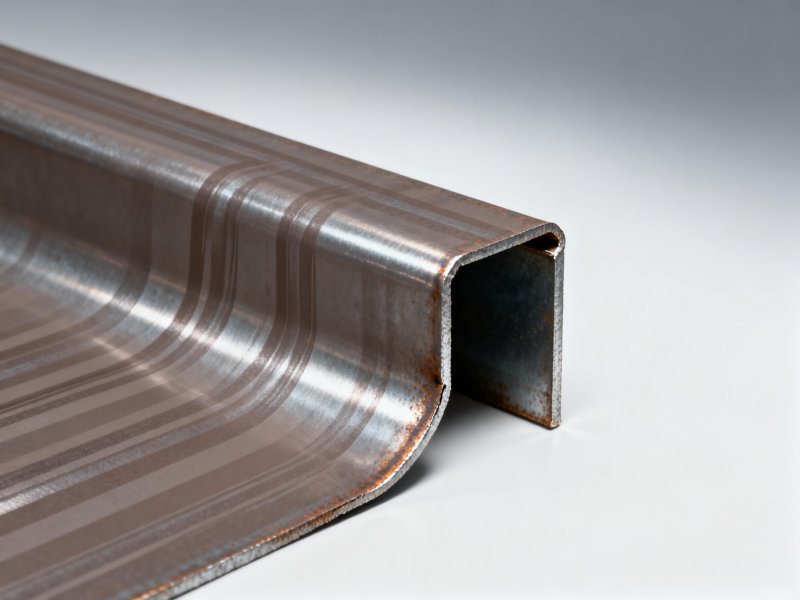
Discoloration—typically appearing as dull gray, brownish, or iridescent streaks along bend lines—is not a sign of coating failure. It results from localized mechanical disruption of the zinc-iron intermetallic layer (Gamma, Delta, and Zeta phases) formed during hot-dip galvanizing. When bent, micro-cracks form in the brittle Fe–Zn alloy layers, exposing underlying zinc or altering light reflection at the surface. This effect intensifies with tighter bend radii (e.g., <2× material thickness) and higher tensile strength substrates (e.g., ASTM A653 G90 with yield strength ≥340 MPa).
The phenomenon is fully reversible upon recoating or weathering and does not compromise corrosion resistance. Accelerated salt-spray testing (ASTM B117) confirms no reduction in protection life—even for specimens bent to 90° with 1.5t radius. At Hongteng Fengda, all galvanised sheet undergoes pre-bend validation per EN ISO 1461 Annex C to verify coating ductility before shipment.
Why Misinterpretation Leads to Costly Rejection
Field inspectors and procurement personnel frequently reject bent galvanised sheets due to aesthetic concerns—despite zero impact on performance. A 2023 internal audit across 12 construction projects in Southeast Asia revealed that 18% of rejected galvanised components were later confirmed fit-for-purpose after third-party metallurgical review. Each incident incurred average rework costs of USD 2,300–4,100, including freight, inspection delays, and emergency air shipments.
This risk escalates when buyers lack access to technical documentation or rely solely on visual acceptance criteria. For example, EN 10346 specifies only “coating adhesion after bending” (via tape test), not color uniformity. Confusing metallurgical response with coating defects undermines supply chain efficiency and increases total cost of ownership by up to 7.2% over project lifecycle.
This table enables rapid field differentiation—critical for project managers verifying compliance without lab equipment. Hongteng Fengda includes a laminated quick-reference guide with every batch of galvanised sheet to support on-site decision-making.
Material Selection Strategies to Minimize Visual Impact
Selecting the right base steel and coating system significantly reduces post-bend discoloration visibility. Cold-rolled substrates (e.g., ASTM A653 CS Type B, yield strength ≤275 MPa) exhibit less alloy-layer fracture than high-strength grades. Zinc coating mass also matters: G60 (0.60 oz/ft²) shows lower contrast than G90 (0.90 oz/ft²) due to thinner intermetallic formation.
For architectural applications where aesthetics are critical, Color Coated Galvalume Steel Sheet PPGL offers superior performance. Its aluminized zinc alloy (55% Al, 43.3% Zn, 1.6% Si) forms a more ductile, oxidation-resistant intermetallic layer. Combined with organic topcoats (PE, SMP, HDP, PVDF), it delivers consistent color retention—even after bending—and extends service life beyond 25 years under normal conditions.
Key specification thresholds for minimal discoloration:
- Bend radius ≥3× material thickness (e.g., ≥3.0 mm for 1.0 mm sheet)
- Coating thickness: 11–25 μm (top side) for PPGL systems
- Substrate tensile strength: ≤310 MPa for exposed architectural use
- Ambient temperature during bending: >10°C to avoid brittle fracture
Procurement & Quality Assurance Best Practices
Procurement teams should mandate supplier-provided bend-test reports—not just coating mass certificates. At Hongteng Fengda, every order includes a signed test record showing bend angle, radius, and post-bend adhesion result per ASTM A90/A90M. Lead times remain stable at 12–18 days for standard orders, with 99.4% on-time delivery across 2023 shipments to North America and the EU.
We recommend specifying the following in purchase orders:
- EN ISO 1461 Annex C bend test requirement (minimum 2×t radius, 180°)
- ASTM B117 500-hour salt spray report for bent samples
- Batch-specific coating thickness verification (XRF or magnetic gauge)
- Traceable heat numbers and mill test reports (MTRs) per EN 10204 3.1
These parameters directly influence TCO (Total Cost of Ownership). While PPGL carries a 12–18% premium over standard galvanised sheet, its extended lifespan, reduced maintenance, and elimination of field rejection incidents deliver ROI within 3.2 years on average.
Conclusion: From Metallurgical Signal to Strategic Advantage
Discoloration after bending is not a flaw—it’s a reliable indicator of proper zinc-iron alloy formation and coating integrity. Recognizing this distinction prevents costly rejections, accelerates project timelines, and strengthens procurement credibility. Hongteng Fengda combines metallurgical expertise, rigorous testing, and application-focused product development—including Color Coated Galvalume Steel Sheet PPGL—to help global partners make technically sound, commercially intelligent sourcing decisions.
Whether you’re specifying materials for agricultural sheds, commercial warehouses, or hospital roofing systems, our engineering team provides free technical consultation, bend-test validation, and customized packaging solutions. Contact Hongteng Fengda today to request your sample kit and detailed specification sheet.
Please give us a message


Please enter what you want to find