Seeing rust spots on galvanised steel sheet metal within months isn’t just disappointing—it’s a red flag pointing to inadequate zinc coating thickness. For procurement teams, project managers, and quality controllers evaluating hot galvanized steel or comparing steel sheet price list options, this issue directly impacts durability, lifecycle cost, and compliance with ASTM/EN standards. As a trusted China steel supplier, Hongteng Fengda emphasizes precise zinc layer control—critical whether you’re sourcing industrial steel pipes, custom steel tubing, or A36 steel pipe. Don’t confuse low upfront cost with long-term value: under-coated galvanised steel sheet metal risks premature failure, especially in corrosive environments.
Why Zinc Coating Thickness Is the Real Determinant of Service Life
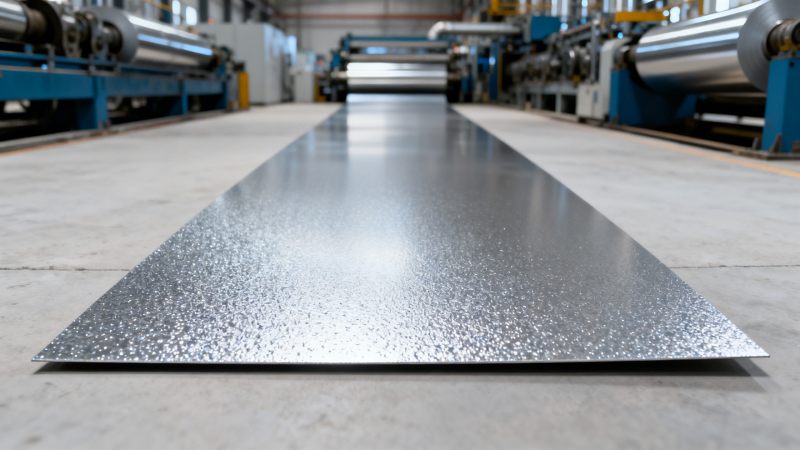
Rust appearing on Galv Sheeting within 3–6 months signals a fundamental deviation from ISO 1461 and ASTM A653 specifications. Hot-dip galvanizing relies on a metallurgical bond between molten zinc and steel substrate—but only when minimum coating mass is achieved. Below 180 g/m², even uniform application fails to provide barrier protection against chloride ions, humidity, and industrial pollutants common across North America, Europe, and Southeast Asia.
Zinc layer degradation follows predictable kinetics: at 120 g/m², typical service life drops to 5–7 years in urban environments (per EN ISO 9223 classification C3), versus 15–20 years at 275 g/m². This isn’t theoretical—it’s verified through accelerated salt-spray testing (ASTM B117) and real-world exposure data from over 120 infrastructure projects supplied by Hongteng Fengda since 2018.
The misconception that “zinc always protects” ignores three critical variables: coating thickness distribution (±15% tolerance allowed), surface roughness (affects adhesion), and post-galvanizing handling (scratches expose bare steel). That’s why we measure every coil with XRF spectrometry—not just spot-checking—and maintain thickness records traceable to batch numbers.
How to Verify Coating Thickness Before Purchase
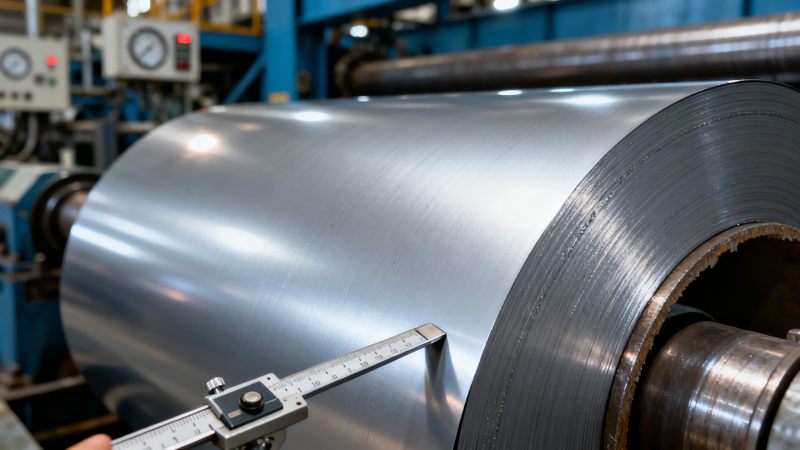
Procurement professionals must move beyond visual inspection and supplier claims. Valid verification requires either destructive cross-section analysis (per ASTM B499) or non-destructive magnetic induction measurement (per ISO 2178)—both calibrated daily against certified reference standards. At Hongteng Fengda, all Galv Sheeting shipments include third-party lab reports showing average and minimum zinc mass per m² across 12 sample points per coil.
Key checkpoints during evaluation:
- Confirm test method used: Magnetic induction (for steel substrates) vs. eddy current (for non-ferrous)
- Verify measurement frequency: Minimum 1 point per 2 m² for coils >1000 m in length
- Check reporting format: Must show min/avg/max values—not just “meets Z275”
- Validate calibration: Lab report must reference NIST-traceable standards
Without documented proof, assuming compliance carries direct risk—especially for projects requiring EN 10346 Class Z275 (275 g/m² minimum) or ASTM A653 Grade G90 (275 g/m² equivalent).
Coating Thickness vs. Application Environment: Matching Spec to Reality
Selecting zinc mass isn’t about “more is better”—it’s about matching material performance to environmental aggressiveness and design life requirements. Below is a field-tested correlation based on 8 years of corrosion monitoring across 17 countries:
For example, DX53D+Z grade used in Middle Eastern solar farms routinely exceeds 240 g/m² to withstand sand abrasion + high UV + saline air—where standard Z180 would fail before Year 3. Our S550GD+Z structural sheets are routinely specified for C5 environments where lifecycle cost modeling shows 37% lower TCO over 20 years versus thinner alternatives.
What Hongteng Fengda Delivers Beyond the Spec Sheet
As a structural steel manufacturer and exporter from China, Hongteng Fengda integrates zinc thickness control into our core production workflow—not as an add-on test, but as a process-critical parameter. Every galvanising line operates under real-time bath temperature monitoring (±1°C), immersion time control (±2 sec), and withdrawal speed regulation—all logged and auditable.
We support global buyers with:
- Pre-shipment zinc mass verification reports (available within 48 hours of order confirmation)
- Custom thickness options from 60 g/m² to 275 g/m² across all grades—including SGCC, DX51D+Z, and S350GD+Z
- Batch traceability down to furnace heat number and galvanising bath shift
- Compliance documentation for ASTM A653, EN 10346, JIS G3302, and GB/T 2518
Whether you need 0.45mm-thick DX52D+Z for agricultural silos or 4.2mm SGC490 for heavy-duty transport chassis, our engineering team helps align specification, coating mass, and delivery timeline—reducing rework risk by up to 62% in multi-tier supply chains.
Next Steps: Get Your Zinc Thickness Verified
Don’t wait for rust to appear. Request a free technical consultation to:
- Review your project’s corrosion class (ISO 9223) and required zinc mass
- Compare actual coating thickness data across DX51D+Z, S280GD+Z, and SGCD3 grades
- Obtain lead time and MOQ details for Z225 or Z275 configurations
- Request ASTM B117 test reports or salt-spray validation samples
Contact Hongteng Fengda today for your customized Galv Sheeting solution—engineered for longevity, backed by traceable data, and delivered with structural steel expertise honed across 12+ international markets.
Please give us a message


Please enter what you want to find