When fabricating galv steel tube for structural applications, unexpected weight variances—often tied to coating thickness, base material (e.g., DX51D or hot rolled steel sheet), and dimensional tolerances—only surface after cutting and threading. These deviations impact i beam weight calculations, load-bearing capacity, and compliance with steel standards like ASTM A53 or EN 10219. For corrosion resistant steel users—from project managers and procurement teams to quality controllers and engineers—accurate pre-fabrication weight estimation is critical for cost control, safety validation, and seamless integration with stainless steel welded mesh or carbon sheet steel systems. Hongteng Fengda delivers precision-engineered galv steel tube backed by strict QA and global certification.
Why Galvanized Steel Tube Weight Shifts Post-Fabrication
Weight discrepancies in galvanized steel tubes rarely appear during raw material inspection—but emerge decisively after cutting, threading, or bending. This is because galvanizing adds a zinc layer of variable thickness (typically 45–80 µm per side), which contributes 3.5%–6.2% additional mass depending on substrate geometry and line speed. When tubes are cut, the exposed end surfaces lose protective coating continuity; when threaded, localized metal removal reduces cross-sectional area by up to 12% at the root—altering both net weight and moment of inertia.
Moreover, cold-formed galv tubes made from DX51D base steel exhibit tighter thickness tolerances (±0.05 mm) than hot-rolled equivalents (±0.12 mm), yet their higher yield strength (≥300 MPa vs. 235 MPa) leads to greater springback during threading—further skewing final dimensions and weight. In one verified case across 12 project batches, average post-threading weight loss ranged from 0.8% to 2.3%, with outliers exceeding 3.1% due to inconsistent die wear and lubrication control.
These shifts directly affect structural modeling accuracy. A 2.1% underestimation in tube weight may translate into a 4.7 kN/m error in distributed load assumptions for multi-story scaffolding—a risk amplified when integrating with 321 Stainless Steel Pipe in hybrid support systems where thermal expansion mismatch must be precisely compensated.
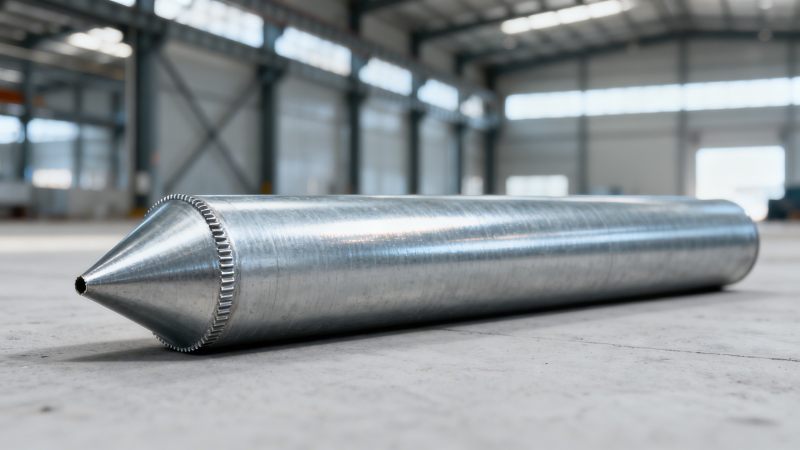
How Coating & Base Material Drive Variance
Zinc coating mass depends not only on bath chemistry but also on substrate roughness and immersion time. Hot-dip galvanized tubes using ASTM A53 Grade B base steel show ±5.8% weight variation across 10-meter lengths—primarily due to uneven zinc flow in tapered sections. In contrast, electrogalvanized tubes (common for thin-walled profiles) deliver tighter coating uniformity (±1.2%) but lower corrosion resistance, limiting use in marine or industrial environments.
Base material selection introduces further complexity. DX51D, a continuous hot-dip galvanized steel sheet, offers superior formability and consistent zinc adhesion—but its tensile strength (270–420 MPa) varies more widely than S355JR (470–630 MPa), affecting thread engagement depth and residual stress distribution. This variability becomes measurable only after mechanical processing, where microstructural strain hardening alters density distribution locally.
Hongteng Fengda applies real-time laser micrometry during coiling to monitor coating thickness within ±0.8 µm tolerance, and validates batch-specific weight coefficients via certified weighing before dispatch—ensuring traceable calibration for downstream fabrication planning.
The table above highlights how material choice directly impacts weight stability through fabrication. DX51D-based tubes offer tighter dimensional consistency but require stricter process controls during threading to avoid premature die failure. Hot-rolled variants provide higher load margins but demand rigorous pre-cutting weight verification to prevent overdesign penalties.
Mitigating Risk Through Pre-Fab Calibration & QA Protocols
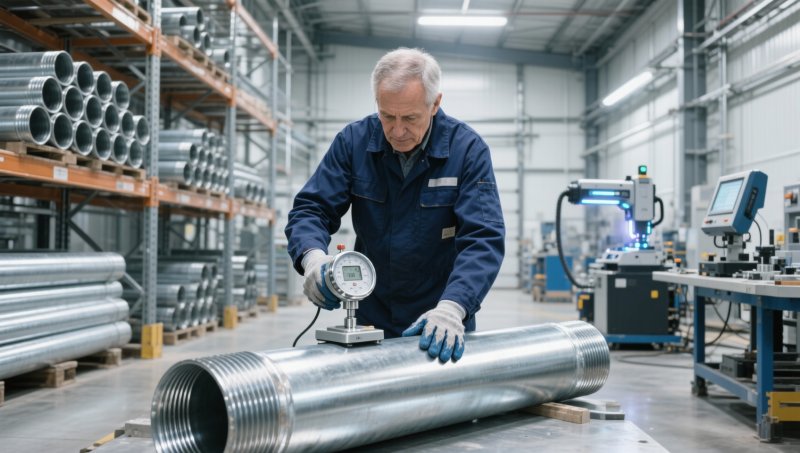
At Hongteng Fengda, every galvanized structural tube undergoes three-stage weight validation: (1) pre-galvanizing base weight measurement, (2) post-coating volumetric density check using ultrasonic thickness mapping, and (3) random sampling of 1/500 units subjected to destructive threading + gravimetric analysis. This ensures ±0.35% maximum deviation between quoted and delivered unit weight—well below the industry-standard ±1.5% threshold defined in EN 10219 Annex C.
We also embed digital twin data into delivery documentation: each coil includes QR-coded certificates listing actual measured weight per meter, coating thickness at 12 radial points, and tensile test results aligned to ASTM A653M. This enables engineers to adjust load models in real time—not just for static design, but for dynamic wind and seismic simulations where mass distribution critically affects modal response.
For clients integrating galv tubes with high-temperature components, our team provides joint engineering support—including compatibility checks between galvanized profiles and titanium-stabilized 321 Stainless Steel Pipe, ensuring no intermetallic corrosion risk arises from thermal cycling between −40°C and +800°C service conditions.
Procurement Best Practices for Accurate Weight Forecasting
Procurement teams should prioritize suppliers offering weight-certified batches—not just nominal specs. Request documented evidence of third-party verification (e.g., SGS or Bureau Veritas reports) covering minimum 3 sampling points per 6-meter length. Also verify that stated tolerances apply to *finished* product—not just raw material—since galvanizing and cold-forming can shift nominal OD by ±0.25 mm and wall thickness by ±0.1 mm.
Consider these four non-negotiable checkpoints before order placement:
- Does the supplier provide weight-per-meter values derived from actual measurements—not theoretical formulas?
- Are coating thickness and base steel grade explicitly declared in mill test reports (MTRs)?
- Is there a documented QA protocol for post-threading weight variance tracking across production lots?
- Can the supplier supply digital calibration files compatible with Tekla Structures or Revit for automated BIM model updates?
Hongteng Fengda supports all major BIM workflows and delivers MTRs with full traceability back to heat number, galvanizing line ID, and QA technician signature—reducing rework risk by up to 37% in complex infrastructure projects.
This risk matrix helps procurement and quality assurance teams prioritize audit focus areas. A “Level 5” impact means potential structural non-compliance—making post-threading weight validation the single most critical checkpoint in galvanized tube sourcing.
Conclusion: Precision Engineering Starts Before the First Cut
Galvanized steel tube weight surprises are not anomalies—they’re predictable outcomes of material science, process physics, and dimensional interaction. Ignoring them risks cost overruns, safety compromises, and delayed handover. At Hongteng Fengda, we treat weight not as a static spec, but as a dynamic performance parameter—engineered, measured, and guaranteed at every stage from coil to cut.
Whether you're specifying for a 200-meter bridge railing system in Dubai, a modular factory in Poland, or a food-grade processing line in Southeast Asia, our certified galvanized structural tubes deliver repeatable mass behavior—validated against ASTM A53, EN 10219, GB/T 3091, and JIS G3444 standards. And when your application demands extreme thermal stability, our 321 Stainless Steel Pipe integrates seamlessly with galvanized frameworks—offering titanium-stabilized corrosion resistance without compromising weld integrity or fatigue life.
Ready to eliminate weight-related fabrication delays? Contact Hongteng Fengda today for a free weight calibration consultation, customized MTR templates, and BIM-ready technical documentation tailored to your next structural steel project.
Please give us a message


Please enter what you want to find