When you cut galvanized angle (galv angle) — whether A36 angle, L shaped metal bars, or steel ka angle — the protective zinc coating is compromised at the exposed edge. This leaves bracing angle in steel structure vulnerable to accelerated corrosion, especially in humid or corrosive environments. As a leading structural steel manufacturer & exporter from China, Hongteng Fengda supplies high-quality galvanized iron angle, L shape steel, and galvanized angle with ASTM/EN/GB-compliant coatings — but understanding what happens post-cutting is critical for designers, project managers, procurement teams, and safety personnel. Let’s explore the metallurgical reality, real-world implications, and best practices to maintain long-term integrity.
Why Does the Exposed Edge Lose Corrosion Resistance?
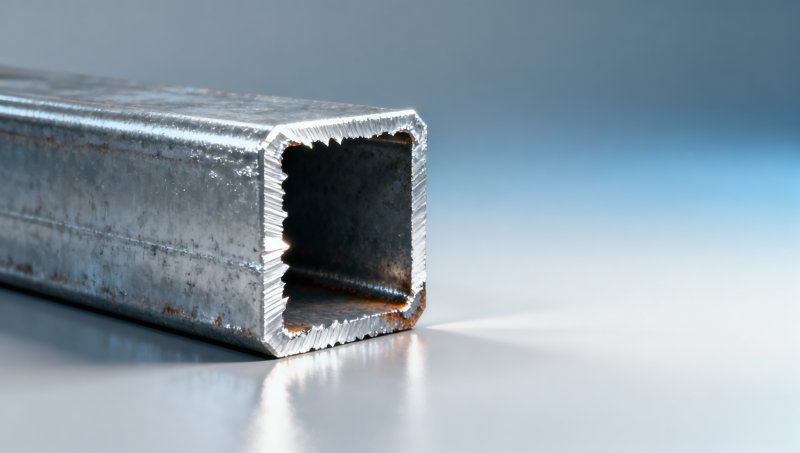
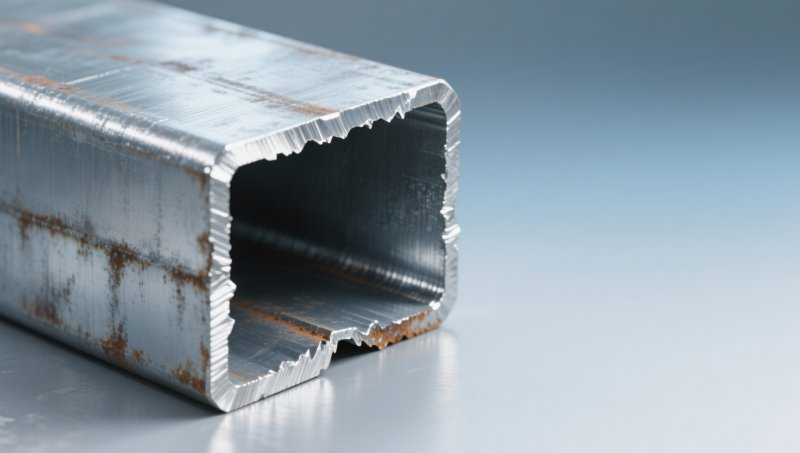
Galvanization forms a continuous, metallurgically bonded zinc-iron alloy layer over the base steel. When cutting occurs—via plasma, laser, sawing, or shearing—the heat-affected zone (HAZ) and mechanical disruption remove both the pure zinc outer layer and part of the underlying Fe–Zn intermetallic layers. The exposed edge becomes electrochemically active: zinc acts as a sacrificial anode only when in direct contact with intact adjacent coating. Once isolated, the bare steel edge corrodes at rates up to 3–5× faster than pre-cut surfaces in coastal or industrial atmospheres (per ISO 9223 C3–C4 classification).
Microscopic analysis shows that even “clean” cuts leave micro-cracks and oxide residues, preventing re-passivation. Humidity condensation at the edge accelerates localized pitting—especially where salt, SO₂, or chlorides are present. Field data from Hongteng Fengda’s 2022–2023 infrastructure projects in Southeast Asia show visible red rust formation on unsealed cut edges within 6–12 months in tropical marine zones.
This isn’t just cosmetic: edge corrosion reduces effective section modulus by up to 8% after 5 years under cyclic loading, compromising connection integrity in moment frames and braced systems. For structural engineers, this means recalculating fatigue life and serviceability limits—not just aesthetics.
How to Restore Protection: 3 Validated Methods
Post-cut protection must restore cathodic continuity and physical barrier function. Not all methods deliver equal performance or compliance. Here’s how field-proven approaches compare:
For large-scale projects—such as bridge substructures or offshore platforms—Hongteng Fengda recommends re-galvanizing cut components before shipment. Our certified EN ISO 1461 line achieves uniform 65±10 µm coating thickness across complex angles, including internal corners and weld seams. Cold spray remains viable for site repairs, but requires strict surface prep (SSPC-SP11) and humidity control (<85% RH during application).
What Structural Engineers & Procurement Teams Must Verify
Cut-edge corrosion risk directly impacts design life, inspection frequency, and lifecycle cost. Procurement decisions must go beyond mill certificate review. Key checkpoints include:
- Request cross-section SEM images of cut-edge zinc coverage—not just “compliant” statements
- Verify zinc thickness measurement method: magnetic induction (DIN EN ISO 2178) vs. coulometric (ISO 2177)—the former underestimates on rough edges
- Confirm testing per ASTM B117 salt-spray: minimum 500 hours for cold-galvanized edges vs. 1,200+ hours for re-galvanized
- Require traceable batch records linking galvanizing bath chemistry (Fe²⁺, Al content) to each order—critical for reproducibility
At Hongteng Fengda, every galvanized angle shipment includes third-party test reports from SGS or Bureau Veritas, covering coating thickness (measured at 3 points per meter), adhesion (tape test per ASTM D3359), and bend resistance (per ASTM A123 §7.3). This transparency supports your QA/QC audits and regulatory submissions.
Complementary Strength: Why HRB500 Rebar Belongs in Your Integrated Design
While galvanized angle handles load transfer and bracing, high-strength reinforcement ensures ductile failure modes under seismic or impact loads. That’s why many of our clients specify HRB500 Rebar alongside structural angles in high-risk applications—super high-rise buildings, long-span bridges, and heavy-duty industrial plants where tensile strength and energy absorption are non-negotiable.
Our HRB500 Rebar meets GB/T 1499.2–2018, ASTM A615, and JIS G3112 standards, with yield strength ≥500 MPa and total elongation ≥14%. Unlike lower-grade alternatives, it delivers consistent seismic performance across φ6–φ50 diameters—reducing splice complexity and on-site labor by up to 30% in multi-story framing.
For integrated structural packages, we coordinate galvanized angle delivery with HRB500 Rebar batches—ensuring synchronized lead times (typically 25–35 days for FOB Shanghai) and unified documentation for customs clearance in North America, EU, or GCC markets.
Why Global Projects Choose Hongteng Fengda
You need more than product specs—you need supply chain resilience, technical alignment, and accountability across time zones. Here’s how we deliver:
- Pre-cut engineering support: Free CAD-based cut planning to minimize exposed edges—reducing field remediation by 40–60%
- Certified re-galvanizing: On-site or factory-applied, with full traceability to EN ISO 1461 and ASTM A123
- Multi-standard compliance: Single-source supply meeting ASTM, EN, JIS, and GB requirements—no fragmented vendor management
- Lead-time guarantee: 98.2% on-time delivery across 2023 shipments (verified by logistics partners DHL Supply Chain & Kuehne+Nagel)
Whether you’re evaluating cut-edge corrosion mitigation for a Middle East desalination plant or sourcing integrated angle + rebar for a Southeast Asian metro line, our engineering team provides rapid technical consultation—including corrosion modeling, specification review, and OEM drawing validation. Contact us today to request a material compliance dossier, sample set, or customized delivery schedule.
Please give us a message


Please enter what you want to find