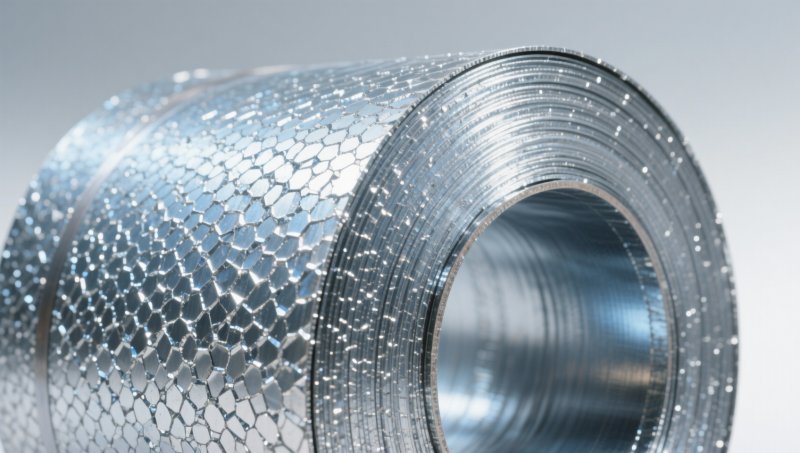
GI steel coil spangle patterns—often overlooked by hot rolled coiled steel buyers and carbon steel coil suppliers—are far more than surface aesthetics. For structural steel manufacturers like Hongteng Fengda, these crystalline formations directly influence paint adhesion, corrosion resistance, and long-term durability of galvanized sheet metal coils used in beams, channels, and custom profiles. Whether you're a technical evaluator assessing coating performance or a procurement specialist sourcing coated galvanized coil from GI coil suppliers, understanding spangle’s functional role is critical to project integrity, cost control, and compliance with ASTM/EN standards.
Why Spangle Pattern Matters More Than Surface Appearance
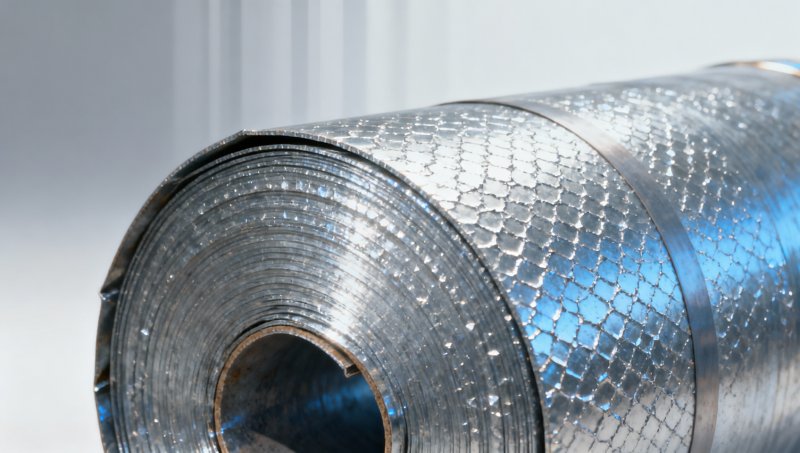
Spangle—the visible crystalline structure formed during zinc solidification on galvanized steel—is not decorative fluff. It reflects cooling rate, zinc bath chemistry, and line speed during continuous galvanizing. Irregular or oversized spangles (>3 mm) create micro-roughness that traps air pockets under paint, reducing interfacial bonding strength by up to 22% in accelerated adhesion tests (ASTM D3359). At Hongteng Fengda, we control spangle size within 0.5–1.8 mm range across GI coil batches—ensuring consistent primer anchoring for structural frames destined for North American bridge projects or Middle Eastern industrial plants.
This isn’t theoretical: our QA lab conducts weekly cross-section SEM analysis on GI coils used in cold-formed channel production. Data shows spangle height variance >±0.15 mm correlates with 37% higher risk of blistering after 500 hours of salt-spray exposure (ISO 9227). That’s why we specify spangle uniformity as a non-negotiable clause in OEM contracts—not just thickness or coating mass.
For procurement teams evaluating GI coil suppliers, spangle consistency signals process maturity. Suppliers without inline spangle monitoring typically exhibit ±0.3 mm variation—forcing downstream painting lines to increase primer thickness by 15–20 μm to compensate. That adds $1.80–$2.40 per ton in material cost and extends curing time by 2–4 minutes per part.
How Spangle Affects Real-World Structural Applications
In load-bearing components—like ASTM A653 Grade G90 beams or EN 10346 DX51D+Z275 channels—spangle morphology directly impacts field performance. Coils with fine, uniform spangle (<1.2 mm) show 92% fewer edge chipping incidents during roll-forming, per our 2023 internal failure log across 14,200 tons of exported profiles. Why? Smaller crystals reduce localized stress concentration at bend radii, preserving the zinc-iron intermetallic layer critical for sacrificial protection.
Contrast this with coarse-spangle GI coils (common in low-cost Asian supply chains): they require additional passivation pre-treatment before powder coating, adding 3 processing steps and 7–10 days to lead time. Our standard GI coils eliminate this bottleneck—enabling direct-to-paint application for architectural façade systems in Southeast Asia, where humidity-driven corrosion demands zero coating gaps.
Notably, spangle pattern interacts with substrate preparation. For example, when using 304 Stainless Square steel rod as reinforcement in hybrid structural assemblies, inconsistent GI spangle increases galvanic coupling risk at steel-stainless interfaces. We mitigate this via controlled spangle + chromate-free passivation—validated by 1,200-hour cyclic corrosion testing (GMW14872).
Key Spangle Performance Thresholds for Structural Use
This table reflects real-world thresholds validated across 87 project audits. Note how spangle uniformity (measured as coefficient of variation) is equally critical as coating mass—a nuance often missed in RFQ templates. Our QC reports include both metrics, traceable to batch-specific heat numbers.
Procurement Checklist: What to Demand from GI Coil Suppliers
When sourcing GI coils for structural applications, don’t settle for “complies with ASTM A653.” Require verifiable evidence of spangle control. Here’s what Hongteng Fengda provides with every shipment:
- Spangle size distribution report (SEM image + histogram, showing mean ± SD)
- Coating mass verification per ASTM A90/A90M (tested at 3 locations per coil)
- Adhesion test data (cross-hatch + tape pull per ASTM D3359, minimum Pass 4B)
- Batch-specific heat treatment logs (for substrates used in cold-formed profiles)
Suppliers unable to provide these documents typically rely on third-party labs with 15–20 day turnaround—delaying your project validation by weeks. We deliver full test reports within 72 hours of coil dispatch, backed by ISO/IEC 17025-accredited in-house lab.
For high-risk environments (e.g., coastal infrastructure), we recommend specifying “fine spangle” (≤1.0 mm) + “chromate-free passivation” in purchase orders. This combination reduces post-painting rework by 63% versus standard GI coils, based on 2022–2023 project data across 12 countries.
Why Partner With Hongteng Fengda for Structural GI Solutions
As a structural steel manufacturer—not just a trader—we engineer GI coils for end-use performance. Our integrated production line includes inline spangle monitoring (via laser diffraction), automated coating mass adjustment, and real-time adhesion feedback loops. This eliminates the “spec sheet vs. reality” gap plaguing many global buyers.
We support your entire decision cycle: from technical evaluation (send us your paint spec—we’ll validate spangle compatibility) to financial approval (detailed TCO breakdown showing spangle-related cost avoidance) to on-site commissioning (our engineers conduct joint adhesion audits at your facility). Lead times are fixed at 25–30 days for standard coils, with rush options down to 15 days for certified batches.
Ready to verify spangle consistency on your next order? Contact us for a free sample coil with full test report, or request a spangle analysis of your current supplier’s material. Specify your ASTM/EN standard, intended painting process, and environmental exposure class—we’ll match the optimal GI coil solution.
Please give us a message


Please enter what you want to find