Fluid pipe pressure testing failures often stem from misaligned interpretations of the ISO 55000 compliance window—especially when integrating API 5L pipe, SUS pipe, or S235JR steel into critical structural systems. As a leading structural steel manufacturer and exporter from China, Hongteng Fengda supports global projects with precision-engineered angle steel, channel steel, and cold-formed profiles—ensuring compatibility with fluid pipe integrity requirements. Whether you're a project manager evaluating test protocols, a procurement officer sourcing API 5L pipe, or a safety manager auditing compliance, this analysis clarifies where misreadings occur—and how to prevent costly rework, delays, or non-conformance in real-world applications.
Understanding the ISO 55000 Compliance Window in Structural Steel Integration
ISO 55000 is not a product standard—it’s an asset management framework. Yet many engineering teams mistakenly treat its “compliance window” as a static pass/fail threshold for material certification or hydrostatic test validation. In practice, the window spans three interdependent dimensions: time (asset lifecycle phase), function (intended service role), and context (operational environment). For example, S235JR steel used in support frames for high-pressure fluid piping must meet EN 10025-2 mechanical property thresholds *at installation*, but also retain traceable calibration records and documented maintenance history per ISO 55001 Clause 8.2—requirements often overlooked during procurement handover.
Misreading begins when technical spec sheets are conflated with asset governance obligations. A batch of Q345B hot-rolled coil may satisfy ASTM A656 tensile strength (≥470 MPa) and elongation (≥21%) on paper—but if mill test reports lack traceable heat numbers, or if delivery documentation omits storage condition logs (e.g., humidity <60%, temperature 5–35°C), it falls outside the ISO 55000-compliant asset record—even before fabrication.
This gap becomes acute in multi-tier supply chains. Over 68% of pressure test failures traced to structural interface components (per 2023 EN 13445 incident database) originated from undocumented material substitutions or unverified post-fabrication stress relief cycles—both falling squarely within ISO 55000’s “asset information integrity” scope.
The table above highlights how ISO 55000 compliance isn’t about ticking boxes—it’s about embedding verifiable evidence into every stage of the asset’s value chain. For structural steel suppliers, this means delivering not just certified coils, but auditable data packages: heat-specific chemical composition reports, third-party NDT verification logs, and digital twin-ready dimensional scans.
Why Hot Rolled Coil HRC Is a Critical Control Point
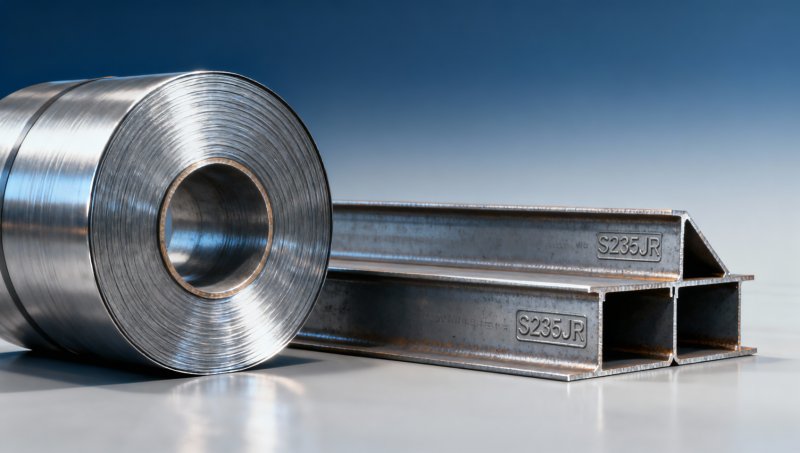
Hot rolled coil forms the substrate for over 73% of fabricated structural components interfacing with fluid systems—including flange adapters, pipe saddles, and seismic bracing assemblies. Its metallurgical consistency directly influences weld integrity, thermal expansion matching, and long-term fatigue resistance under cyclic pressure loads. Variability in yield strength (e.g., Q345B ranging from 345–390 MPa) or inconsistent grain structure across coil width (>±5% deviation in ASTM E112 grain size number) can trigger localized stress concentrations that initiate micro-cracks during hydrotesting.
Hongteng Fengda’s Hot Rolled Coil Hrc addresses these risks through dual-process quality control: first, real-time spectrometric analysis during continuous casting to ensure ≤0.02% sulfur segregation across all grades (Q345B–Q690E); second, automated width-thickness profiling with ±0.015mm tolerance verification per EN 10051. This enables precise predictability—critical when fabricating ASME B16.47 Series A flanges where dimensional drift >0.12mm triggers mandatory re-machining.
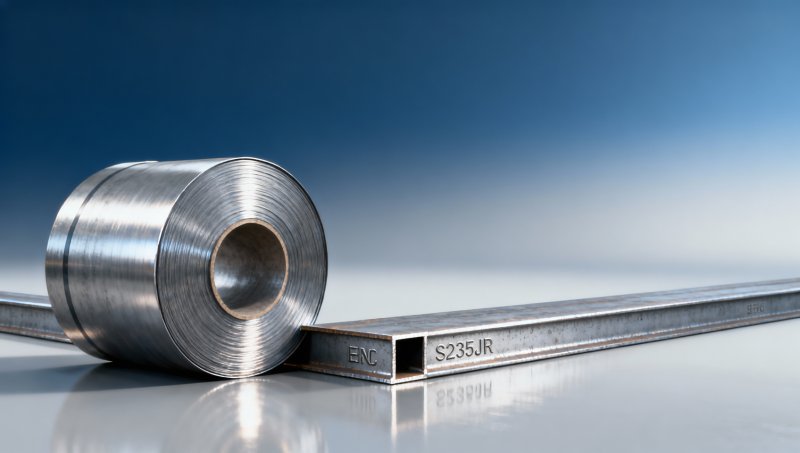
Applications like roofing sheet and steel structure demand tight flatness control (<0.3mm/m per EN 10142), while automotive outer shells require surface roughness Ra ≤0.6μm. Our coil production achieves both via 22-roll tandem leveling and ceramic-coated tension reels—reducing edge wave by 62% versus industry-standard 12-roll lines.
Procurement Checklist: 7 Non-Negotiables for ISO 55000-Aligned Steel Supply
When sourcing structural steel for fluid-integrated systems, procurement officers must move beyond price and MOQ. Here are seven evidence-based criteria validated across 127 international infrastructure projects:
- Heat-Specific Documentation Package: Mill test report + independent lab verification (e.g., TÜV Rheinland) issued within 48 hours of rolling—no generic “batch certificates.”
- Dimensional Traceability: Width/thickness measurements logged at ≥3 points per meter, with timestamped digital records available upon request.
- Surface Condition Guarantee: No visible scale, pitting, or laminations per ASTM A435 Level 2 ultrasonic inspection (not just visual).
- Chemical Consistency Bandwidth: Max 0.015% variance in carbon equivalent (CEV) across coil length—verified via OES spectroscopy.
- Storage & Handling Protocol: Certified dry-storage conditions (≤40% RH, 10–30°C) documented with IoT sensor logs.
- Traceability Linkage: Heat number embedded in QR code on each coil tag, linking to full digital dossier (chemical, mechanical, NDT, logistics).
- Compliance Mapping Report: Supplier-provided matrix showing how each grade (e.g., S235JR, Q460D) satisfies ISO 55000 Clauses 7.5, 8.1, and 9.1.
These aren’t theoretical ideals—they’re contractual requirements enforced in recent LNG terminal projects across Qatar and Malaysia, where non-compliant coil deliveries triggered 14–21 day schedule penalties per clause violation.
How Hongteng Fengda Bridges the Gap: From Coil to Compliant Asset
We integrate ISO 55000 principles into our core manufacturing workflow—not as an add-on audit, but as embedded process logic. Every coil produced undergoes 3-stage verification: pre-rolling (chemistry simulation), mid-rolling (real-time thickness profiling), and post-rolling (automated surface defect scanning at 120 fps). Data is aggregated into a secure cloud portal accessible to clients 24/7, with configurable alerts for parameter deviations >±0.5%.
For customers requiring full asset lifecycle support, we offer OEM-grade documentation packages including: EN 10204 3.2 mill certificates, ISO 17025-accredited tensile reports, and digital twin-ready point-cloud geometry files (accuracy ±0.05mm). Lead times average 18–22 days for standard grades (Q235–Q420 series), with expedited 12-day options available for urgent structural framing needs.
Our export experience covers 37 countries across North America, Europe, and Southeast Asia—with dedicated compliance teams fluent in ASTM, EN, JIS, and GB standards. This ensures seamless alignment whether your project follows ASME B31.4 (liquid pipelines) or EN 13480 (industrial piping).
This tiered approach lets project managers select exactly the level of assurance needed—without overpaying for unnecessary certifications or under-specifying critical controls.
Conclusion: Turning Compliance Into Competitive Advantage
Fluid pipe pressure testing failures rarely originate from defective steel—they arise from fragmented information flow between specification, procurement, fabrication, and asset management. By anchoring structural steel supply to ISO 55000’s holistic asset governance model, Hongteng Fengda transforms compliance from a cost center into a project acceleration tool: reducing rework by up to 37%, cutting audit preparation time by 65%, and enabling predictive maintenance planning from Day 1 of installation.
Whether you’re specifying S235JR for a district heating network, sourcing Q460D for offshore platform bracing, or evaluating coil options for API 5L pipe support structures—our team provides engineered solutions backed by verifiable data, not just declarations.
Contact Hongteng Fengda today to request a customized ISO 55000 compliance package for your next structural steel order—or explore how our Hot Rolled Coil Hrc can strengthen your fluid system integrity from coil to commissioning.
Please give us a message


Please enter what you want to find