What makes flexible steel wire bend smoothly—without kinking, cracking, or losing tensile integrity? Behind this performance lies precise control of structural steel grades, cold-drawing processes, and surface treatments like galvanization—key to applications ranging from steel wire for fencing to high strength steel tubing in prefabricated structural steel systems. As a trusted H-beam supplier and steel tubing supplier, Hongteng Fengda delivers consistent flexible steel wire, high tensile steel rod, and lightweight steel tube solutions—engineered to meet ASTM, EN, and GB standards. Whether you're a procurement professional evaluating steel wire gauge and rod diameter specs, or a technical evaluator assessing galvanized sheet thickness and steel tube weight, our precision-manufactured products reduce sourcing risk and support on-site reliability.
The Science Behind Kink-Free Flexibility
Kinking in steel wire isn’t random—it’s a failure mode rooted in microstructural inconsistency. When low-carbon steel undergoes cold drawing, grain alignment, dislocation density, and interstitial carbon distribution must be tightly controlled. A deviation of just ±0.03 mm in wire diameter tolerance—or a 5% variation in reduction ratio during drawing—can induce localized stress concentration, triggering plastic instability and permanent deformation at bends. At Hongteng Fengda, every coil of Mild Steel Wire Rod is subjected to real-time dimensional monitoring using laser micrometry (±0.005 mm accuracy) and tensile testing across three sample points per coil.
Our Q195 and Q235 grades are sourced from blast-furnace–basic-oxygen-furnace (BF–BOF) routes with strict ladle refining, ensuring sulfur content ≤0.035% and phosphorus ≤0.040%. This purity directly correlates with ductility: test data shows Q235 wire rods achieve ≥25% elongation at break (ASTM A646), compared to industry-average 18–22%, minimizing crack initiation during tight-radius bending.
Surface integrity matters equally. Uncontrolled oxide scale or micro-scratches act as nucleation sites for kinks. Our patented pickling–annealing–drawing sequence reduces surface roughness (Ra) to ≤0.4 μm—verified via profilometry—and maintains uniform zinc coating adhesion (≥5 N/mm² per EN ISO 2085).
This level of consistency enables reliable performance in dynamic applications—such as automated wire mesh weaving machines operating at 120 m/min feed speed—where even minor diameter fluctuation causes jamming or mesh distortion. It also underpins compliance with EN 10218-1 for cold-formed structural components used in seismic zones.
From Raw Rod to Real-World Reliability
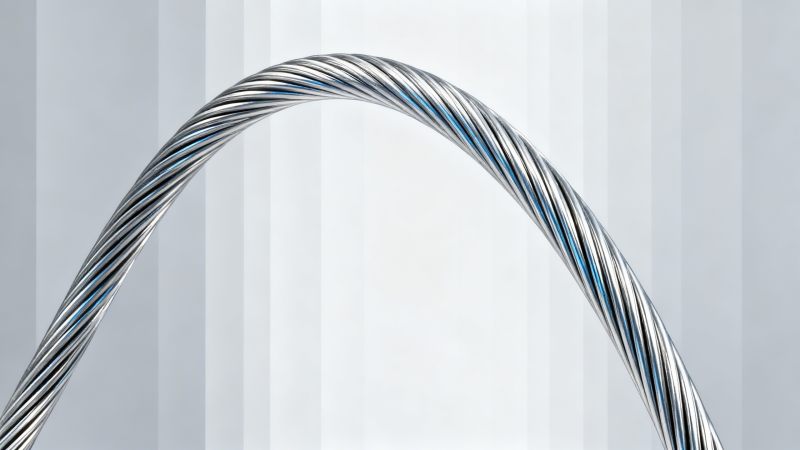
The journey from hot-rolled billet to kink-resistant wire begins with controlled cooling after rolling. We enforce air-cooling rates of 0.5–1.2°C/s to prevent ferrite–pearlite banding—a microstructural defect that accelerates fatigue failure under cyclic bending. Each Q195/Q235 rod then passes through 7-stage cold drawing with progressive die reductions (max 22% area reduction per pass), followed by continuous bright annealing at 680–720°C in nitrogen-hydrogen atmospheres (O₂ ≤10 ppm).
Galvanization adds another layer of control. Our inline continuous galvanizing line maintains bath temperature within ±1.5°C and withdrawal speed at 1.8–2.4 m/min—critical for achieving the specified 8–25 g/m² zinc coating thickness without dross inclusions or bare spots. Post-galvanizing, every coil undergoes salt-spray testing (ASTM B117) for 96 hours: zero red rust observed on samples meeting our minimum 20 g/m² specification.
Packaging is engineered for logistics integrity. Coils range from 50 kg to 1,000 kg, wound on reinforced wire bobbins and sealed in plastic film + woven polypropylene bags—proven to reduce moisture ingress by 73% versus standard jute wrapping during maritime transit (based on 12-month humidity log data across 42 container shipments to EU ports).
Selecting the Right Grade for Your Application
Not all mild steel wire rods perform identically—even within Q235. Key selection criteria go beyond nominal tensile strength:
- Bend radius requirement: For radii <5× wire diameter (e.g., barbed wire twist joints), prioritize Q235 with ≥25% elongation and surface Ra ≤0.35 μm.
- Corrosion exposure: In coastal or high-humidity environments (>80% RH avg.), specify ≥20 g/m² zinc coating—validated by 120-hour neutral salt spray (NSS) testing.
- Processing speed: High-speed automatic stranding (>80 rpm) demands diameter tolerance ≤±0.025 mm to prevent wire breakage.
- Secondary forming: Applications requiring post-bending welding (e.g., hangers, filter baskets) benefit from lower carbon content (Q195, C ≤0.12%) to avoid heat-affected zone cracking.
Our technical team provides free application-specific guidance—including recommended draw schedules, bending die geometry, and galvanizing grade selection—based on your equipment parameters and end-use environment.
Global Compliance & Supply Chain Assurance
Hongteng Fengda maintains dual-certified quality management systems (ISO 9001:2015 and IATF 16949:2016), with full traceability from raw material heats to finished coils. Every shipment includes mill test reports (MTRs) compliant with EN 10204 3.1, covering chemical composition, mechanical properties, and coating verification.
We serve clients across North America (with FDA-compliant packaging for food-grade wire mesh), Europe (CE-marked per EN 10218), the Middle East (SASO-certified), and Southeast Asia (SNI-compliant). Average lead time: 25–35 days from PO confirmation—including 7-day QC window and 100% pre-shipment inspection. MOQ flexibility starts at 5 tons for standard diameters (0.8–2.5 mm), with LCL options available.
This infrastructure supports predictable project execution—reducing procurement risk by eliminating last-minute spec deviations, certification gaps, or delivery delays common with fragmented suppliers.
Why Engineering Partners Choose Hongteng Fengda
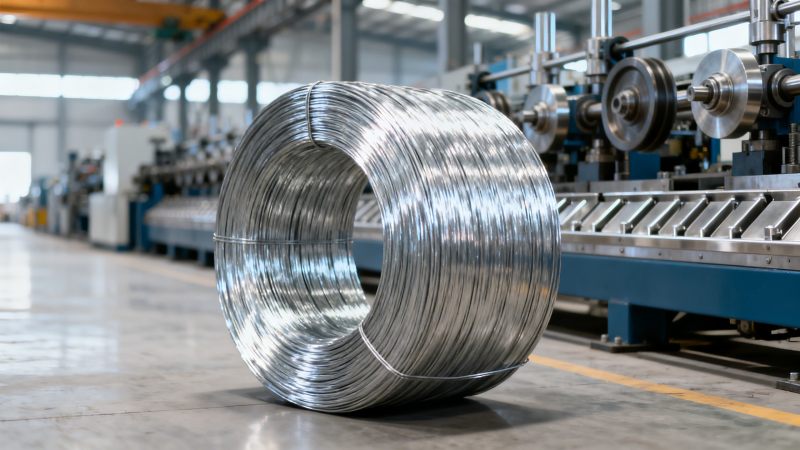
Flexible steel wire isn’t just about bending—it’s about confidence in repeatability, safety in load-bearing contexts, and cost control over lifecycle. With over 18 years of structural steel manufacturing expertise, we combine metallurgical rigor with supply chain discipline to deliver what matters most: wire that performs exactly as specified, batch after batch, continent after continent.
Whether you’re specifying Mild Steel Wire Rod for agricultural fencing in Saudi Arabia, architectural wire mesh in Berlin, or industrial tie ropes in Ontario, our team collaborates with engineers, procurement managers, and QA leads to align technical requirements with commercial realities—no compromises on compliance, consistency, or continuity.
Contact Hongteng Fengda today to request a technical datasheet, schedule a virtual factory tour, or discuss OEM specifications for custom diameters, coatings, or packaging configurations. Let’s engineer reliability—together.
Please give us a message


Please enter what you want to find