Understanding flat rolled steel coil grades does not have to be complicated. This guide explains the main grade differences in plain language, helping material selection become clearer and less risky.
In steel sourcing today, grade choice matters more than ever. Performance targets, coating demands, and processing needs are becoming stricter across construction and manufacturing projects.
That is why flat rolled steel coil is no longer compared by price alone. Buyers now look closely at strength levels, formability, corrosion resistance, and compliance with ASTM, EN, JIS, and GB standards.
Why flat rolled steel coil grades are getting more attention
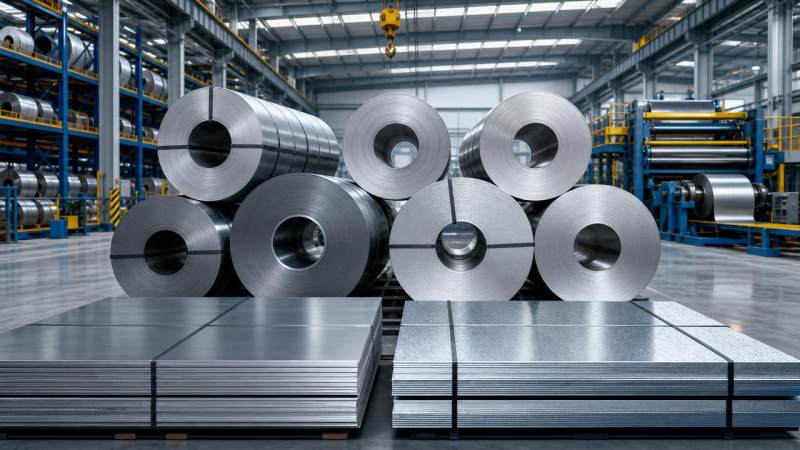
The market has shifted toward application-specific steel. A coil used for roofing, framing, appliances, or stamping cannot be judged by one simple grade label.
At the same time, international trade requires clearer specifications. Slight differences in coating mass, yield strength, or surface treatment can change service life and fabrication results.
For this reason, flat rolled steel coil grades are now discussed earlier in project planning. Misunderstanding a grade often leads to forming cracks, weak structural performance, or premature corrosion.
The clearest trend: grade selection now follows end use
The biggest change is practical. Steel grades are increasingly selected from the final application backward, rather than from stock availability forward.
This means a simple question comes first: what must the coil do after delivery? Bending, deep drawing, load bearing, outdoor exposure, or heat resistance all point to different grades.
Plain-language meaning of common grade groups
- Commercial grades: balanced for general forming and common manufacturing use.
- Drawing grades: softer and easier to shape into more demanding profiles.
- Structural grades: stronger and better suited for load-bearing parts.
- High-strength grades: designed to reduce weight while keeping strength.
- Coated grades: focused on corrosion protection for outdoor or humid environments.
When comparing flat rolled steel coil, the key is not which grade sounds higher. The key is whether the grade matches forming, strength, and environmental exposure needs.
What is driving these changes in flat rolled steel coil demand
Several forces are shaping how grades are specified and purchased. These drivers explain why material descriptions have become more detailed than before.
In short, flat rolled steel coil is becoming a performance decision. Price still matters, but failed performance costs much more than a carefully chosen grade.
How to read grade differences without getting lost in code systems
Many grade names look technical, but the logic is manageable. Most grade codes point to one or more of these factors: strength level, forming class, coating type, and standard system.
A simple comparison framework
- Check the base steel purpose: commercial, drawing, or structural.
- Look at mechanical properties: yield strength, tensile strength, elongation.
- Confirm coating system: galvanized, galvalume, or other metallic coating.
- Review coating mass and surface finish requirements.
- Match the grade to the fabrication method and service environment.
For example, a higher yield strength grade can support structure better. However, it may be less forgiving in deep drawing or tight-radius bending operations.
Likewise, a highly formable flat rolled steel coil may shape beautifully, but it may not deliver the structural resistance needed for framing or reinforcement components.
Coating choices are influencing grade decisions more than before
Another important trend is the shift from base metal comparison to total protection comparison. In many projects, coating performance now strongly influences final grade selection.
This is especially true where roofs, wall systems, industrial casings, ducting, and outdoor structural accessories face moisture, heat, or polluted air.
A useful example is S220GD Galvalume Steel Coil . This coated flat rolled steel coil uses an aluminium-zinc layer with 55% aluminium, 43.5% zinc, and 1.5% silicon.
That combination offers strong atmospheric corrosion resistance and very good heat resistance. It is often selected where longer durability is preferred over standard galvanized material.
Typical specifications include AZ30 to AZ150 coating mass, thickness from 0.25 to 1.2 mm, width from 720 to 1250 mm, and finishes such as chromated, oiled, or AFP.
With yield strength at or above 220 MPa and tensile strength at or above 300 MPa, it balances corrosion protection and usable forming performance for many construction-related applications.
What these grade shifts mean for real-world applications
The effects are visible across several business stages. Material planning, fabrication setup, surface treatment choice, and long-term maintenance expectations are all affected.
In construction and structural use
Projects increasingly prefer flat rolled steel coil grades that combine strength with predictable coating life. Roofing, purlins, cladding supports, and formed profiles often follow this pattern.
In manufacturing and processing
Pressing, bending, roll forming, and welding all react differently to grade chemistry and strength level. Small grade changes can alter tool wear, springback, and finished-part consistency.
In sourcing and quality control
Specification sheets need more detail now. A flat rolled steel coil order should clearly state standard, grade, thickness, width, coating, finish, and intended application.
The most important points to check before selecting a grade
- Required strength versus required formability.
- Indoor use versus outdoor exposure.
- Need for heat resistance or reflective performance.
- Compatibility with roll forming, stamping, or welding.
- Acceptance standards under ASTM, EN, JIS, or GB.
- Surface finish expectations for appearance or handling.
These checks help avoid a common mistake: assuming all flat rolled steel coil with similar thickness performs the same way. In practice, grade details define the result.
A practical way to compare flat rolled steel coil options going forward
This method simplifies technical discussions. Instead of chasing every code, focus first on function, environment, and process compatibility, then narrow the right grade family.
Choosing with more confidence starts from clearer specifications
Flat rolled steel coil grades are becoming more specialized, not more confusing. Once strength, formability, coating, and standards are viewed together, the selection process becomes clearer.
A reliable next step is to compare current drawings or service conditions against actual grade properties. That simple review often reveals whether an existing specification is too weak, too costly, or just right.
For projects needing stable supply, international standard compliance, and customized structural steel support, working with an experienced Chinese producer can reduce sourcing risk and improve consistency.
If your application involves coated or structural flat rolled steel coil, define the end use first, then verify the grade data carefully. Better grade clarity leads to better steel performance.
Please give us a message


Please enter what you want to find