For quality control and safety teams, flat rolled steel coil is only as reliable as the inspections behind it. From surface defects and thickness tolerance to mechanical performance and compliance with ASTM, EN, JIS, and GB standards, every checkpoint affects downstream safety and project efficiency. This guide highlights the quality checks that matter most when evaluating coil consistency, reducing sourcing risks, and ensuring dependable performance in structural and industrial applications.
Why a Checklist Matters for Flat Rolled Steel Coil
A structured checklist turns flat rolled steel coil inspection into a repeatable process. It helps compare batches, document deviations, and prevent avoidable production loss.
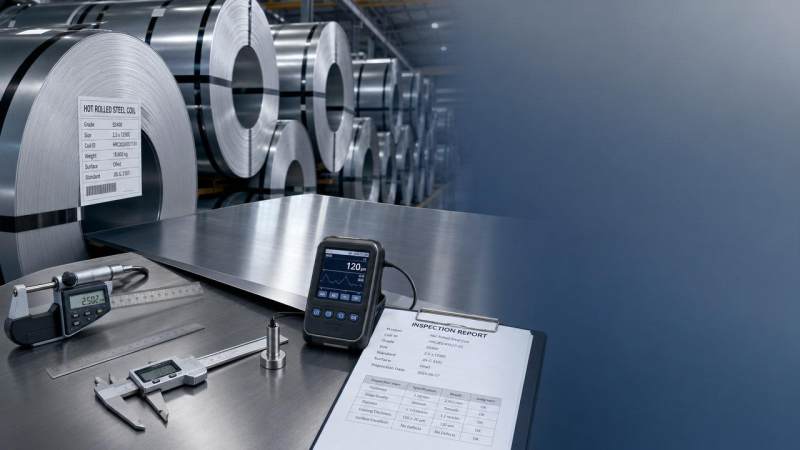
In steel sourcing, minor variation can create major downstream issues. Coil flatness, coating condition, and edge quality directly affect cutting, forming, welding, and installation results.
Checklist-based review also supports traceability. When a flat rolled steel coil shipment includes clear records, buyers can verify whether material properties match design and compliance requirements.
Core Quality Checks That Matter Most
Use the following checkpoints to assess flat rolled steel coil before acceptance, processing, or project release.
- Verify material grade first. Confirm the flat rolled steel coil matches ordered chemistry, standard designation, and heat number on test certificates and coil tags.
- Measure thickness at multiple positions. Check center and edge readings, then compare actual values with the specified tolerance and application requirement.
- Inspect width, coil ID, and OD carefully. Dimensional mismatch can interrupt slitting, roll forming, storage, and transport planning.
- Examine surface condition under good lighting. Look for scale, scratches, rust, pits, roll marks, waviness, stains, and coating damage.
- Check edge quality closely. Burrs, cracks, telescoping, and edge wave often signal handling issues or rolling defects that affect later processing.
- Review flatness and shape performance. Camber, crown, buckle, and coil set can reduce forming accuracy and increase scrap rates.
- Confirm mechanical properties through test data. Yield strength, tensile strength, elongation, and hardness must suit the intended structural or industrial use.
- Check coating mass or finish consistency when relevant. Galvanized and treated coils need uniform protection to perform in humid or corrosive environments.
- Assess packing and corrosion protection. Damaged wrapping, trapped moisture, and weak strapping can compromise flat rolled steel coil before it reaches production.
- Validate standards compliance. Compare inspection results against ASTM, EN, JIS, or GB limits instead of relying on appearance alone.
How to Read the Results
One failed item does not always mean full rejection. However, repeated deviation across thickness, shape, and surface usually indicates unstable process control.
Separate critical defects from acceptable variation. Surface stains may be manageable in hidden applications, while edge cracking can make the flat rolled steel coil unsuitable.
Inspection Points by Application Scenario
Structural and Construction Use
For framing, support members, and fabricated sections, mechanical consistency matters most. Yield strength and thickness variation directly influence load-bearing confidence.
Surface defects also matter when the flat rolled steel coil will be cut into visible panels or structural parts requiring clean welding zones.
Forming and Profile Production
Roll forming lines demand stable width, flatness, and edge condition. Even small crown or camber issues can distort profiles and slow line speed.
In many projects, flat rolled steel coil becomes channels, sections, and custom supports. For related applications, Channel Steel Supplier solutions may also be relevant, especially where Q195, Q235, Q345B, Duplex, or 304 and 316 grades are required for construction, wall beams, brackets, or lightweight roof systems.
Corrosive or Outdoor Environments
When the flat rolled steel coil is galvanized or otherwise protected, coating continuity becomes a top inspection item. Bare spots shorten service life quickly.
Related fabricated members often require tight tolerances and dependable standards. For example, channel products used with coil-based systems may need thickness from 1.5mm to 25mm, height from 80mm to 160mm, and compliance with AISI, ASTM, DIN, JIS, BS, and GB/T, especially when anti-corrosion performance and weldability are both important.
Often Missed Risks in Flat Rolled Steel Coil Evaluation
Ignoring Batch-to-Batch Variation
A compliant sample does not guarantee a compliant shipment. Test more than one coil when the order includes several heats or production dates.
Trusting Certificates Without Visual Confirmation
Mill test certificates are important, but physical inspection remains necessary. Handling damage, moisture exposure, and storage issues happen after production.
Overlooking Coil Shape During Receiving
Shape defects are often noticed only when processing starts. By then, downtime, rejects, and claims become more expensive and harder to resolve.
Using Generic Tolerances for Specialized Work
Standard tolerance may still be too loose for laser cutting, precision bending, or exposed architectural applications. Match inspection limits to actual use.
Practical Steps to Execute the Checklist
- Define the required standard, grade, dimensions, and mechanical targets before shipment leaves the mill.
- Request coil photos, packing details, and test certificates in advance for pre-arrival review.
- Sample each lot systematically, then record thickness, width, surface condition, and identification marks.
- Use calibrated gauges and documented acceptance criteria to avoid subjective judgments.
- Separate conforming and nonconforming coils immediately to prevent accidental use.
- Keep traceable records linking the flat rolled steel coil to project drawings, production orders, and inspection outcomes.
Why Supplier Process Control Still Matters
Inspection at receiving cannot replace stable manufacturing discipline. Reliable steel supply depends on controlled rolling, consistent chemistry, proper packing, and documented quality assurance.
Hongteng Fengda is a professional structural steel manufacturer and exporter from China, supporting global construction and industrial projects with dependable production capacity, strict quality control, and compliance with major international standards.
Its product scope includes angle steel, channel steel, steel beams, cold formed profiles, and customized structural steel components, helping reduce sourcing risk and improve delivery reliability.
Conclusion and Next Action
Flat rolled steel coil quality should never be judged by appearance alone. Thickness, shape, edge condition, surface integrity, mechanical properties, and standards compliance all affect final performance.
Use a written checklist for every shipment, compare results against the intended application, and document deviations before processing begins. That simple discipline improves safety, reduces scrap, and supports more predictable project execution.
When evaluating the next flat rolled steel coil order, start with the checkpoints above and confirm that supplier records, inspection data, and application requirements align from the beginning.
Please give us a message


Please enter what you want to find