When comparing electrogalvanized wire with hot-dip alternatives, durability, corrosion resistance, and long-term cost all matter. For buyers evaluating hot dip galvanized steel price, steel bar cost, or working with a reliable channel steel supplier, understanding which coating lasts longer can reduce maintenance risks and sourcing mistakes. This guide explains the key performance differences, service life factors, and application scenarios to help engineers, purchasers, and project managers make more informed steel selection decisions.
Which lasts longer in real-world use?
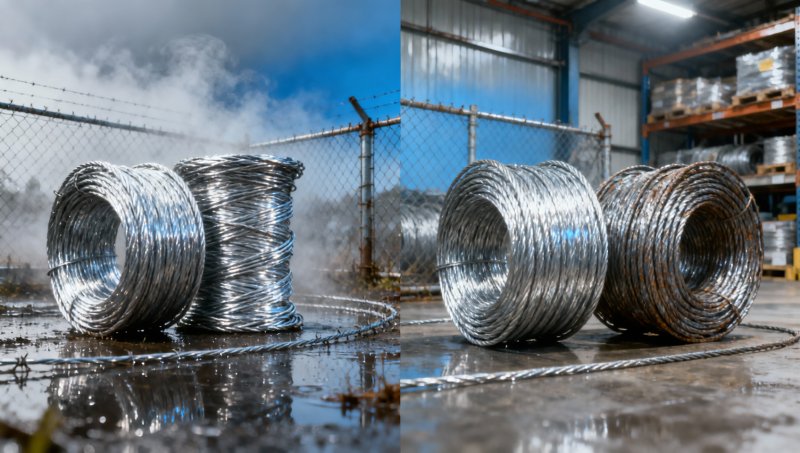
In most outdoor, humid, or industrial environments, hot-dip galvanized wire lasts longer than electrogalvanized wire. That is the short answer most buyers, engineers, and project teams need first.
The reason is simple: hot-dip galvanizing usually creates a thicker zinc coating, which gives the steel more sacrificial protection over time. Electrogalvanized wire has a cleaner and more uniform surface finish, but its zinc layer is typically thinner, so it tends to wear out faster when exposed to rain, moisture, salt, chemicals, or abrasion.
If your project priority is long service life with lower maintenance frequency, hot-dip galvanized wire is usually the safer choice. If appearance, dimensional consistency, and lower initial cost matter more than maximum outdoor durability, electrogalvanized wire may still be suitable.
What is the actual difference between electrogalvanized and hot-dip galvanized wire?
Although both products use zinc to protect steel from corrosion, the coating process is different, and that difference directly affects service life.
Electrogalvanized wire is coated through an electroplating process. The zinc layer is relatively thin, smooth, and bright. This makes it useful for indoor applications, light-duty use, and products where surface appearance matters.
Hot-dip galvanized wire is immersed in molten zinc. This usually produces a thicker coating with stronger corrosion resistance, especially in outdoor or harsh conditions. The surface may look less bright or less uniform than electrogalvanized wire, but its protective performance is generally better.
For procurement teams and technical evaluators, the decision should not be based on appearance alone. It should be based on expected exposure conditions, design life, replacement difficulty, and total ownership cost.
What factors determine how long galvanized wire will last?
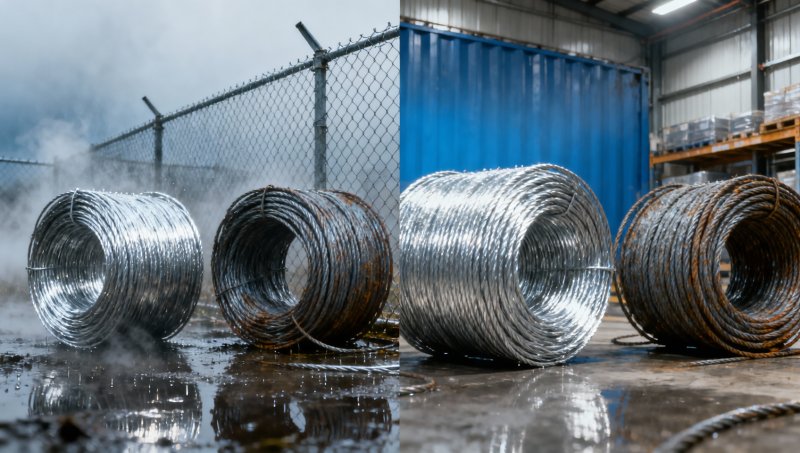
Coating type matters, but it is not the only factor. The actual lifespan of galvanized wire depends on several project-specific conditions:
- Coating thickness: Thicker zinc coatings generally provide longer corrosion protection.
- Environment: Coastal, marine, agricultural, and industrial settings are more corrosive than dry indoor areas.
- Mechanical wear: Friction, bending, vibration, and handling damage can shorten coating life.
- Wire diameter and base steel quality: Product design and raw material consistency affect long-term performance.
- Installation quality: Poor storage, cutting damage, or incorrect use can reduce effective service life.
For example, electrogalvanized wire used indoors in a dry warehouse may perform acceptably for years. The same wire used for outdoor fencing in a coastal zone may deteriorate much faster. Hot-dip galvanized wire is more forgiving in these tougher conditions.
When is electrogalvanized wire the better choice?
Electrogalvanized wire is not a poor product. It is simply better suited to different priorities. It can be the right choice when:
- The application is indoors or in a low-corrosion environment
- A smooth, bright, clean surface is preferred
- Tight dimensional control is important
- Lower upfront material cost is a key purchasing factor
- The wire is used in light manufacturing, packaging, craft, mesh, or short-to-medium service cycles
For distributors and end users, this distinction is important. Choosing a more durable coating than necessary may increase initial cost without improving project value. The correct decision depends on the real service environment, not only on product category.
When is hot-dip galvanized wire worth the extra cost?
Hot-dip galvanized wire is often worth the higher price when replacement, maintenance, corrosion failure, or safety risk would be expensive. This is especially true for:
- Outdoor fencing and barriers
- Agricultural and livestock installations
- Construction site applications
- Marine or coastal environments
- Industrial plants with moisture or chemical exposure
- Infrastructure projects that require longer design life
For project managers and financial approvers, this becomes a total cost issue rather than a unit price issue. A cheaper wire that fails early may create higher lifecycle cost through labor, downtime, replacement, warranty disputes, or safety concerns.
That same principle applies across coated steel products. In many construction and manufacturing applications, buyers also compare coating performance in sheet and coil materials. For example, products such as DX53D Galvalume Steel Coil are selected not only for base strength but also for corrosion resistance, heat reflectivity, formability, and compliance with standards such as GB, AISI, ASTM, JIS, and DIN. With yield strength of 270–300 MPa, tensile strength of 350–450 MPa, elongation of no less than 24%, and aluminium-zinc coated low-carbon steel construction, this type of material is widely used in roofs, walls, garages, pipes, modular buildings, appliances, and automotive components where coating performance strongly affects service life.
How should buyers compare service life instead of just comparing price?
If you are sourcing galvanized wire for a project or resale market, use a practical evaluation method:
- Define the service environment clearly. Indoor, outdoor, coastal, industrial, agricultural, and humid conditions should not be treated the same.
- Ask for coating specifications. Do not compare products by name only. Request zinc coating details, standards, and test data if available.
- Estimate target service life. Is the wire expected to last 2 years, 5 years, or more than 10 years?
- Calculate replacement and maintenance cost. Include labor, shutdown risk, transport, and field repair.
- Check supplier quality consistency. Stable production quality matters more than one attractive quotation.
This is where working with an experienced structural steel manufacturer and exporter can reduce sourcing risk. For buyers managing broader steel procurement beyond wire, a reliable supplier with controlled production, international standard compliance, and stable lead times can help avoid hidden quality variation and project delays.
Common mistakes that lead to the wrong wire selection
Many purchasing problems come from oversimplified comparisons. Common mistakes include:
- Assuming all galvanized wire has similar durability
- Choosing based only on initial price
- Ignoring local climate and corrosion conditions
- Overvaluing bright appearance instead of protective performance
- Failing to confirm coating thickness or applicable standards
- Using indoor-grade material for outdoor exposure
These mistakes can affect not just wire performance, but also contractor reputation, maintenance budgets, and end-user satisfaction. For distributors and resellers, wrong specification choices may also increase claims and after-sales problems.
Final answer: which one should you choose?
If your main question is which lasts longer, hot-dip galvanized wire is generally the better option. It offers stronger corrosion resistance and longer service life in most outdoor and demanding environments.
Electrogalvanized wire remains a practical choice for indoor, low-corrosion, appearance-sensitive, or budget-driven applications. The best decision depends on where and how the wire will be used, how long it needs to last, and what failure would cost your project.
For engineers, purchasers, and decision-makers, the most effective buying approach is to compare lifecycle value rather than just the initial material price. When the environment is harsh or long-term reliability matters, paying more for hot-dip galvanized wire is often the more economical decision in the long run.
Please give us a message


Please enter what you want to find