Choosing the correct electrical galvanized pipe size has become more critical as construction systems grow denser, codes tighten, and project schedules shorten.
A small sizing error can trigger conduit congestion, extra bending difficulty, poor cable pulling performance, and avoidable steel waste.
In steel-intensive industrial and commercial projects, early sizing decisions now affect not only installation speed, but also lifecycle reliability and compliance confidence.
This article explains the most common electrical galvanized pipe sizing mistakes, why they are happening more often, and how to make better specification choices from the start.
Why electrical galvanized pipe sizing errors are becoming more visible
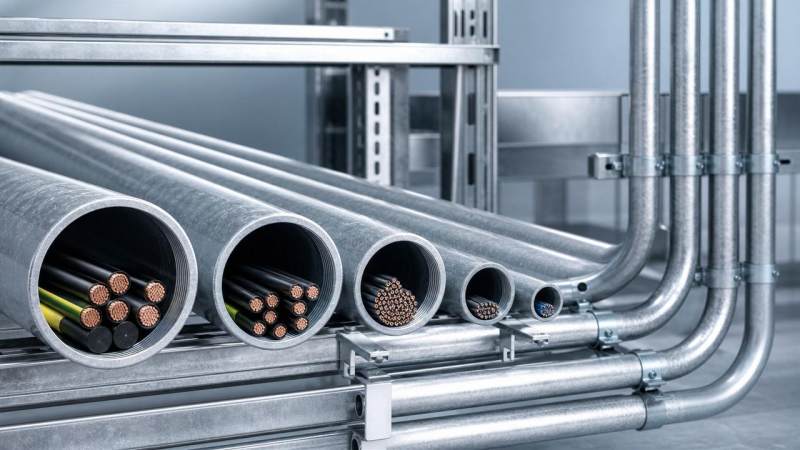
Electrical distribution layouts are no longer simple. Buildings contain more power lines, control cables, data systems, and retrofit pathways than before.
That complexity makes electrical galvanized pipe selection more sensitive to internal diameter, wall thickness, routing length, and future expansion needs.
At the same time, international projects often mix ASTM, EN, JIS, and GB references. Misreading nominal size versus actual dimensions causes frequent confusion.
Another trend is cost pressure. Teams may downsize electrical galvanized pipe to save material, but that short-term decision often increases labor and replacement costs later.
The strongest trend signals behind wrong electrical galvanized pipe choices
Several market and technical shifts are driving these mistakes more often across steel construction and industrial installation work.
Early electrical galvanized pipe sizing mistakes that cause later failures
1. Confusing nominal size with usable internal space
One of the most common mistakes is assuming nominal electrical galvanized pipe size directly reflects the available internal area for cables.
In reality, wall thickness, coating, and manufacturing standard all affect internal clearance. This becomes critical in longer runs or multi-cable installations.
2. Ignoring conduit fill limits
Electrical galvanized pipe must be sized with proper fill ratios, not only by counting cable quantity.
Cable diameter, insulation thickness, bend count, and pulling tension all matter. A pipe that looks acceptable on paper may fail during installation.
3. Forgetting future circuit expansion
Projects often leave no spare capacity. Later upgrades then require new routing, extra supports, or partial demolition.
Sizing electrical galvanized pipe only for today’s cable load increases total ownership cost over the structure’s life.
4. Misjudging bending and threading requirements
Larger electrical galvanized pipe may appear safer, but oversized selections can increase bending difficulty, space conflict, and connection complexity.
Undersized pipe creates the opposite problem. Both extremes reduce field efficiency and can damage cable jackets during pulling.
5. Overlooking environmental exposure
Indoor dry areas, humid process plants, coastal facilities, and outdoor structures create different demands for wall thickness and galvanizing durability.
The correct electrical galvanized pipe size should be matched with corrosion resistance requirements, support spacing, and expected mechanical impact.
Why these sizing mistakes affect more than one business function
Wrong electrical galvanized pipe sizing does not stay limited to one installation team. It influences several project stages at once.
- Engineering faces redesign work when routing space or fill rules are missed.
- Procurement may reorder materials because standard lengths or diameters were selected incorrectly.
- Fabrication experiences schedule delays when supports and brackets no longer fit.
- Site installation slows due to hard cable pulling, extra couplings, or alignment problems.
- Maintenance teams inherit systems with little spare capacity for future circuits.
In steel structure projects, the conduit decision also links with supporting members, opening coordination, and equipment access routes.
For this reason, some projects review electrical galvanized pipe routing together with structural framing during the early layout stage.
When steel support design is considered early, integrated members such as H-beam sections can help organize service pathways efficiently.
In heavy-duty applications, these structural sections offer strong bending resistance, simple construction, and flexible lengths from 1m to 12m as required.
Compliance with standards such as JIS G3101, EN10025, ASTM A36, ASTM A572, and ASTM A992 supports cross-market coordination in steel framing systems.
The practical factors that should guide electrical galvanized pipe sizing now
A better sizing decision usually comes from checking several variables together instead of focusing on diameter alone.
Key sizing checkpoints
- Number and type of conductors in each run
- Insulation thickness and cable pulling difficulty
- Run length and total bend count
- Moisture, chemicals, and outdoor exposure
- Local code requirements and target market standards
- Future spare capacity expectations
- Compatibility with supports, brackets, and steel openings
What deserves closer attention when sourcing steel products globally
Global sourcing adds another layer of risk to electrical galvanized pipe specification.
Suppliers may describe dimensions by outside diameter, nominal bore, or trade size. Galvanizing quality and tolerance control can also vary by production line.
It is important to request full dimensional data, coating details, steel grade references, and applicable standards before confirming the order.
Reliable steel partners with stable manufacturing and quality control reduce the chance of mismatch between design intent and delivered product.
Hongteng Fengda, a structural steel manufacturer and exporter from China, supports global projects with consistent production, customized solutions, and standard-compliant steel products.
That kind of supply capability helps lower sourcing risk when electrical galvanized pipe installation must align with broader steel structure requirements.
How to reduce electrical galvanized pipe sizing mistakes before installation starts
- Confirm the governing standard and size basis at drawing stage.
- Calculate conduit fill using actual cable data, not estimates.
- Review run length, bend count, and pull tension together.
- Reserve practical spare capacity for future system changes.
- Coordinate conduit routes with structural steel and access clearances.
- Verify delivered electrical galvanized pipe dimensions against approved specifications.
These checks are simple, but they prevent expensive corrections later. They also improve installation flow and help maintain code confidence throughout the project.
The next smart move is to treat sizing as an early coordination decision
Electrical galvanized pipe sizing should no longer be treated as a minor purchasing detail.
It is now an early coordination issue tied to cable safety, steel structure planning, labor efficiency, and long-term adaptability.
By checking standards, fill limits, routing conditions, and future needs upfront, projects can avoid the most common electrical galvanized pipe mistakes early.
The best results come from combining accurate technical review with dependable steel supply support before installation begins.
Please give us a message


Please enter what you want to find