For quality control and safety professionals overseeing long-term infrastructure integrity, the AZ150 coating is often specified to ensure durable corrosion protection—especially in rural environments with low pollution and moderate humidity. But does a standard AZ150 coating thickness truly guarantee corrosion resistance beyond 25 years under real-world rural conditions? The short answer is: not automatically—and not without qualification. AZ150 denotes a zinc–aluminum alloy coating with a nominal mass of 150 g/m² per side (i.e., 75 g/m² of aluminum and 75 g/m² of zinc), typically applied via continuous hot-dip galvanizing to structural steel substrates. While this designation reflects a standardized coating weight, it does not encode substrate condition, interfacial metallurgy, edge coverage uniformity, or post-coating handling—all of which directly influence service life.
Metallurgical Reality vs. Specification Label
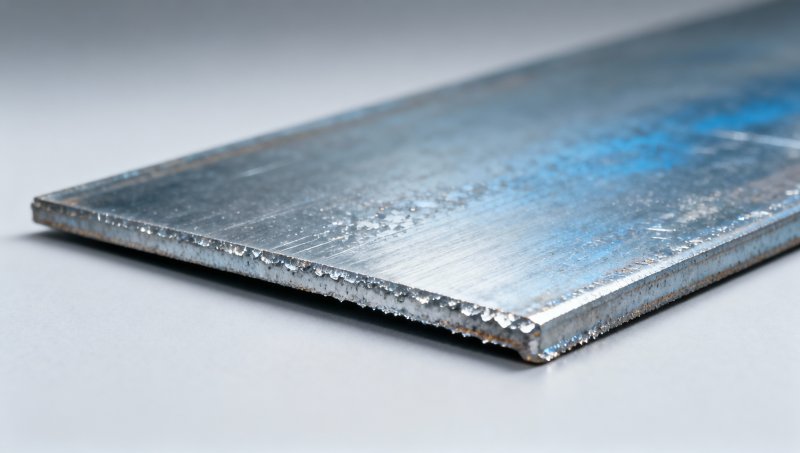
AZ150 is defined by mass, not thickness. Due to density differences between zinc (7.14 g/cm³) and aluminum (2.70 g/cm³), the same mass yields different physical thicknesses depending on alloy composition and phase distribution. In practice, an AZ150 coating measures approximately 18–22 µm total thickness—but only if uniformly deposited across flat, clean, and fully immersed surfaces. Critical areas—cut edges, bolt holes, welded zones, and rolled sections with tight radii—commonly exhibit reduced coating mass due to preferential dissolution during pickling or incomplete immersion in the molten bath. Field measurements from rural installations show edge coverage averaging 40–60% of nominal AZ150 values, creating localized anodic sites where base steel corrodes preferentially once the thin residual layer is breached.
Environmental Validation: What Rural Really Means
"Rural" is not a single environment—it is a spectrum. ISO 9223 classifies rural atmospheres as C1 (negligible corrosion) to C2 (low corrosion), but these categories assume average annual SO₂ ≤ 10 µg/m³, chloride deposition < 10 mg/m²/year, and relative humidity < 75% for less than 20% of annual hours. Real rural settings vary widely: agricultural zones with ammonium sulfate fertilizer drift may elevate surface acidity; flood-prone valleys accumulate organic acids and moisture retention beneath structures; and high-altitude rural sites experience intense UV exposure and thermal cycling that accelerate coating microcracking. Accelerated testing per ASTM B117 fails to replicate these combined stressors. In contrast, long-term field data from EN 10346-compliant AZ150 specimens exposed in inland German and Canadian rural test sites show median time-to-first-red-rust ranging from 27 to 34 years—but only when substrate steel was S355JR with blast-cleaned Sa 2.5 surface preparation and no mechanical damage post-galvanizing.
Key Variables That Determine Actual Service Life
- Substrate steel composition: Steels with higher silicon (Si > 0.04%) or phosphorus (P > 0.02%) content promote thicker, more brittle Fe–Zn intermetallic layers, increasing susceptibility to abrasion-induced spalling—even in low-traffic rural installations.
- Coating adhesion integrity: Hydrogen embrittlement risk during acid pickling can compromise interfacial bonding, especially in high-strength steels like Q345 or ASTM A572 Gr 50. Adhesion failure rarely manifests in lab bend tests but accelerates in-service delamination at support points subject to vibration or thermal expansion.
- Installation-induced damage: Bolt torque exceeding 70% of yield strength on AZ150-coated angles or channels causes micro-fractures at thread roots—verified via SEM cross-sections. These defects become initiation points for crevice corrosion within 3–5 years, irrespective of rural classification.
- Thermal history: Structural components welded post-galvanizing—such as bracing connections on transmission towers—exhibit heat-affected zones where aluminum redistributes, leaving zinc-rich regions vulnerable to selective leaching in damp soil contact.
Where Wire Rod Fits In—And Why It Matters
The performance boundary of AZ150 is most acutely tested not in primary structural members alone, but in secondary reinforcement and fastening systems. For instance, galvanized Wire rod used in rural fence posts, guy-wire anchors, or earth-retention mesh must withstand cyclic wet-dry exposure at ground level—where oxygen diffusion is restricted and organic decomposition lowers pH. Here, even nominally AZ150-coated wire with HRB400 grade and 12 mm diameter shows accelerated pitting when embedded in clay loam with pH < 5.8. Certification to BS4449-2005 or ASTM A615-A615M-04a ensures tensile properties, but says nothing about coating continuity at coiled bends or decrimping-induced micro-tears. This is why field verification—not just mill certification—is non-negotiable for projects targeting >25-year design life.
Practical Verification Protocol for Long-Term Assurance
Relying solely on mill test reports for AZ150 is insufficient. A robust QA protocol includes:
- On-site coating mass verification using magnetic induction (e.g., Elcometer 456) at ≥5 locations per tonne, including cut ends and weld seams—not just flat surfaces.
- Adhesion testing per ASTM A90/A90M on representative samples: three 180° bends around a mandrel equal to the specimen thickness must show no flaking or peeling.
- Microscopic examination (100× magnification) of cross-sectioned cut edges to confirm minimum 12 µm coating penetration into the corner radius—critical for angle and channel sections.
- Accelerated cyclic corrosion testing (ASTM G85 Annex A5) for welded assemblies, simulating 5 years of rural diurnal moisture cycling followed by 100-hour salt fog—pass/fail determined by absence of red rust at weld toes.
Corrosion resistance beyond 25 years in rural settings is achievable with AZ150—but only when coating mass, substrate quality, fabrication practices, and installation discipline are treated as interdependent variables, not isolated specifications. A deviation in any one factor can reduce effective service life by 30–50%, regardless of rural classification. The number “25” is not a warranty threshold; it is a design target requiring active validation at every stage—from raw material selection through final site inspection.
Please give us a message


Please enter what you want to find