When reviewing structural steel specifications for compliance and safety, one critical question arises: Does every production batch require tensile strength testing? For quality control and safety managers overseeing global construction or industrial projects, understanding the testing requirements embedded in ASTM, EN, JIS, and GB structural steel specifications is essential—not only for regulatory adherence but also for mitigating project risk. At Hongteng Fengda, a certified structural steel manufacturer and exporter from China, we align all testing protocols with international standards and client-specific QA/QC plans. This article clarifies when batch-level tensile testing is mandatory—and when representative sampling suffices—helping you balance rigor, efficiency, and compliance.
What Structural Steel Specifications Actually Require
Structural steel specifications are not monolithic documents—they are performance-based frameworks that define mechanical properties, chemical composition limits, dimensional tolerances, and verification methods. Tensile strength is among the most fundamental mechanical parameters, directly influencing load-bearing capacity, ductility, and failure mode prediction. However, no major international standard mandates 100% batch-level tensile testing as a universal rule. Instead, requirements are calibrated by product type, heat treatment condition, production volume, and application criticality.
For example, ASTM A6/A6M (general requirements for rolled structural steel) specifies that tensile tests shall be conducted on one specimen per heat—not per batch—provided the heat is defined as a single ladle or continuous casting pour. Similarly, EN 10025-2 requires one tensile test per 60 tonnes of material for hot-rolled structural steels like S235JR or S355J2, with exceptions for small heats (<20 tonnes), where a minimum of one test per heat still applies. These thresholds reflect decades of statistical process control experience: consistent melting, rolling, and cooling practices reduce inter-batch variability to statistically acceptable levels.
GB/T 700 and GB/T 1591 in China follow comparable logic—requiring mechanical testing per heat treatment lot rather than per shipment or packaging unit. This distinction is operationally vital: a “batch” may refer to 25 tonnes of angle steel packed for export, while the underlying “heat lot” could span 120 tonnes across three rolling shifts. Confusing these terms leads to redundant testing, inflated costs, and delayed inspections without added safety benefit.
How Testing Frequency Varies Across Key Standards
Comparative Requirements for Tensile Verification
The table below summarizes tensile testing frequency requirements across four major structural steel specifications—highlighting both common ground and critical divergences relevant to global procurement and QA/QC planning.
This comparative view reveals an industry-wide consensus: tensile verification is tied to metallurgical consistency (i.e., heat origin), not logistics units. It also underscores why Hongteng Fengda maintains full traceability from ladle analysis to final mill certificate—enabling precise alignment between test reports and delivery documentation. For safety-critical applications—such as seismic bracing or offshore platforms—clients may specify additional tensile sampling (e.g., one per 20 tonnes), which we accommodate through our ISO 9001-certified QA system and dual-lab verification capability.
Beyond Tensile: The Role of Supplementary Mechanical Verification
While tensile strength anchors structural steel specifications, it is rarely evaluated in isolation. Yield strength, elongation at break, and reduction of area are co-reported metrics—each carrying distinct implications for design safety margins and fabrication behavior. For instance, EN 10025-2 requires elongation ≥22% for S355JR at 16 mm thickness; falling below this—even with acceptable tensile strength—triggers rejection due to insufficient ductility for plastic hinge formation in moment-resisting frames.
Impact testing (Charpy V-notch) adds another layer: ASTM A572 Grade 50 demands minimum 27 J at –20°C for structural members in cold-climate bridges. In such cases, tensile testing remains per-heat, but impact verification may require extra specimens from different locations within the same heat to confirm through-thickness uniformity. This layered verification strategy reflects how structural steel specifications embed functional performance—not just numbers—into their compliance logic.
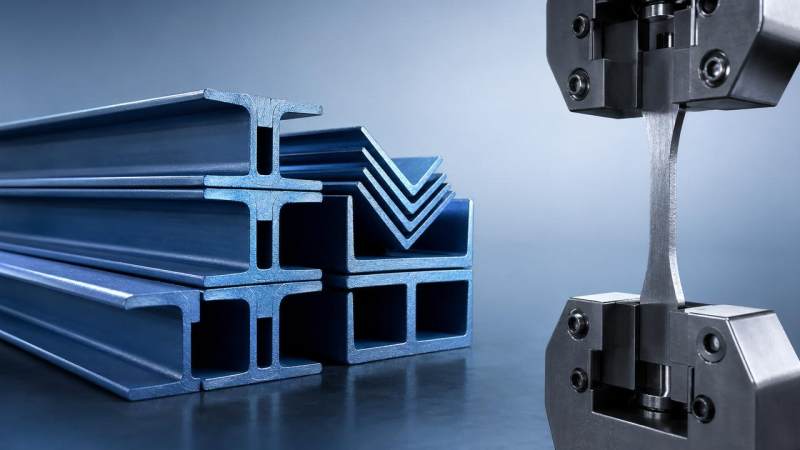
Practical Guidance for Quality and Safety Managers
For professionals responsible for incoming inspection or third-party audit coordination, here are five evidence-based practices grounded in real-world structural steel specifications:
- Verify heat identification first: Confirm that mill test reports (MTRs) explicitly link tensile results to ladle number, heat number, and rolling date—not just order or container ID.
- Distinguish “batch” from “lot” in contracts: Specify in procurement documents whether “batch” refers to heat lot, rolling lot, or shipping lot—avoiding ambiguity during dispute resolution.
- Require certified lab accreditation: Ensure tensile tests are performed by labs accredited to ISO/IEC 17025, with documented calibration records traceable to NIST or equivalent national standards.
- Review dimensional conformity alongside mechanical data: ASTM A6 permits ±0.5 mm tolerance on flange thickness for W-shapes—but exceeding this may invalidate tensile assumptions due to localized stress concentration.
- Leverage supplementary products for high-corrosion environments: Where structural integrity must persist under aggressive exposure, consider integrating corrosion-resistant solutions such as Galvanized Steel Wire Rope, engineered for long-term tensile retention across mining, marine, and photovoltaic infrastructure applications.
Hongteng Fengda supports this rigor with full MTR transparency, digital traceability dashboards, and optional witnessed testing at our Tianjin facility—reducing QA cycle time by up to 40% compared to third-party-only workflows.
Why Partner with Hongteng Fengda for Structural Steel Compliance
As a structural steel manufacturer and exporter from China, Hongteng Fengda bridges global specification complexity with operational discipline. We produce angle steel, channel steel, steel beams, cold-formed profiles, and custom components—all verified against ASTM, EN, JIS, and GB structural steel specifications. Our integrated QA system includes in-line ultrasonic testing, automated dimensional scanning, and dual-source tensile validation across three independent laboratories.
With stable monthly output exceeding 18,000 tonnes and lead times consistently held to 25–35 days from PO confirmation, we help quality and safety managers eliminate supply-chain uncertainty—without compromising on test integrity. Every order includes a full suite of documentation: mill test reports, chemical analysis certificates, dimensional compliance summaries, and, where required, witnessed test logs.
Contact us today to discuss your specific structural steel specifications, review sample MTR formats, confirm certification alignment for your target market (e.g., CE marking for EU, ASTM compliance for North America), or request pre-shipment tensile verification for critical-path deliveries.
Please give us a message


Please enter what you want to find