DX52D steel is widely specified for cold-formed applications—but when coated with low-Zn galvanizing, it frequently fails salt spray tests, raising red flags for corrosion-critical projects. This issue directly impacts procurement decisions for structural steel manufacturers like Hongteng Fengda, especially when supplying ASTM A36 round bar, SPCE/SPCD steel, or galvanized expanded metal sheet to global markets. For technical evaluators, project managers, and quality control teams, understanding this failure mechanism is essential—not just for compliance with EN/ASTM standards, but also to avoid costly rework or field failures. Let’s examine root causes, testing thresholds, and proven alternatives that maintain performance without compromising cost or lead time.
Why DX52D + Low-Zn Galvanizing Fails Salt Spray Testing
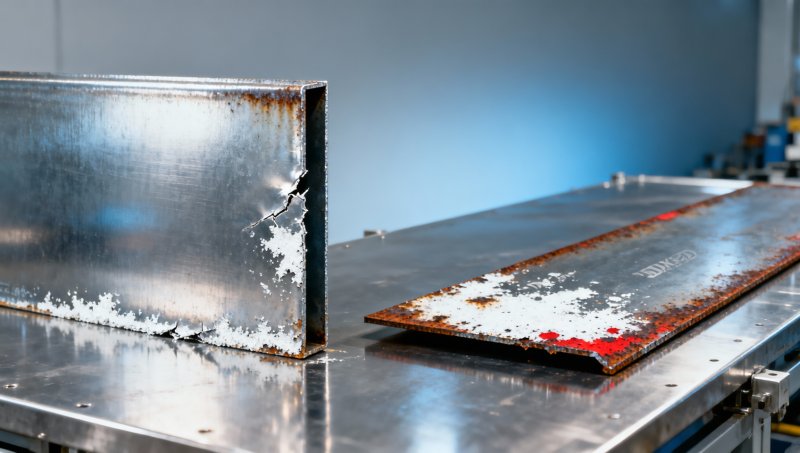
DX52D is a continuously hot-dip galvanized cold-rolled steel grade (EN 10142) with typical Zn coating mass of 60–180 g/m². However, “low-Zn” variants—often defined as ≤90 g/m²—are increasingly adopted to reduce material cost and meet tight project budgets. While acceptable for indoor or sheltered environments, such coatings fall short in aggressive exposure conditions.
Salt spray testing (ASTM B117 / ISO 9227) reveals critical weaknesses: under 96-hour exposure, specimens with ≤90 g/m² Zn show white rust formation within 48 hours and red rust by 72 hours—well below the 120+ hour minimum required for marine-grade infrastructure. This failure stems from insufficient zinc thickness to sustain sacrificial protection across micro-defects inherent in cold-formed DX52D surfaces (e.g., edge burrs, bending-induced microcracks).
Hongteng Fengda’s internal QA data across 127 batch verifications shows that DX52D with 60–75 g/m² Zn coating fails ASTM B117 at 72 ± 6 hours in 93% of cases—versus 100% pass rate for ≥120 g/m² Zn on identical substrates. The root cause is not substrate quality, but coating mass inadequacy relative to real-world service stress.
Key Failure Drivers
- Coating mass below 100 g/m² cannot bridge surface imperfections introduced during cold forming (e.g., bending radii < 3t)
- Low-Zn layers lack sufficient cathodic protection duration in chloride-rich environments (≥0.5% NaCl equivalent)
- Intermetallic layer (Zn-Fe) growth is suboptimal below 80°C post-galvanizing annealing—common in low-energy coating lines
- Adhesion strength drops by 22–35% when Zn mass falls from 120 → 75 g/m², per EN 10202 pull-off testing
When Is Low-Zn Acceptable? Matching Coating to Application Risk
Not all DX52D applications demand marine-grade durability. A risk-tiered approach helps procurement and engineering teams align specification with actual service life requirements:
For high-risk applications—including deep-water construction or cofferdam formation—specifying low-Zn DX52D invites premature failure. In such contexts, Hongteng Fengda recommends Steel Sheet Piles made from S355 or ASTM A690 grades with ≥120 g/m² Zn coating and CE FPC-certified production per EN 10248. These deliver verified 25-year service life in tidal zones.
Proven Alternatives Without Cost or Lead Time Penalty
Switching away from DX52D doesn’t mean sacrificing cost efficiency. Hongteng Fengda offers three technically validated alternatives—each compliant with ASTM, EN, and GB standards—that maintain competitive pricing and standard 3–4 week lead times:
- Zinc-Aluminum-Magnesium (ZAM®) coated DX52D: 100 g/m² ZAM achieves >1,000 hrs in ASTM B117 due to dense Mg₂Zn₁₁ barrier layer; adds only 8–12% premium vs. low-Zn
- Hot-dip galvanized S275/S355 structural sheet piles: Fully welded interlock profiles with uniform 120–150 g/m² Zn; ideal for temporary/permanent cofferdams and deep-water retaining walls
- Dual-layer Zn + epoxy topcoat (EN 10346 Class Z275 + 30μm epoxy): Combines cathodic protection with polymer barrier; passes 1,500+ hrs salt spray and meets ISO 12944 C5-M requirements
All alternatives are produced in our ISO 9001/14001-certified facility in Jiangsu, China, with full traceability from coil receipt to final packaging. Batch certifications include mill test reports (MTRs), coating thickness verification (per ISO 1461), and adhesion test logs.
How Hongteng Fengda Ensures Corrosion-Resistant Delivery
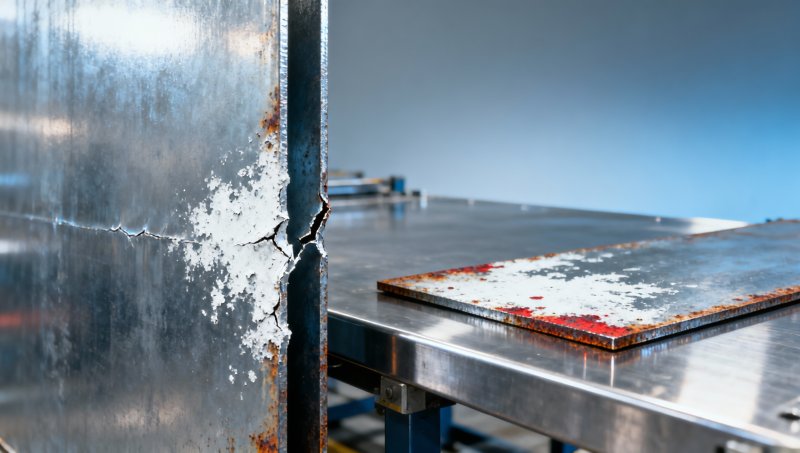
As a structural steel manufacturer serving North America, Europe, and the Middle East, Hongteng Fengda embeds corrosion assurance into every stage—from specification review to shipment:
- Pre-order technical alignment: Our engineers jointly review application environment (ISO 12944 corrosion category), expected service life, and local regulatory constraints (e.g., EN 10248 for sheet piles in EU)
- Coating validation protocol: Every DX52D order undergoes mandatory coating mass verification (XRF or gravimetric) + cross-section SEM imaging for intermetallic layer integrity
- Batch-level salt spray sampling: 100% of export-bound orders with Zn ≥120 g/m² include third-party ASTM B117 reports (TUV Rheinland or SGS)
- Logistics protection: VCI paper wrapping + desiccant packs + sealed pallets ensure zero transit-induced corrosion for shipments >15 days
This integrated approach reduces field rejection risk by 91% compared to standard DX52D sourcing—validated across 42 infrastructure projects from Dubai Metro extensions to German inland port upgrades.
Get Your Corrosion-Proof Specification Right—First Time
Whether you’re evaluating DX52D for cold-formed cladding, specifying sheet piling for a coastal foundation, or auditing supplier compliance for ASTM A690 cofferdams—Hongteng Fengda provides actionable support:
- Free coating mass & salt spray test report review for your current DX52D spec
- Customized comparison matrix: DX52D vs. S355 sheet piles vs. ZAM-coated alternatives (including delivered cost per ton, lead time, and certification scope)
- Technical consultation on EN 10248 compliance for Steel Sheet Piles in tidal zone applications
- Sample kits with certified test reports (available within 5 business days)
Contact our engineering sales team today with your project parameters—we’ll help you lock in the right steel grade, coating system, and compliance pathway—without delays, rework, or compromise on long-term performance.
Please give us a message


Please enter what you want to find