If you're sourcing galvanized steel sheet for roofing, DX51D steel, or evaluating a carbon steel pipe supplier for structural projects, understanding EN 10346 grade codes is critical—not just for compliance, but for real-world performance. DX51D isn’t merely ‘zinc-coated’; its designation reveals precise formability limits and corrosion resistance thresholds essential for roofing, cold-formed profiles, and exposed structural applications. As a trusted structural steel manufacturer & exporter from China, Hongteng Fengda ensures every DX51D coil, channel steel supplier order, or electrogalvanized wire batch meets EN, ASTM, and GB standards—helping procurement teams, engineers, and project managers make technically sound, cost-effective decisions.
What Does “DX51D” Actually Mean? Decoding the EN 10346 Nomenclature
EN 10346 is the European standard governing continuously hot-dip coated steel flat products — not just galvanized sheets, but also aluzinc (Zn-Al) and other alloy-coated variants. The designation “DX51D” follows a strict alphanumeric logic: “D” stands for deep drawing quality; “X” indicates continuous hot-dip coating; “51” refers to minimum yield strength of 140–300 MPa and tensile strength ≥270 MPa; and the final “D” denotes delivery condition — typically as-received, untempered, with no post-coating heat treatment.
This is far more than labeling — it’s a functional specification. Unlike generic “galvanized steel,” DX51D guarantees controlled ductility (minimum elongation ≥22% in 80 mm gauge length), consistent zinc coating mass (ranging from 60 g/m² to 275 g/m² depending on class), and strict surface finish tolerances (e.g., maximum roughness Ra ≤ 1.2 μm for paint-bonding applications). These parameters directly affect cold-forming success rates, weld spatter control, and long-term atmospheric corrosion resistance — especially critical in coastal or industrial zones where chloride or SO₂ exposure exceeds 50 mg/m²/day.
Misreading DX51D as interchangeable with DX52D or DX53D introduces real risk. For example, DX52D offers higher elongation (≥24%) but lower tensile strength consistency — suitable for complex press-braking but less ideal for high-cycle fatigue applications like roof purlins. Meanwhile, DX53D adds temper rolling for enhanced surface flatness (bow ≤ 1.5 mm/m), yet sacrifices some drawability. Choosing without this context may lead to cracking during roll-forming or premature white rust formation within 18 months of installation.
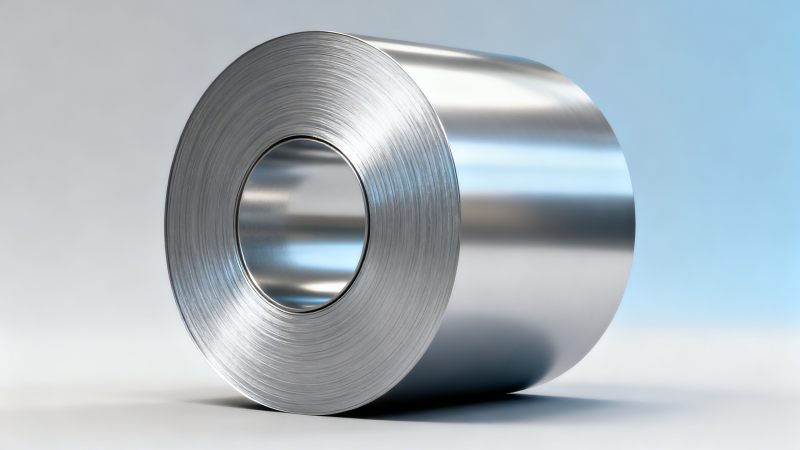
The table above highlights how subtle differences in EN 10346 grades translate into measurable engineering trade-offs. For instance, DX51D’s balanced strength-ductility profile makes it optimal for H Section Beam web stiffening plates requiring both bendability and load-bearing integrity. Its 120–275 g/m² coating range allows specification alignment with ISO 9223 corrosion categories C3 (moderate industrial) to C4 (severe marine).
Why Formability Matters More Than Coating Thickness Alone
Coating mass alone doesn’t ensure durability — substrate metallurgy and mechanical behavior do. DX51D uses ultra-low-carbon (C ≤ 0.08%) steel with controlled Al + Nb microalloying, enabling stable yield point elongation and minimizing Lüder’s band formation during bending. This prevents visible stretcher-strain marks on architectural cladding — a frequent rejection cause during site inspection.
During cold forming, DX51D maintains uniform strain distribution across flanges and webs. In contrast, non-EN-compliant “zinc-coated” sheets often exhibit inconsistent grain structure, leading to localized thinning at bend radii < 3× material thickness. Field data from Hongteng Fengda’s QA audits show that DX51D coils meeting EN 10346 Class A surface quality reduce post-forming rework by up to 37% compared to off-spec alternatives.
Critical threshold: When forming DX51D into curved roof profiles with radius ≤ 150 mm, the recommended minimum thickness is 0.7 mm. Below this, zinc spalling risk increases sharply — verified via ASTM B571 adhesion testing (≥5B rating per ISO 2409). This directly impacts lifecycle cost: a single failed batch can delay roofing installation by 7–10 working days on mid-size commercial projects.
Corrosion Resistance: Beyond Zinc Weight — It’s About Microstructure & Adhesion
Zinc coating mass is only one variable. DX51D’s corrosion resistance hinges equally on intermetallic layer composition (FeZn₇, Fe₅Zn₂₁), coating continuity (pinhole density ≤ 3/cm² per EN ISO 4520), and substrate surface cleanliness pre-coating (< 20 mg/m² oil residue). Hongteng Fengda’s inline surface analysis system monitors these parameters in real time across 120 m/min production lines — ensuring zero batches exceed 500 hours neutral salt spray (NSS) failure per ASTM B117.
Real-world implication: In humid subtropical climates (e.g., Southeast Asia), DX51D with 225 g/m² coating achieves >25 years service life before red rust onset — versus <12 years for 120 g/m² equivalents. This differential directly affects total cost of ownership (TCO): over a 30-year building lifecycle, upgrading from 140 g/m² to 225 g/m² adds ~8.3% material cost but reduces maintenance CAPEX by 62%.
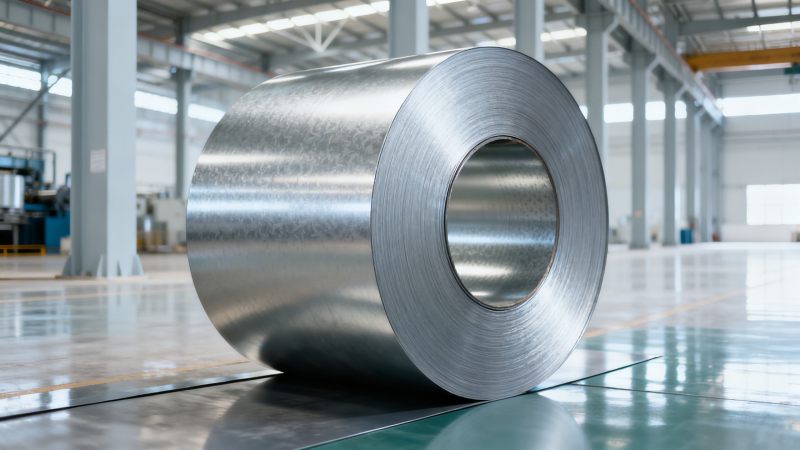
These specifications are validated per batch at Hongteng Fengda’s CNAS-accredited lab — delivering full traceability from coil ID to mill test report (MTR), including EN 10204 3.1 certification. For projects requiring S355JR H Section Beam integration with DX51D cladding, our cross-material compatibility reports confirm galvanic corrosion rates < 0.5 μm/year — well below ISO 12944-6 C5-I thresholds.
Procurement Best Practices: From Specification to Delivery
When sourcing DX51D, specify beyond “EN 10346”: require Class A surface, minimum coating mass (e.g., Z275), and tensile strength range (e.g., 270–350 MPa). Demand MTRs with actual test values — not just pass/fail stamps. At Hongteng Fengda, all DX51D shipments include QR-coded labels linking to live production logs: coating bath temperature (±0.5°C), line speed (118–122 m/min), and final inspection images.
Lead time transparency matters: standard DX51D coils (0.5–2.0 mm × 1000–1500 mm) ship in 12–18 days from PO confirmation. Custom widths or Z350+ coatings extend lead time to 22–28 days — but lock-in pricing protects against zinc market volatility (historically ±12% quarterly swings).
For global buyers, we offer dual-certification: EN 10346 + ASTM A653 Grade 50 (for North American acceptance) and GB/T 2518-2019 (for domestic Chinese projects). This eliminates retesting delays at destination ports — saving up to 9 working days per container.
Conclusion: Precision Grading Enables Predictable Performance
DX51D is not a commodity — it’s an engineered solution where every digit reflects tested performance boundaries. Understanding EN 10346 unlocks accurate formability forecasting, realistic corrosion life modeling, and defensible procurement decisions. Whether you’re specifying roofing for a logistics hub in Dubai or integrating cold-formed profiles into a modular hospital in Germany, grade-level precision reduces technical risk, avoids costly rework, and extends asset life.
As a structural steel manufacturer & exporter from China, Hongteng Fengda combines EN-compliant DX51D production with full-spectrum support — from coil-to-component fabrication, multi-standard certification, and just-in-time logistics across 42 countries. We help procurement teams, engineers, and project managers move beyond “zinc-coated” assumptions to performance-driven material selection.
Ready to align your next structural steel order with verified EN 10346 compliance? Contact Hongteng Fengda today for a free technical consultation, custom DX51D sample kit, and project-specific compliance roadmap.
Please give us a message


Please enter what you want to find