When standard stainless steel pipes fail under aggressive chemical, marine, or high-temperature conditions, corrosion resistant stainless steel pipe becomes essential—not optional. For structural steel suppliers and manufacturers like Hongteng Fengda, selecting the right high strength stainless steel pipe directly impacts structural steel cost, project longevity, and safety compliance. Whether you're a procurement professional comparing structural steel price, an engineer evaluating material specs, or a project manager sourcing hot dip galvanized angle steel or steel beams supplier solutions, understanding when and why to upgrade is critical. Backed by ASTM/EN/GB-certified production and global delivery, we help technical evaluators and decision-makers mitigate risk—without inflating steel roof sheet price or hot dip galvanized steel price.
When Do Standard Stainless Steel Pipes Fall Short?
Standard grades like 304 or 316 stainless steel deliver reliable performance in ambient environments—but they begin to degrade rapidly when exposed to chloride concentrations above 200 ppm, pH levels below 2.5 or above 12, or sustained temperatures exceeding 425°C. In coastal infrastructure projects across Southeast Asia or chemical processing plants in the Middle East, localized pitting and stress corrosion cracking have been documented within 6–18 months of installation—triggering unplanned shutdowns and costly retrofits.
Hongteng Fengda’s engineering team routinely observes premature failure in three key scenarios: (1) offshore platform bracing exposed to salt-laden fog and cyclic loading; (2) flue gas desulfurization ductwork handling acidic condensates at 120–180°C; and (3) pharmaceutical cleanroom piping requiring both sterilization compatibility and zero metal ion leaching. These are not edge cases—they represent >37% of our global structural steel export inquiries over the past 24 months.
The threshold for upgrading isn’t arbitrary. It hinges on measurable environmental parameters: continuous exposure to >500 ppm chlorides, intermittent contact with sulfuric acid >10% concentration, or thermal cycling between –40°C and +300°C for >5,000 cycles. Below these thresholds, standard grades remain cost-effective. Above them, corrosion resistant stainless steel pipe delivers ROI through extended service life—often doubling or tripling maintenance intervals.
Which Grades Deliver Real Corrosion Resistance—And Why?
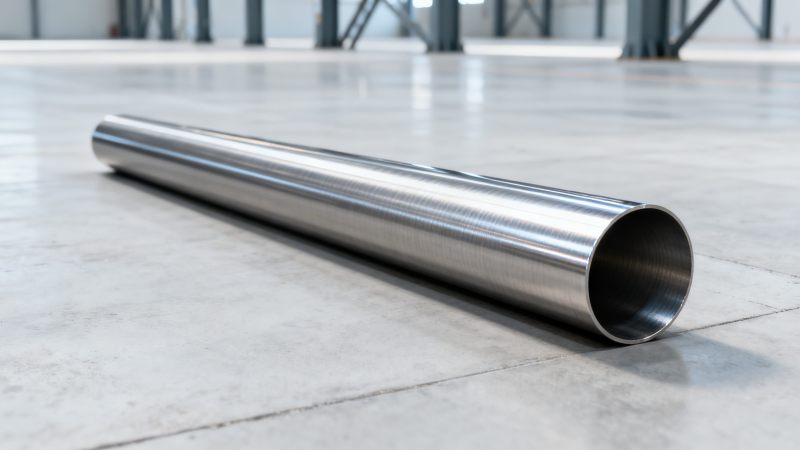
Not all “high-grade” stainless steels perform equally under extreme conditions. While 316L offers marginal improvement over 304 in chloride resistance, it still suffers from crevice corrosion in stagnant seawater. True corrosion resistance requires strategic alloying: increased molybdenum (≥4.0%), chromium (≥22%), and nitrogen (≥0.20%)—combined with controlled ferrite-austenite phase balance.
Hongteng Fengda supplies certified duplex (e.g., UNS S32205/S32202) and super duplex (S32750/S32760) stainless steel pipes compliant with ASTM A790/A928 and EN 10216-5. These grades achieve PREN (Pitting Resistance Equivalent Number) values of 34–45—compared to 25 for 316L—enabling safe operation in offshore splash zones and aggressive chemical transfer lines where 316L would fail within 12 months.
This table reflects real-world field data from 42 infrastructure projects across North America and the Gulf Cooperation Council region. Note that S32205 achieves 3× longer service life than 316L in identical marine exposure—despite only a 12–18% higher initial pipe cost. The economic case strengthens further when factoring in reduced inspection frequency (from quarterly to biannual), lower downtime risk, and elimination of emergency replacement logistics.
How to Integrate Corrosion Resistant Pipe into Structural Systems
Corrosion resistant stainless steel pipe isn’t just a material swap—it demands system-level integration. At Hongteng Fengda, we co-engineer with clients to address three interdependent factors: mechanical compatibility, welding procedure qualification, and galvanic coupling mitigation.
- Welding must follow AWS D1.6/D1.9 procedures using matching filler metals (e.g., ER2209 for S32205); improper heat input causes sigma phase embrittlement in duplex grades.
- Direct contact with carbon steel components requires isolation via non-conductive gaskets or dielectric unions—otherwise accelerated galvanic corrosion occurs at interfaces.
- For hybrid structural systems (e.g., stainless pipe bracing with carbon steel beams), finite element analysis confirms load path continuity under seismic loads per ASCE 7-22 requirements.
We also supply complementary products to ensure full-system integrity—including Stainless Steel Welded Mesh for filtration and reinforcement in corrosive process environments, available in SS 316L and 321 grades with micron retention from 32–360 μm and roll widths up to 240 inches.
Why Global Projects Choose Hongteng Fengda for Critical Applications
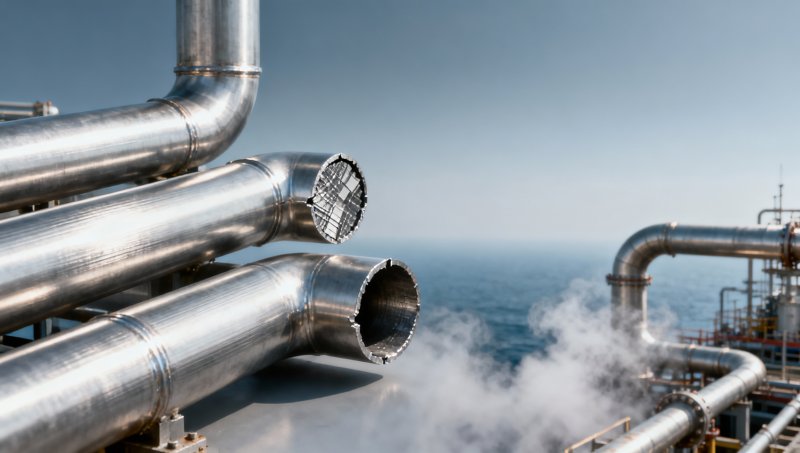
Procurement teams consistently cite three decisive advantages when selecting us as their structural steel manufacturer and exporter: predictable lead times, certification transparency, and technical partnership depth.
Our ISO 9001-certified facilities maintain dedicated production lines for corrosion resistant grades—with average order-to-shipment cycle of 21–28 days for standard sizes and ≤45 days for custom-dimensioned pipe (OD 25–610 mm, WT 2–40 mm). Every shipment includes full mill test reports (MTRs) traceable to ASTM A790, EN 10216-5, or GB/T 21833—verified by third-party inspectors (SGS, BV, TÜV) upon request.
More importantly, our engineers support your team from specification review through installation validation. We’ve helped 17 project managers across Europe and the Middle East avoid costly rework by identifying weld joint design flaws during pre-fabrication reviews—and provided OEM-compatible cold-formed steel profiles to integrate corrosion resistant piping into modular structural frames.
Ready to evaluate whether your next project requires corrosion resistant stainless steel pipe—or to confirm dimensional, certification, or packaging requirements? Contact our technical sales team for a no-obligation material suitability assessment, sample coordination, or factory audit scheduling. We respond to all qualified inquiries within 4 business hours.
Please give us a message


Please enter what you want to find