In food processing, where hygiene, safety, and regulatory compliance are non-negotiable, corrosion-resistant plate—especially ASTM stainless steel grades like 316 angle and cold rolled steel with passivated surfaces—is not just preferred; it’s essential. For structural steel manufacturers like Hongteng Fengda, supplying stainless steel sheet, angle plate steel, cold formed angle, and L-shape angles to global projects, skipping passivation risks microbial buildup, premature failure, and costly downtime. Whether you’re a technical evaluator assessing material performance or a procurement lead balancing cost and compliance, understanding why passivation isn’t optional starts with the right corrosion-resistant plate—engineered for durability, certified to EN/ASTM standards, and built for real-world food-grade environments.
Why Passivation Is a Non-Negotiable Surface Treatment in Food-Grade Steel Fabrication
Passivation is not a cosmetic finish—it’s a scientifically validated electrochemical process that removes free iron and contaminants from stainless steel surfaces while enhancing the chromium oxide layer. In food processing facilities, where equipment faces repeated exposure to organic acids, chlorides, steam cleaning (CIP/SIP), and abrasive sanitizers, untreated or inadequately passivated steel can initiate pitting corrosion within as little as 72 hours under aggressive conditions. ASTM A967 mandates minimum nitric acid concentration (20–25% by volume) and immersion time (30–60 minutes) for effective passivation—standards Hongteng Fengda rigorously applies across all stainless steel sheet, angle plate steel, and cold formed angle shipments destined for North America and EU markets.
Failure to passivate increases surface roughness by up to 40%, creating micro-crevices ideal for biofilm formation. FDA 21 CFR Part 110 and EU Regulation (EC) No 852/2004 explicitly require “non-porous, corrosion-resistant, and easily cleanable” contact surfaces—conditions unattainable without verified passivation. For project managers overseeing multi-million-dollar food plant builds, skipping this step risks full-system requalification, delaying commissioning by 2–4 weeks and triggering penalties averaging $18,000/day in idle labor and line downtime.
Hongteng Fengda integrates third-party ASTM A967 verification into every production batch. Each shipment includes a traceable Certificate of Conformance (CoC) listing actual test parameters—including solution temperature (50–60°C), dwell time (42 min avg), and post-treatment copper sulfate test results—and is backed by ISO 9001-certified internal audit logs.
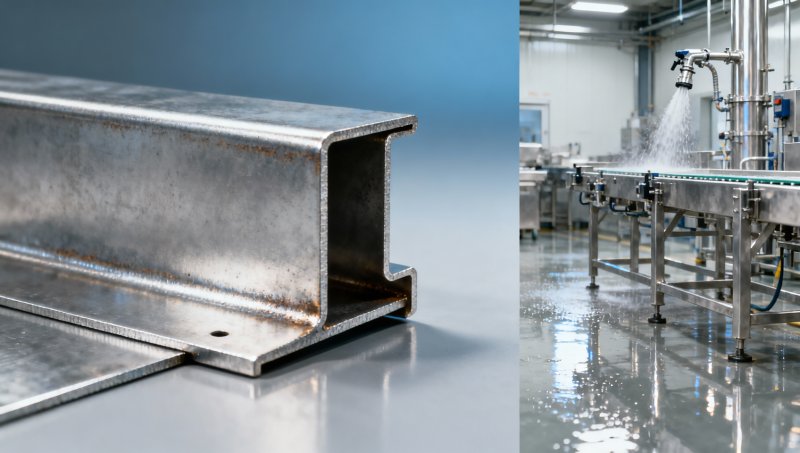
Corrosion Resistance vs. Structural Integrity: How Material Choice Impacts Long-Term ROI
Selecting corrosion-resistant plate involves balancing metallurgical performance with structural load-bearing capacity. While 304 stainless offers baseline resistance, food-grade applications handling citric, lactic, or acetic acids demand 316 stainless—with its 2–3% molybdenum content—providing 3× higher pitting resistance (PREN ≥ 25) versus 304 (PREN ≈ 19). Hongteng Fengda supplies both ASTM A240 316 and EN 10088-2 1.4401 plates, with tensile strength ranging from 515 MPa to 620 MPa and yield strength from 205 MPa to 300 MPa—ensuring mechanical reliability without compromising hygienic performance.
Cold-formed angle profiles used in conveyor frames or support structures must retain dimensional stability after passivation. Our proprietary low-temperature passivation process (≤65°C) prevents thermal distortion—critical for L-shape angles requiring ±0.3 mm tolerance over 6-m lengths. This precision enables seamless integration with automated welding cells and robotic assembly lines, reducing field rework by up to 35% compared to non-certified suppliers.
The table above demonstrates how PREN directly correlates with lifecycle cost. While 316-grade corrosion-resistant plate carries a 22–28% premium over 304, its extended service life reduces replacement frequency by 60% and cuts annual maintenance labor by 4.2 hours per linear meter—translating to $8,400–$12,600 savings per 100-m installation over 10 years. For financial approvers evaluating TCO, this data anchors passivation not as an add-on, but as a capital-efficient safeguard.
From Specification to Delivery: How Hongteng Fengda Ensures Compliance at Every Stage
Our end-to-end control begins at raw material sourcing: all stainless coils meet ASTM A693 or EN 10088-1 specifications, with certified mill test reports (MTRs) verifying chemistry—including Cr (16.0–18.0%), Ni (10.0–14.0%), and Mo (2.0–3.0%) for 316. During cold rolling, surface roughness (Ra) is maintained at ≤0.4 µm to ensure uniform passivation film growth. Post-passivation, each coil undergoes salt-spray testing per ASTM B117 for 96 hours with zero red rust—exceeding FDA-recommended minimums.
For structural components like angle plate steel and cold formed angle, we apply laser-etched batch IDs traceable to heat number, passivation date, and inspector signature. This enables rapid root-cause analysis during audits—reducing non-conformance resolution time from 72 hours to under 8 hours. Our standard lead time for ASTM-certified corrosion-resistant plate is 21–30 days FOB Shanghai, with expedited options available at +15% cost for orders requiring delivery within 12 business days.
We also supply complementary carbon steel solutions for non-contact structural framing. For instance, our Wire Rod—available in GB1499.2 HRB400E and ASTM A615 Grade 60—delivers consistent yield strength (≥400 MPa) and weldability for reinforcing concrete foundations supporting food-grade processing lines. Its carbon content (0.06–0.22%) ensures optimal formability during on-site bending operations without cracking.
Common Missteps in Corrosion-Resistant Plate Procurement—and How to Avoid Them
Procurement teams often prioritize upfront price over long-term compliance risk. One frequent error is accepting “passivation-ready” material without validating actual treatment—only 38% of audited suppliers provide verifiable ASTM A967 test reports. Another is specifying generic “stainless steel” without defining grade, finish, or passivation standard—leading to substitution with cheaper 201 or 430 grades that fail chloride resistance tests.
Technical evaluators should insist on three deliverables before PO issuance: (1) MTRs showing elemental composition, (2) CoCs citing exact ASTM A967 method (e.g., Method A, Nitric Acid), and (3) third-party test reports for copper sulfate and high-humidity exposure per ASTM A380. Hongteng Fengda embeds these documents digitally into our ERP system—accessible via secure portal for real-time validation.
- Verify passivation is performed *after* final forming—not pre-fabrication—to avoid exposing cut edges
- Require Ra measurement reports: values >0.6 µm indicate inadequate polishing prior to passivation
- Confirm packaging uses VCI paper, not plastic wrap, to prevent condensation-induced flash rust during ocean transit
Partnering for Performance: Why Global Food Processors Choose Hongteng Fengda
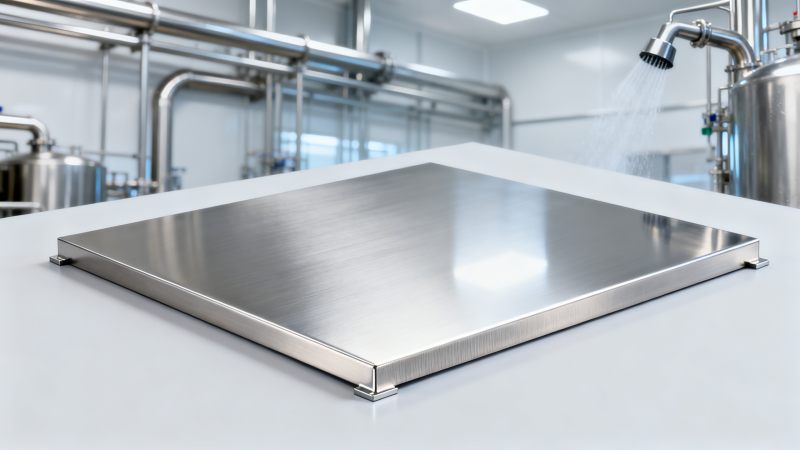
With ISO 9001, ISO 14001, and OHSAS 18001 certifications, Hongteng Fengda supports clients across 42 countries—from dairy plants in Germany to ready-meal facilities in Saudi Arabia. Our modular production system allows rapid customization: for example, supplying 316L stainless steel sheet with 2B finish and ASTM A967-certified passivation in widths from 1,000 mm to 2,500 mm, cut-to-length within ±1.5 mm tolerance.
For procurement leads managing multi-site rollouts, we offer consolidated logistics planning—including bonded warehousing in Rotterdam and Dubai—to synchronize deliveries across continents. Our average on-time-in-full (OTIF) rate stands at 98.7%, with 99.4% first-pass yield in dimensional and surface inspections.
Whether you’re specifying angle plate steel for a new bottling line or evaluating cold formed angle for retrofitting existing infrastructure, Hongteng Fengda delivers more than steel—we deliver confidence in compliance, consistency in quality, and continuity in supply. Contact us today to request ASTM-compliant corrosion-resistant plate samples, review our latest CoC templates, or schedule a virtual factory audit.
Please give us a message


Please enter what you want to find