When sourcing corrosion resistant carbon steel for construction or infrastructure projects, buyers often confuse 'resistant' with 'rust-proof' — a critical distinction impacting longevity, maintenance costs, and safety. At Hongteng Fengda, a trusted steel profile manufacturer and exporter from China, we supply ASTM/EN-compliant corrosion resistant carbon steel, high strength steel rebar, and cold-formed structural profiles — all engineered for real-world durability, not just lab claims. Whether you're comparing HRC steel price, reviewing rebar price lists, or evaluating carbon steel for construction applications like steel roofing (how to install & benefits), understanding true corrosion performance is essential. Explore the science — and the specs — behind delayed vs. prevented rust.
What “Corrosion Resistant” Really Means — And Why It’s Not Synonymous With “Rust-Proof”
In metallurgy and structural engineering, “corrosion resistant carbon steel” refers to grades that delay — not eliminate — oxidation under ambient or mildly aggressive conditions. Unlike stainless steels (e.g., 304 or 316), which form a self-repairing chromium oxide layer, carbon steel relies on alloying elements (e.g., Cu, P, Cr in trace amounts), surface treatments (e.g., phosphating, galvanizing), or protective coatings to extend time-to-first-rust by 2–5× compared to standard A36 or Q235.
Real-world testing shows typical uncoated low-alloy carbon steel begins visible rust formation within 7–14 days in coastal humidity (>80% RH, 25°C), while optimized corrosion-resistant variants (e.g., ASTM A588 Grade K) may hold off red rust for 30–90 days under identical exposure. That delay translates directly into reduced maintenance cycles — from annual inspections to biennial — and lower lifecycle cost over 20+ years of service life.
Crucially, resistance is context-dependent: it assumes controlled environmental thresholds — ≤0.5 g/m²/day SO₂, <50 µg/m³ chloride deposition, and no continuous immersion. Exceed these, and protection degrades rapidly. This is why specification sheets must reference test standards (e.g., ASTM G101 for atmospheric corrosion index) — not marketing terms alone.
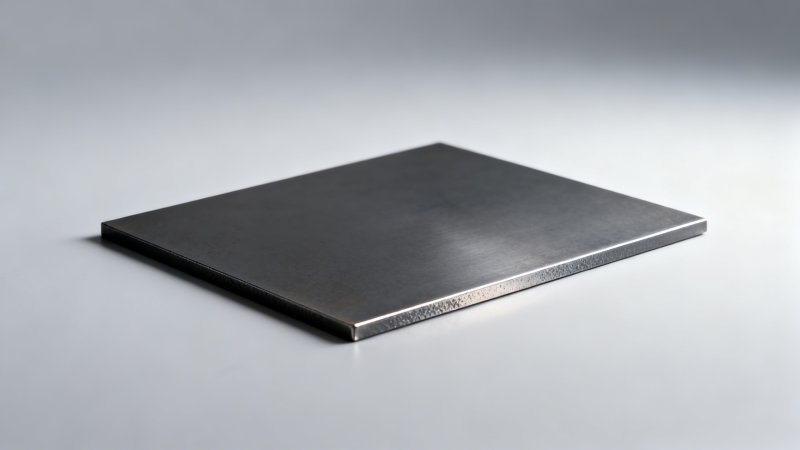
How Carbon Steel Plate Grades Align With Corrosion Performance & Application Needs
Not all carbon steel plates deliver equal corrosion resilience — even within the same base material family. The SPCC series, widely used across global manufacturing, demonstrates how incremental compositional refinement directly affects surface stability and post-processing compatibility. For instance, SPCG (C ≤0.02%, S ≤0.020%) offers superior drawability and uniformity for painted or laminated applications where micro-pitting could compromise coating adhesion — a key factor in roofing and automotive exteriors.
Below is a comparison of key chemical and mechanical traits across six SPCC-series grades — all available as Carbon Steel Plate from Hongteng Fengda, certified to ASTM A1008, EN 10131, and JIS G3141:
This tiered grading system enables precise matching of plate chemistry to end-use requirements: higher purity (lower C/S) improves weld integrity and paint adhesion — both vital for long-term corrosion control in exposed structures. All SPCC-series plates supplied by Hongteng Fengda undergo strict batch-level verification per ISO 9001 and third-party mill test reports (MTRs).
Procurement Checklist: 5 Critical Factors Beyond “Resistant” Labeling
When evaluating corrosion resistant carbon steel for procurement, avoid relying solely on supplier claims. Instead, validate against these five measurable criteria — each tied directly to field performance and compliance risk:
- Standard Compliance Verification: Confirm certification to ASTM A588 (weathering steel), ASTM A606 (Type 4), or EN 10025-5 S355J0WP — not generic “corrosion resistant” statements.
- Surface Treatment Documentation: Require MTRs showing zinc coating mass (e.g., ≥275 g/m² for hot-dip galvanized beams) or phosphate conversion layer thickness (e.g., 2–5 µm).
- Environmental Suitability Mapping: Cross-check project location’s ISO 9223 corrosion category (C3–C5) against product’s validated performance in salt-spray (ASTM B117) or cyclic corrosion tests (e.g., ISO 14993).
- Weldability & Post-Weld Protection: Verify pre-qualified WPS (welding procedure specs) and whether heat-affected zones require touch-up coating — critical for structural joints.
- Lead Time & Traceability: Ensure full lot traceability and guaranteed delivery windows — especially for custom-cut or pre-finished Carbon Steel Plate, where delays increase storage-related moisture exposure risk.
Why Global Project Teams Choose Hongteng Fengda for Structural Steel Sourcing
From North American bridge upgrades to Middle Eastern industrial plants, engineers and procurement managers rely on Hongteng Fengda for three consistent advantages: predictable quality, responsive customization, and end-to-end compliance support. Our facility maintains dual-certified production lines (ISO 9001 + ISO 14001), enabling simultaneous supply of ASTM A992 beams, EN 10025-2 S275JR channels, and cold-formed profiles — all with full documentation in English, Arabic, or Spanish.
We offer rapid technical alignment: share your project drawings or spec sheet, and receive within 48 hours a tailored proposal covering grade selection, dimensional tolerances (±0.5 mm for cut-to-length plates), surface finish options (wire-drawn, laminated film, or primer-coated), and lead time confirmation — typically 15–25 working days for standard orders, with expedited slots available for urgent infrastructure timelines.
Whether you need corrosion-resistant carbon steel for roof framing, rebar for seismic-resistant foundations, or OEM-specific channel sections — contact us today for material data sheets, sample coordination, or a no-obligation review of your current sourcing strategy.
Please give us a message


Please enter what you want to find