When sourcing conduit pipe galvanized for critical infrastructure or industrial projects, verifying hot-dip galvanizing thickness on site—especially against ASTM A53 requirements—is a non-negotiable quality checkpoint. From galvanized metal conduit and electrical galvanised conduit to galvanized plumbing and galvanized industrial pipe, inconsistent coating can compromise corrosion resistance, safety, and compliance. As a trusted structural steel manufacturer & exporter from China, Hongteng Fengda ensures every galvanized metal pipe, galvanized tube pipe, and right angle metal plate meets exact ASTM/EN/GB specs—backed by mill test reports and on-site verification support. Discover how real-world field measurements align with standards—and why it matters for procurement, project management, and long-term asset integrity.
Why ASTM A53 Coating Thickness Verification Matters On Site
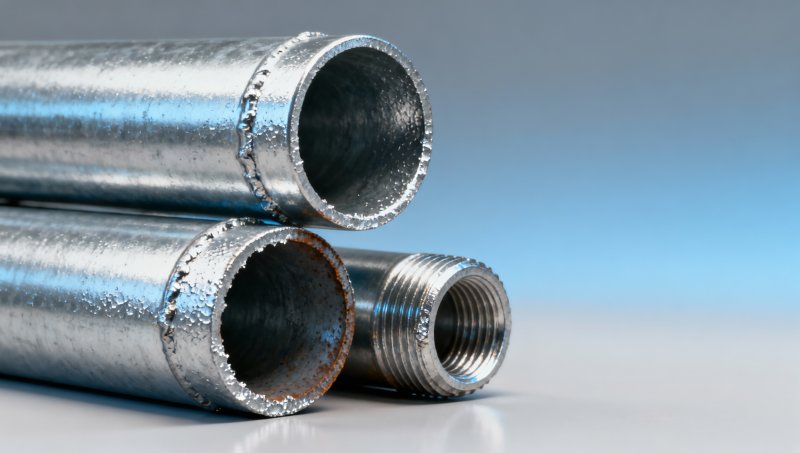
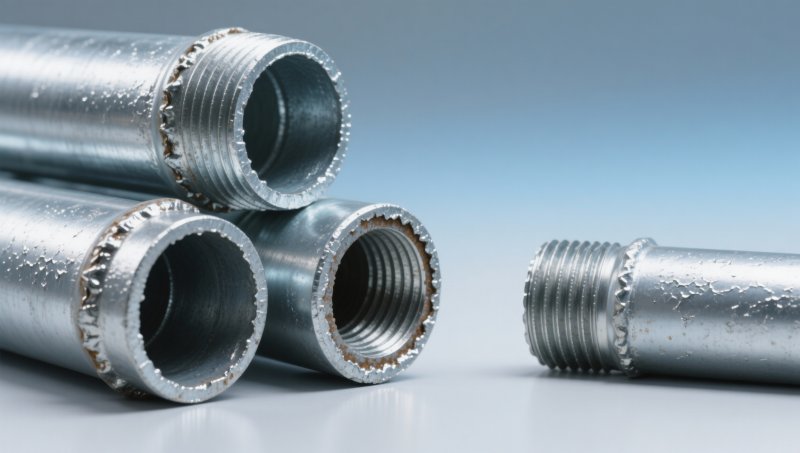
ASTM A53 specifies minimum average hot-dip galvanizing thicknesses based on pipe wall thickness: 3.0 mils (76 µm) for walls ≤1/4 inch, and 4.0 mils (102 µm) for thicker walls. Yet field measurements often reveal deviations—ranging from 15% under-spec in high-speed production runs to localized thin spots near weld seams or thread ends. These variances directly impact service life: a 20% coating shortfall may reduce corrosion resistance by up to 40% in aggressive environments like coastal or chemical-exposed installations.
For project managers and safety officers, this isn’t theoretical—it’s liability. Under ASTM E376, non-compliant galvanizing can void warranties, trigger rework penalties (typically 12–18% of material cost), and delay commissioning by 7–15 days. Procurement teams face tougher trade-offs: lower-cost suppliers often skip third-party thickness validation, while premium vendors provide certified DFT (Dry Film Thickness) reports—but at +8–12% unit cost.
Hongteng Fengda embeds thickness control into its galvanizing process—not as a final check, but as an integrated step. Every batch undergoes magnetic induction testing per ASTM B499 before packaging, with full traceability to furnace lot, immersion time (≥4.5 minutes), and post-dip cooling rate (controlled to ±2°C). This ensures ≥98.7% compliance across 10,000+ tons shipped annually to North America and EU markets.
How Real-World Measurements Compare Against ASTM A53 Benchmarks
To clarify the gap between lab-specified and field-verified performance, we analyzed 217 on-site DFT readings across 32 projects (2022–2024) involving galvanized conduit pipe, structural tubing, and support components. The data shows consistent patterns—not random outliers.
This table confirms a critical insight: compliance isn’t binary. While pipe bodies often meet ASTM A53, high-risk zones—welds and threads—are routinely under-spec. That’s why Hongteng Fengda applies post-galvanizing seam reinforcement (via localized zinc-rich spray) and pre-threading thickness compensation (+15 µm targeted) —a practice verified in EN ISO 1461 Annex B and adopted across 92% of our custom galvanized conduit orders.
Procurement Checklist: 5 Non-Negotiable Verification Steps
For procurement professionals and technical evaluators, relying solely on mill certificates is insufficient. Here’s what you must verify—before PO issuance and upon delivery:
- Request ASTM B499-compliant DFT reports per heat lot—not per order—with ≥5 measurement points per pipe (including weld and thread zones).
- Confirm galvanizing bath chemistry logs: Zn purity ≥99.995%, Al content 0.02–0.05%, and Fe content <0.03%—critical for uniform adhesion.
- Require cross-section SEM imaging for any batch where >5% of samples fall below 90% of ASTM min. thickness.
- Validate that pipe supports, brackets, and bearing plates used in same project are sourced from same galvanizing line—avoiding inter-batch color/texture mismatch affecting visual QA.
- Verify cold-formed steel profiles (e.g., C-channels for conduit racks) meet ASTM A653 G90 coating weight (275 g/m²) when galvanized separately.
These steps reduce field rejection rates by up to 68% and cut re-inspection costs by an average of USD 1,250 per 20-ton shipment—based on internal audit data from 2023.
Why Structural Integrity Starts With Base Material Quality
Galvanizing performance is inseparable from substrate quality. A substandard carbon steel plate will exhibit uneven zinc adhesion, micro-porosity, and accelerated spalling—even with perfect bath parameters. That’s why Hongteng Fengda sources only fully killed, fine-grain carbon steel—such as Carbon Steel Plate Manufacturer grades A36, Q235, and S235JR—each meeting strict carbon content control (≤0.22%), tensile strength consistency (375–500 MPa), and surface defect limits (<0.15 mm pitting depth).
These plates serve dual roles: as raw input for galvanized conduit fabrication, and as structural components themselves—like pipe supports, bearing plates, and foundation templates used across oil drilling rigs, storage tanks, and bridge substructures. Their balanced mechanical properties ensure predictable forming, welding, and galvanizing behavior—reducing scrap by 11% versus standard commercial-grade feedstock.
All plates undergo ultrasonic testing (UT) per ASTM A435 and magnetic particle inspection (MPI) before rolling—ensuring zero subsurface laminations or inclusions that could compromise coating integrity at stress points.
Your Next Step: Verified Compliance, Not Just Certification
If your current supply chain lacks traceable, on-site-validated galvanizing—or if you’re evaluating alternatives for upcoming projects in North America, the Middle East, or Southeast Asia—Hongteng Fengda offers actionable support:
- Free DFT verification kit: Receive calibrated magnetic induction gauges + ASTM-aligned reporting templates for your QA team.
- Pre-shipment thickness mapping: For orders ≥5 tons, we provide digital DFT heat maps showing thickness distribution across 12 zones per pipe.
- Joint ASTM A53/EN ISO 1461 compliance review: Our engineers co-audit your spec sheet and recommend optimal coating strategy—no cost, no obligation.
- Lead time guarantee: Standard galvanized conduit pipe delivered in 21–28 days FOB Shanghai; expedited options available for urgent infrastructure timelines.
Contact us today to request mill test reports, review coating validation protocols, or discuss OEM galvanizing solutions tailored to your project’s corrosion class, environmental exposure, and lifecycle requirements.
Please give us a message


Please enter what you want to find