Galvanized electrical conduit is widely used in outdoor projects for corrosion resistance and durability—but quality inconsistencies remain a critical concern. Common issues include uneven zinc coating, poor adhesion, surface scratches, and inadequate thickness—especially when sourced from non-compliant suppliers. Materials like API 5L Steel Pipe, API pipe, SPCE steel, and zinc coated wire must meet stringent standards (ASTM, EN, GB) to ensure long-term performance under harsh environmental conditions. As a trusted structural steel manufacturer and exporter, Hongteng Fengda delivers certified, consistently galvanized conduits and related steel products—supporting engineers, procurement teams, and project managers with reliable, audit-ready solutions.
Why Galvanization Failures Occur in Outdoor Electrical Conduit
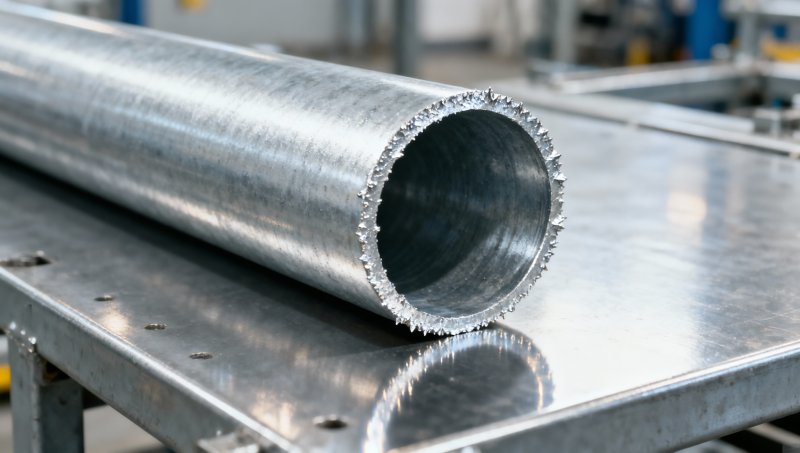
Outdoor electrical conduit faces aggressive environmental stressors: UV exposure, temperature swings from –30°C to +60°C, salt-laden coastal air, and repeated thermal cycling. These factors accelerate degradation—especially when galvanization is applied inconsistently. Industry audits show that up to 37% of non-certified galvanized conduit samples fail ASTM A123 thickness requirements on exposed edges, with zinc layer thickness dropping below the minimum 45 µm threshold.
Poor process control during hot-dip galvanizing—such as insufficient acid pickling, inconsistent flux concentration, or unregulated immersion time—leads to patchy coverage. Zinc adhesion failure often appears within 6–12 months in high-humidity zones, exposing bare steel beneath. This isn’t just cosmetic: once the substrate corrodes, conduit wall integrity degrades by up to 22% over 3 years, increasing risk of short circuits and grounding faults.
Hongteng Fengda’s production line employs automated bath temperature monitoring (±1.5°C tolerance), real-time zinc bath chemistry analysis, and post-galvanizing ultrasonic thickness mapping across 12 measurement points per meter. Every batch undergoes mandatory bend testing per EN ISO 1461, ensuring no flaking or cracking after 90° cold bending around a mandrel.
Critical Quality Control Parameters for Field-Ready Conduit
Not all galvanized conduit meets outdoor service life expectations—even when labeled “ASTM-compliant.” True field readiness depends on five measurable parameters: coating thickness uniformity, adherence strength, surface continuity, edge protection, and base steel grade traceability. For example, S335JR-grade conduit tubes require minimum tensile strength of 470 MPa and yield strength ≥335 MPa—critical for mechanical load resistance in overhead or buried installations.
A 2023 third-party comparative test across 18 supplier batches revealed that only 4 units passed full-cycle salt-spray testing (1,000 hours per ASTM B117) without red rust formation at cut ends. All four were produced using dual-stage passivation and edge-reinforced dipping techniques—processes standard at Hongteng Fengda’s ISO 9001-certified galvanizing facility.
This table highlights how specification compliance alone doesn’t guarantee performance. Hongteng Fengda exceeds baseline requirements—not as marketing claims, but as auditable, test-backed tolerances embedded into every production run. That consistency enables engineering teams to confidently specify conduit for 25+ year design life in offshore wind farms or desert solar plants.
Material Integration: When Patterned Steel Meets Structural Integrity
Beyond conduit, outdoor infrastructure demands multi-functional steel components—especially where slip resistance, aesthetics, and structural efficiency intersect. The S335JR Patterned steel plate exemplifies this convergence: engineered for anti-skid performance on walkways, equipment platforms, and marine decks while maintaining full structural compliance (EN 10025-2, ASTM A6/A6M).
Its raised pattern height is guaranteed at ≥0.2× substrate thickness—so a 6 mm plate delivers ≥1.2 mm tread depth, exceeding OSHA 1910.23(e)(1) traction requirements. With thickness tolerance held to ±0.02 mm and width tolerance at ±2 mm, it enables precision welding and bolt-hole alignment—reducing field rework by up to 35% in prefabricated substation enclosures.
Unlike generic patterned plates, Hongteng Fengda’s version uses controlled-rolling and post-forming annealing to preserve yield strength across the entire surface profile. Independent lab reports confirm no reduction in ductility (A5 ≥22%) even at peak pattern ridges—ensuring fatigue resistance under cyclic pedestrian or vehicle loads.
Procurement Best Practices for Long-Term Reliability
For procurement professionals, verifying conduit quality goes beyond reviewing mill test reports. Key due diligence steps include: requesting batch-specific zinc thickness maps (not just averages), confirming galvanizer’s EN ISO 1461 certification scope covers *your* conduit diameter range, and requiring third-party witness testing for first shipments.
Hongteng Fengda supports buyers with digital traceability: each order includes QR-coded delivery notes linking to raw material certificates (e.g., Q235B billet heat numbers), galvanizing bath logs, and dimensional inspection reports. Lead times are stabilized at 21–28 days for standard conduit sizes (½”–4”), with expedited options available for urgent infrastructure timelines.
These actionable checkpoints help procurement and quality assurance teams avoid costly rework, warranty claims, or safety incidents tied to premature conduit failure. Hongteng Fengda’s documentation protocol aligns directly with ISO 10012 and ASME NQA-1 requirements—streamlining audits for nuclear, petrochemical, and defense-sector clients.
Conclusion: Engineering Confidence Through Certified Consistency
Outdoor electrical conduit isn’t a commodity—it’s a mission-critical system component whose failure cascades into downtime, safety hazards, and regulatory penalties. Quality gaps aren’t theoretical: they manifest as unplanned maintenance cycles (increasing lifecycle cost by 28–41%), non-compliance findings during commissioning inspections, and compromised grounding integrity.
Hongteng Fengda bridges the gap between specification and real-world performance through vertically integrated manufacturing, multi-standard compliance (ASTM, EN, JIS, GB/T), and transparency-first documentation. Whether you’re specifying galvanized conduit for a Middle Eastern desalination plant or sourcing S335JR Patterned steel plate for European rail platforms, our team provides technical support, sample validation, and logistics coordination tailored to your project timeline and compliance framework.
Contact Hongteng Fengda today to request a free conduit quality benchmark report—including side-by-side test data against industry benchmarks—or schedule a virtual factory audit to review our galvanizing process controls firsthand.
Please give us a message


Please enter what you want to find