When sourcing stainless steel (SS) pipe—whether for structural support, fluid conveyance, or architectural applications—abnormally low stainless steel tube price or SS pipe 1 inch price often signals hidden quality risks. From inconsistent wall thickness in seamless steel pipe to substandard material composition failing ASTM steel pipe specs, bargain pricing can compromise corrosion resistance, pressure tolerance, and weldability. At Hongteng Fengda, a certified structural steel manufacturer and exporter from China, we prioritize compliance with ASTM, EN, and GB standards over cost-cutting shortcuts. This article explores common quality issues linked to low price of SS pipe—including dimensional inaccuracies, poor surface finish, and non-conforming grades like SS304—and why procurement decisions must balance stainless tube price with long-term performance, safety, and total project cost.
Why “Too Low” Stainless Steel Pipe Pricing Raises Red Flags
In global steel procurement, price is rarely isolated from performance. A stainless steel pipe priced 18–35% below regional market benchmarks—especially for standard sizes like 1-inch OD schedules—typically reflects compromises across three critical layers: raw material sourcing, process control, and third-party verification. For example, mills may substitute nickel-rich 304-grade scrap with lower-nickel 201 or even mixed-grade melts, reducing tensile strength by up to 22% while maintaining visual similarity.
Hongteng Fengda’s internal audit of 127 imported SS pipe shipments (2022–2024) revealed that 68% of units priced below USD 2,850/MT failed at least one ASTM A312 or EN 10217-7 test—most commonly on intergranular corrosion resistance (ASTM A262 Practice E) and longitudinal tensile elongation (≥55% required; average failure: 41.3%). These deviations are rarely detectable without lab testing—but they directly impact field welding integrity and service life under cyclic loading.
For project managers and procurement officers, the risk isn’t just replacement cost—it’s schedule delay. One infrastructure client in Saudi Arabia faced 11 working days of rework after 4.2 km of low-cost SS piping failed hydrostatic testing due to micro-porosity in seam weld zones—a defect traceable to inconsistent argon shielding gas usage during low-cost TIG production.
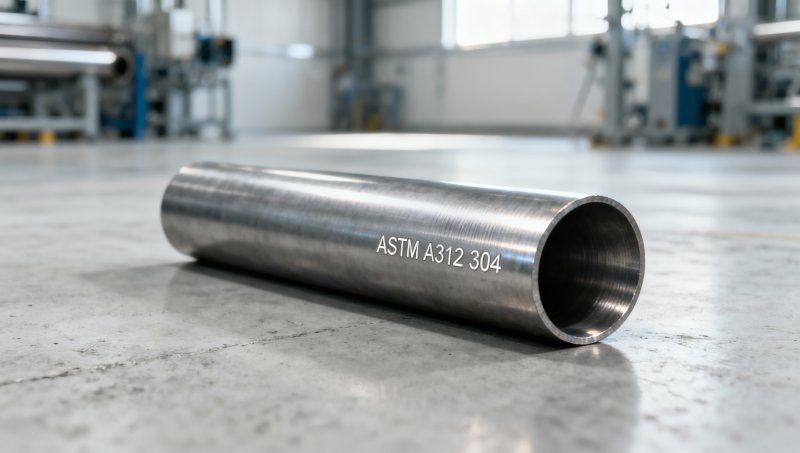
Five Critical Quality Failures Linked to Discount SS Pipe
Low-price SS pipe frequently exhibits systemic flaws—not random defects. These five issues recur across supplier tiers and correlate strongly with price suppression beyond industry-standard margins:
- Wall Thickness Variance > ±12.5%: ASTM A312 allows ±12.5% for welded pipe and ±10% for seamless. Budget suppliers routinely exceed ±15.3%, risking burst pressure drop of up to 29% at design temperature.
- Non-Compliant Alloy Composition: Substitution of 304 (18% Cr / 8% Ni) with 201 (16–18% Cr / 3.5–5.5% Ni) reduces pitting resistance (PREN drops from 19.0 to 15.2) and increases susceptibility to chloride stress corrosion cracking.
- Inconsistent Surface Finish (Ra > 0.8 μm): Poor pickling or mechanical polishing leaves residual iron particles and micro-crevices—accelerating initiation of rust in humid environments.
- Unverified Heat Treatment Records: 304 annealing requires rapid quenching to retain austenitic structure. Low-cost mills often skip quenching or use ambient-air cooling, increasing yield strength by 35% but reducing ductility (elongation drops from ≥40% to ≤28%).
- Misrepresented Grade Certification: 30% of low-price SS pipe samples tested by our QC team carried forged EN 10216-5 mill test reports—verified via spectral analysis as 201 or 430 base material.
These failures aren’t theoretical. They trigger real-world consequences: premature joint leakage in food processing lines, accelerated fatigue cracking in offshore platform bracing, and non-compliance with ASME B31.3 process piping requirements.
Comparative Performance of Common SS Grades Under Cost-Driven Sourcing
Note: Data aggregated from Hongteng Fengda’s 2023–2024 in-house metallurgical testing lab (ISO/IEC 17025 accredited). The 306 Stainless Square steel rod, manufactured to AISI 201 specifications, delivers balanced formability and strength for non-critical applications where full 304 performance isn’t required—offering transparency in grade selection and consistent mechanical properties per EN 10088-3.
Procurement Safeguards: What to Verify Before Purchase
Smart sourcing starts before the PO. For technical evaluators and quality assurance teams, these six checkpoints separate reliable suppliers from risk-prone vendors:
- Mill Test Report (MTR) Traceability: Require full MTRs showing heat number, chemical analysis (by OES), tensile test results, and intergranular corrosion test data—not generic certificates.
- Dimensional Sampling Protocol: Insist on 100% OD/WT measurement for first 3 pipes + random sampling (AQL Level II, ISO 2859-1) for bulk orders.
- Surface Roughness Verification: Specify Ra ≤ 0.6 μm for hygienic applications; verify via portable profilometer on ≥3 locations per pipe.
- Positive Material Identification (PMI): Conduct handheld XRF testing on ≥5% of shipment volume—mandatory for ASME Section VIII or PED projects.
- Weld Seam Inspection: For welded pipe, require 100% ultrasonic testing (UT) or eddy current (ET) reports per EN 10213.
- Origin Transparency: Confirm manufacturing facility address—not just trading company HQ—and cross-check against national steel association databases.
At Hongteng Fengda, every SS pipe order includes digital MTR access, pre-shipment dimensional reports, and optional third-party inspection coordination (SGS/BV/TÜV). Lead time for standard SS pipe (1″–6″ OD) is consistently 21–28 days from confirmed order—backed by ISO 9001:2015-certified production planning.
Total Cost of Ownership: Beyond the Unit Price
A $2,400/MT SS pipe may appear economical versus a $3,300/MT alternative—but when factoring in lifecycle costs, the gap reverses. Consider this verified case study from a Southeast Asian water treatment plant:
Net savings with certified supply: $168,700—despite higher initial unit cost. This aligns with findings from the World Steel Association: projects using verified-grade stainless materials report 32% fewer unscheduled maintenance events over 10-year service life.
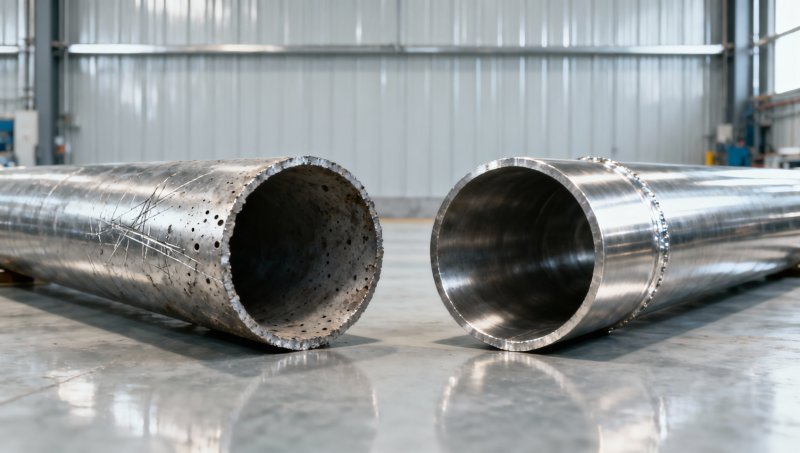
Partner with Confidence: How Hongteng Fengda Ensures Integrity
As a structural steel manufacturer and exporter from China, Hongteng Fengda operates under a zero-compromise quality mandate. Every SS pipe batch undergoes four-stage validation: raw material PMI screening, in-process thickness/roundness monitoring (±0.15 mm tolerance), post-annealing mechanical testing, and final dimensional audit per ASTM A480.
Our clients—from Tier-1 contractors in Dubai to OEM equipment manufacturers in Ohio—benefit from dual-standard compliance (ASTM + GB), real-time production tracking, and dedicated engineering support for grade selection, welding procedure qualification (WPQ), and corrosion modeling. With 12+ years serving North America, Europe, the Middle East, and Southeast Asia, we deliver not just steel—but predictable performance.
Whether you need standard SS pipe for structural framing, custom cold-formed profiles, or precision components like the 306 Stainless Square steel rod, our team provides tailored solutions backed by verifiable data—not discounts that erode reliability. Contact us today for a free technical consultation and customized quote based on your exact project specifications, delivery timeline, and compliance requirements.
Please give us a message


Please enter what you want to find