Precision tooling demands exact dimensional control—especially when specifying cold rolled steel sheet for high-tolerance applications. Whether you're evaluating steel rebar price per ton, sourcing pre-painted steel sheet for aesthetic durability, or selecting corrugated steel sheet for structural integrity, understanding ISO 2408 vs. ASTM A688 tolerance standards is critical. As a leading structural steel manufacturer and exporter from China, Hongteng Fengda ensures full compliance with both specifications—enabling engineers, procurement teams, and project managers to make confident, standards-aligned decisions without compromising on quality, lead time, or cost efficiency.
Why Cold Rolled Steel Sheet Tolerances Matter in Precision Tooling
In precision tooling—such as die sets, progressive stamping dies, and CNC-machined jigs—dimensional deviations as small as ±0.05 mm can trigger part rejection, increased scrap rates, or premature wear. Cold rolled steel sheet is favored for its superior surface finish, consistent thickness, and tight flatness control—but only if tolerances align with functional requirements.
ISO 2408 and ASTM A688 define distinct tolerance frameworks: ISO 2408 (originally developed for wire rope, now widely adopted for thin-gauge flat products) emphasizes geometric consistency across batch production, while ASTM A688 focuses specifically on stainless steel strip used in demanding industrial applications—including those requiring weldability, corrosion resistance, and thermal stability.
For global buyers sourcing from China, mismatched tolerance interpretation can delay approvals, trigger rework, or invalidate certification packages. At Hongteng Fengda, every coil of cold rolled steel sheet undergoes third-party dimensional verification against both standards—ensuring seamless integration into OEM tooling workflows across North America, Europe, and Southeast Asia.
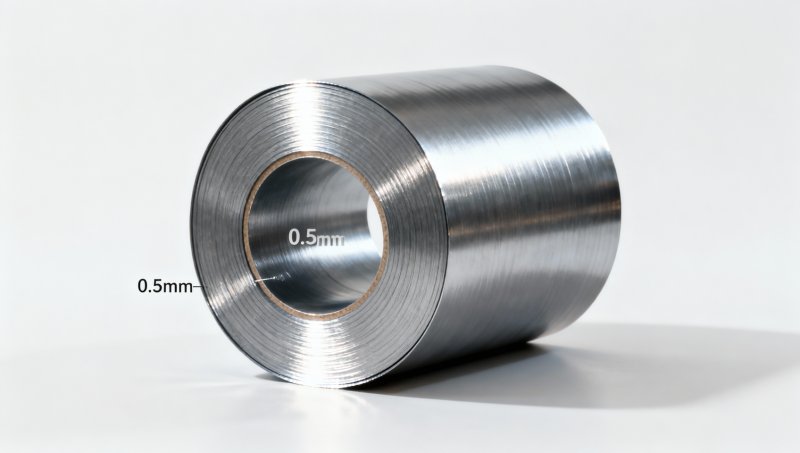
ISO 2408 vs. ASTM A688: Key Tolerance Differences at a Glance
While both standards govern thickness, width, and flatness, their scope, measurement methodology, and acceptance criteria differ significantly. Below is a direct comparison of critical dimensional limits for cold rolled steel sheet in the 0.3–3.0 mm thickness range—a common specification band for precision tooling components.
This table reveals that ASTM A688 imposes stricter controls—particularly for flatness and width symmetry—making it preferred for laser-cutting fixtures and multi-axis bending tools where edge alignment is non-negotiable. ISO 2408 remains widely accepted for general-purpose tool bases and clamping plates where ±0.02 mm thickness variation is functionally acceptable. Hongteng Fengda offers dual-certified material upon request, backed by mill test reports traceable to EN 10204 3.1.
How We Verify Compliance in Real Time
- Laser micrometer scanning across full coil width (sampling frequency: every 2 meters)
- Contact profilometry for flatness validation (measured at 5 points per 1 m² area)
- Batch-level statistical process control (SPC) charts updated hourly
- Final inspection report includes raw data export (CSV/Excel) for client QA systems
When to Specify ASTM A688 Over ISO 2408—And When Not To
ASTM A688 isn’t universally superior—it’s context-dependent. Use it when your application requires:
- Welded assemblies exposed to chloride environments (e.g., marine tooling housings)
- Parts operating continuously above 400°C (leveraging higher creep resistance)
- Medical device molds where surface carbide precipitation must be avoided
- High-cycle conveyor components subject to abrasive wear and fatigue stress
For standard press brake tooling, low-volume jigs, or temporary fixturing, ISO 2408-compliant material delivers optimal cost-performance balance—reducing material cost by 8–12% versus ASTM A688 equivalents without sacrificing functional integrity.
Notably, our 316L Stainless Steel Plate meets ASTM A688 Type 1 requirements out-of-the-box, with guaranteed tensile strength ≥520 MPa and elongation ≥55%, making it ideal for high-temperature tooling inserts and chemical-resistant forming dies.
Procurement Checklist: What to Confirm Before Ordering
To avoid delays and rejections, procurement teams should verify these five items before placing an order for cold rolled steel sheet intended for precision tooling:
- Certification type required: EN 10204 2.2 (declaration) or 3.1 (full test report with SPC data)
- Surface finish specification (e.g., 2B, BA, or NO.4)—critical for post-machining adhesion
- Coil ID and packaging method (wooden pallets vs. steel cradles) for automated uncoiling compatibility
- Lead time commitment: Standard delivery is 12–20 days; expedited processing (7–10 days) available with priority scheduling
- Sample availability: Free physical samples (up to 300 × 300 mm) shipped within 48 hours of request
Hongteng Fengda maintains dedicated QC lanes for tolerance-critical orders, with real-time dashboard access for clients tracking dimensional verification status. All shipments include QR-coded labels linking directly to certified test records.

Why Global Buyers Choose Hongteng Fengda for Precision-Grade Steel
We don’t just supply steel—we engineer sourcing certainty. Our ISO 9001-certified facility in Jiangsu Province operates six continuous cold rolling lines with integrated thickness gauging (X-ray + beta backscatter), enabling ±0.008 mm real-time control—tighter than either ISO 2408 or ASTM A688 mandates.
Unlike generic exporters, we offer engineering collaboration from day one: our technical team reviews your tooling drawings, identifies potential tolerance conflicts, and recommends optimized grade/thickness combinations—free of charge. For urgent projects, we maintain strategic stock of ASTM A688-compliant 316L Stainless Steel Plate in key dimensions (0.5–6.0 mm × 1219–2000 mm), enabling 5-day air freight dispatch.
Ready to validate tolerances for your next tooling project? Contact us today for: dimensional feasibility review, sample coordination, mill test report preview, or customized packaging solutions. Let’s eliminate tolerance risk—before the first cut.
Please give us a message


Please enter what you want to find