For technical evaluators, cold rolled stainless steel coil is a practical choice when surface quality, dimensional accuracy, and downstream processing stability matter.
Its smoother finish, tighter tolerances, and reliable performance support construction, manufacturing, and industrial fabrication with more consistent quality outcomes.
This guide answers common questions about cold rolled stainless steel coil, including selection, comparison, application, and sourcing considerations.
What is cold rolled stainless steel coil and why is it preferred for better surface finish?
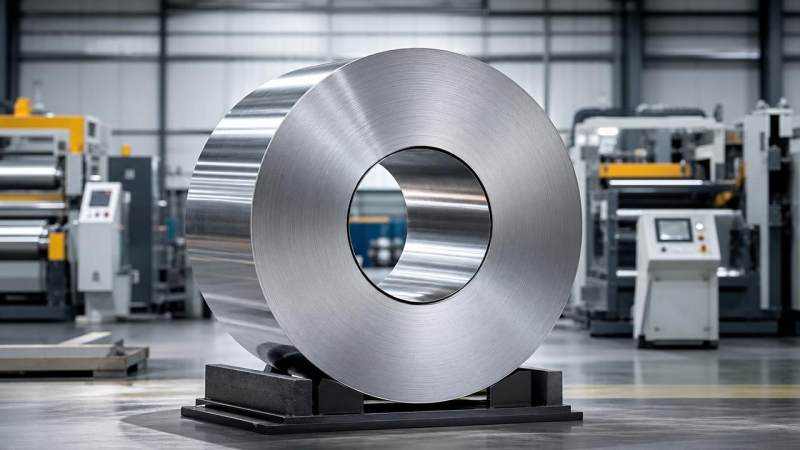
Cold rolled stainless steel coil is stainless steel processed at room temperature after hot rolling and pickling.
This secondary reduction improves flatness, thickness control, and surface smoothness.
Compared with hot rolled material, cold rolled stainless steel coil usually shows a cleaner, brighter, and more uniform appearance.
That finish matters when parts will be visible, coated, welded, bent, or stamped later.
Better surface quality also helps reduce polishing time, coating defects, and handling marks during fabrication.
In many projects, cold rolled stainless steel coil is selected not only for appearance, but for process predictability.
Key characteristics
- Smooth and uniform surface
- Tighter thickness tolerance
- Improved flatness
- Stable formability for downstream processing
- Suitable for decorative and precision applications
Where is cold rolled stainless steel coil commonly used?
Cold rolled stainless steel coil is widely used where appearance and dimensional consistency influence product performance.
Typical applications include wall panels, elevator parts, appliance housings, cabinets, enclosures, kitchen equipment, and precision stamped components.
It is also relevant in industrial fabrication, especially for covers, brackets, formed channels, and parts requiring repeatable bending behavior.
In construction-related supply chains, the material supports visible metalwork and engineered assemblies demanding consistent finish.
Some projects combine stainless coil with corrosion-protected carbon steel components for structural efficiency and cost control.
For example, mid-project sourcing may also include Galvanized Round Steel for towers, road protection, marine accessories, or steel structure components.
That product offers galvanized surface protection, glossy appearance, and diameters from 16 mm to 250 mm or customized sizes.
It can support railway, highway, substation, street light, and automatic lathe processing applications where anti-corrosion service life matters.
Common use environments
- Interior and exterior architectural metalwork
- Industrial equipment panels
- Food and medical support parts
- Consumer appliance shells
- Precision forming and stamping lines
How do you evaluate the quality of cold rolled stainless steel coil?
Surface finish should be checked first, but it is never the only criterion.
A good cold rolled stainless steel coil should show uniform texture, low defect frequency, and no obvious scratches, pits, waviness, or edge problems.
Dimensional consistency is equally important because poor gauge control creates forming instability and assembly issues.
Mechanical properties should match the intended process, especially if the material will be deep drawn, bent, laser cut, or welded.
It is also useful to verify standard compliance, heat traceability, and inspection records.
Practical inspection checklist
Cold rolled stainless steel coil vs hot rolled stainless steel: what is the real difference?
The main difference is not only temperature, but finishing outcome.
Hot rolled stainless steel is produced at higher temperatures and usually has a rougher surface and broader tolerances.
Cold rolled stainless steel coil goes through further reduction, giving a smoother finish and more precise dimensions.
If the part is hidden and heavy fabrication dominates, hot rolled material may be acceptable.
If the part is visible, precision formed, or coating-sensitive, cold rolled stainless steel coil often performs better overall.
Quick comparison
What risks or misunderstandings should be avoided when selecting cold rolled stainless steel coil?
One common mistake is judging cold rolled stainless steel coil only by visual brightness.
A bright surface does not guarantee correct grade, stable mechanics, or process suitability.
Another risk is ignoring edge condition and protective packaging.
Minor transport damage can increase scrap in precision stamping or exposed decorative use.
Specification mismatch is also frequent, especially when thickness tolerance, finish type, or standard references are unclear.
Long-term value depends on consistency between batches, not just one successful sample.
Risk reminders
- Do not assume all smooth coils have equal forming behavior
- Confirm finish, grade, and tolerance in writing
- Check packaging for moisture and abrasion control
- Request inspection data for repeated orders
How can sourcing decisions balance cost, quality, and long-term supply stability?
The lowest quoted price may not deliver the best total value.
For cold rolled stainless steel coil, hidden costs often appear through scrap, rework, delayed processing, or finish inconsistency.
A better approach is to compare technical consistency, standard compliance, production capacity, and lead-time reliability together.
Stable suppliers with modern facilities and strict quality control can reduce sourcing risk significantly.
Hongteng Fengda supports global steel projects with reliable production, customized solutions, and compliance with ASTM, EN, JIS, and GB standards.
Its experience in structural steel exports helps improve schedule confidence and cross-border supply coordination.
Decision guide
Final answer: when is cold rolled stainless steel coil the right choice?
Cold rolled stainless steel coil is the right choice when better surface finish, tighter tolerance, and dependable downstream processing are required.
It offers practical advantages for visible parts, precision fabrication, and applications where quality consistency affects final performance.
The best results come from checking finish, dimensions, standards, and batch stability together.
If your project also needs structural or anti-corrosion steel support items, integrated supply planning can improve cost and schedule control.
Review technical requirements early, compare real processing value, and move forward with verified steel solutions that match the application.
Please give us a message


Please enter what you want to find