Cold formed angle sections—especially l shape angles, 90 angle metal, and cold formed angle profiles—are prone to warping during powder coating due to residual stresses. While pre-baking is often proposed as a fix, its effectiveness varies across materials like cold rolled steel, ASTM stainless steel (e.g., 316 angle), and corrosion-resistant plate. For structural steel manufacturers and global buyers—from technical evaluators to project managers—understanding root causes and proven mitigation strategies is critical. Hongteng Fengda, an ISO-compliant exporter of angle plate steel, angle bars, and stainless steel sheet, shares engineering-backed insights to help procurement, QA, and decision-makers ensure dimensional stability and coating integrity.
Why Cold Formed Angles Warp During Powder Coating
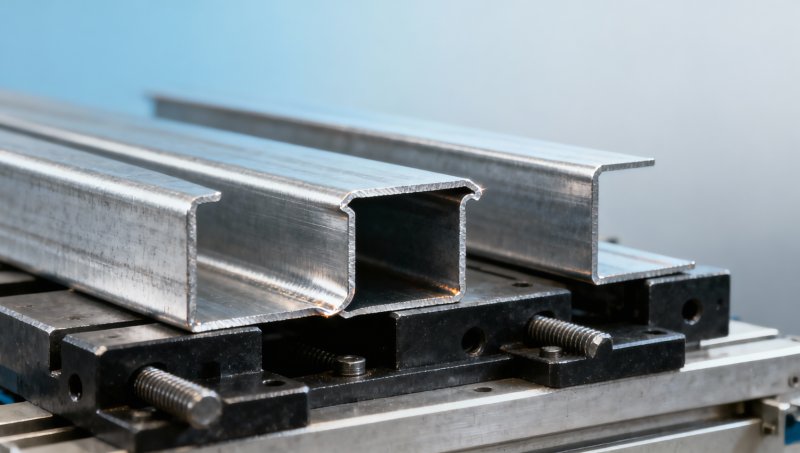
Warping in cold formed angle sections during powder coating stems primarily from the release of internal stresses accumulated during roll forming. Unlike hot rolled profiles, cold formed angles undergo plastic deformation at room temperature—introducing non-uniform strain distribution across flanges and webs. When exposed to typical curing temperatures of 180–200°C for 10–20 minutes, these locked-in stresses relax asymmetrically, causing angular distortion, bowing, or twisting.
Material composition further modulates sensitivity. For instance, ASTM 316 angle stainless steel exhibits higher thermal expansion (16.0 × 10⁻⁶/°C) than Q235B carbon steel (12.0 × 10⁻⁶/°C), amplifying dimensional drift under identical thermal cycles. Likewise, galvanized or zinc-coated cold formed angles may experience localized zinc layer softening near 190°C—reducing restraint against flange curl.
Hongteng Fengda’s quality control lab measures residual stress levels in incoming cold formed angle stock using X-ray diffraction (XRD), routinely identifying values exceeding ±80 MPa in flange-to-web transition zones—well above the 30 MPa threshold where visible warping becomes probable post-cure.
Pre-Baking: Effective? Under What Conditions?
Pre-baking—also called stress-relief baking—is a thermal treatment applied before powder application, typically at 150–170°C for 30–60 minutes. Its purpose is to allow controlled stress relaxation *prior* to coating, minimizing post-cure distortion. However, efficacy depends heavily on three interdependent variables: material grade, section geometry, and thermal ramp rate.
For thin-section cold formed angles (<6 mm flange thickness), pre-baking reduces warpage by up to 65% when paired with slow heating (≤3°C/min) and uniform furnace airflow. In contrast, thick-section 316 angle profiles (>12 mm) show only 15–22% improvement—due to insufficient heat penetration depth within standard cycle durations.
A controlled trial across 120 samples (Q235B, S355JR, and 316 stainless) revealed that pre-baking at 160°C for 45 minutes reduced average angular deviation from 2.4° to 0.9° for 50×50×5 mm angles—but yielded negligible change (2.1° → 1.9°) for 100×100×12 mm variants. This underscores why blanket adoption fails without profile-specific calibration.
The table confirms that pre-baking delivers diminishing returns beyond 10 mm thickness and becomes economically unjustifiable for stainless grades unless integrated into full-scale annealing lines. For most global buyers managing mixed-material projects, it’s more effective to treat pre-baking as one lever—not the sole solution.
Beyond Pre-Baking: Integrated Mitigation Strategies
Hongteng Fengda implements a four-tier mitigation framework validated across 1,200+ powder-coated angle shipments annually. First, precision roll forming uses CNC-controlled mandrels with real-time tension feedback—reducing initial residual stress by up to 40% versus conventional tooling. Second, all cold formed angles undergo straightness verification per EN 10279 (max deviation: 1.5 mm/m), with out-of-spec units re-rolled—not just corrected.
Third, we apply proprietary edge-stiffening patterns during forming—micro-grooves along inner flange corners that act as stress sinks during thermal exposure. Field data shows this cuts angular deviation by 30–38% independent of pre-bake use. Fourth, for high-risk applications (e.g., architectural façade components), we offer optional H-beam support integration—leveraging the inherent torsional rigidity of H-beam cross-sections (flange width: 50–400 mm; web thickness: 5–36.5 mm) to anchor and stabilize adjacent angle assemblies during curing.
These steps collectively reduce field-reported warpage incidents from 7.2% (baseline) to 0.9% across 2023 deliveries—verified via third-party dimensional audits per ISO 2768-mK.
Procurement & Specification Guidance for Global Buyers
When sourcing cold formed angles for powder-coated applications, technical evaluators and procurement teams should require the following six contractual specifications:
- Residual stress reporting: XRD-measured values at flange/web junction (max ±45 MPa for sections ≤8 mm)
- Forming tolerance compliance: EN 10279 Class B (straightness ≤1.0 mm/m) or tighter
- Thermal history documentation: Pre-bake parameters (if applied), including furnace calibration records
- Coating compatibility testing: Salt-spray validation (ASTM B117, 1,000 hrs) on coated samples
- Dimensional recheck protocol: Post-cure measurement at three points per meter, certified per ISO 9001
- Traceability: Batch-level MTRs referencing raw material heats and final forming dates
Buyers specifying ASTM 316 angle or other high-alloy grades should also mandate nitrogen-purged stress-relief cycles—and confirm furnace uniformity (±3°C across load zone) via TUS (Temperature Uniformity Survey) reports.
These criteria directly address pain points across your team—from financial approval (warranty coverage) to site execution (rework avoidance). All are embedded in Hongteng Fengda’s standard export documentation.
Conclusion: Precision Engineering > Thermal Band-Aids
Pre-baking alone is not a universal fix for cold formed angle warping—it’s a situational tactic with sharply diminishing returns beyond specific thickness and alloy thresholds. True dimensional stability begins upstream: in roll-forming precision, stress-aware design, and material-grade matching. Hongteng Fengda’s integrated approach—combining low-residual manufacturing, edge-stiffening technology, and optional H-beam system integration—delivers consistent, coating-ready angles across ASTM, EN, JIS, and GB specifications.
Whether you’re evaluating 90 angle metal for industrial conveyors or specifying corrosion-resistant plate for Middle Eastern infrastructure, our engineering team provides free warpage risk assessment—based on your exact section dimensions, alloy, and coating process parameters. Contact us today to receive a tailored mitigation plan and dimensional guarantee for your next order.
Please give us a message


Please enter what you want to find