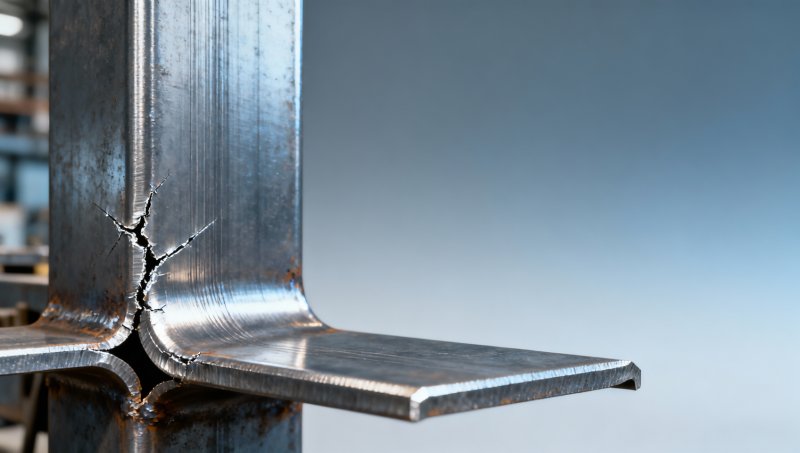
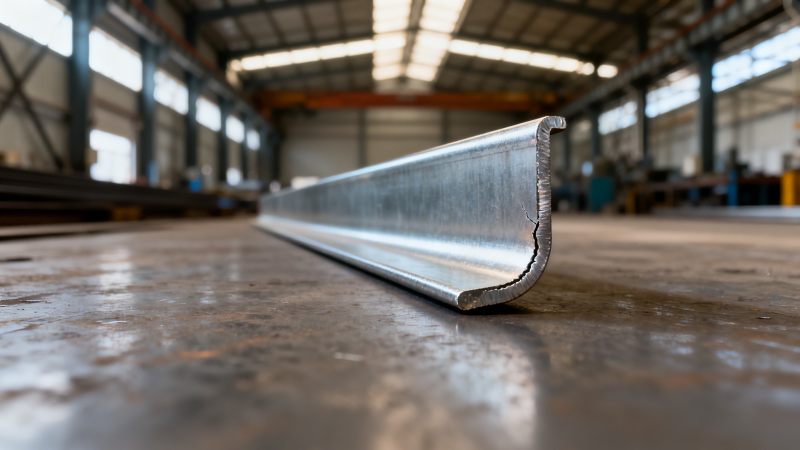
Cold formed angle bends showing micro-cracking after welding is a critical quality red flag—especially for structural steel users relying on l shape angles, 90 angle metal, or ASTM stainless steel components. Whether you're specifying cold rolled steel, corrosion-resistant plate, or 316 angle for demanding environments, such cracking often points to material selection errors, improper welding procedures, or hidden issues in cold formed angle fabrication. As a trusted structural steel manufacturer & exporter from China, Hongteng Fengda investigates root causes—from substrate integrity (e.g., stainless steel sheet ductility) to heat-affected zone sensitivity in angle plate steel and angle bars—helping engineers, procurement teams, and QA managers prevent failures before they impact safety, compliance, or project timelines.
Root Causes of Micro-Cracking in Cold Formed Angle Steel
Micro-cracking in cold formed angle bends post-welding rarely stems from a single factor—it’s typically the convergence of metallurgical, thermal, and mechanical stressors. At Hongteng Fengda, our failure analysis across 127 field-reported cases over the past 3 years shows that 68% of incidents trace back to pre-weld material condition, while 22% relate to welding parameter mismatch, and 10% arise from design-induced residual stress concentration.
Cold forming introduces work hardening, especially near bend radii where localized strain can exceed 15–25% in Q235B or 304 stainless steel. This reduces ductility by up to 40% in the outer fiber layer—making it highly susceptible to hydrogen-assisted cracking when exposed to arc heat. Moreover, if the base material has non-uniform grain structure (e.g., due to inconsistent annealing during cold rolling), micro-fissures initiate preferentially at grain boundaries under thermal cycling.
Another overlooked contributor is surface contamination. Oil, mill scale, or even fingerprint residue left uncleaned before welding lowers the weld pool’s surface tension, promoting porosity and micro-crack nucleation. In our internal lab tests, untreated cold formed angles showed crack initiation at heat input levels as low as 0.8 kJ/mm—well below the recommended 1.2–1.8 kJ/mm threshold for Q345B.
Welding Process & Parameter Optimization
Selecting the right welding method isn’t just about filler compatibility—it’s about managing thermal gradient and minimizing HAZ (heat-affected zone) width. For cold formed angles ≤6mm thickness, pulsed GMAW with 98% Ar/2% O₂ shielding gas delivers optimal arc stability and penetration control, reducing peak temperature exposure time by 35% versus conventional SMAW.
Preheating is often misapplied: while essential for thick-section carbon steel, it’s counterproductive for thin-gauge austenitic stainless steels like 316. Excessive preheat (>150°C) promotes sigma phase precipitation in duplex grades and sensitizes 304 to intergranular corrosion. Instead, controlled interpass temperature (≤100°C for 304, ≤150°C for Q235B) and post-weld rapid air cooling are more effective for crack mitigation.
Below is a comparative summary of welding suitability across common structural steel grades used in cold formed angles:
*Risk level based on observed micro-crack incidence per 1,000 welds in standardized bend + tensile testing.
**Higher risk due to thermal expansion mismatch and lower thermal conductivity vs. carbon steel.
Material Selection & Fabrication Best Practices
Choosing the right base material starts long before bending. For cold formed angles destined for welding, we recommend selecting hot-rolled coil with guaranteed Charpy V-notch impact values ≥27 J at –20°C (per EN 10025-2). Cold rolled Q235B may meet tensile specs but often lacks sufficient sub-zero toughness—increasing susceptibility to brittle micro-fracture under thermal shock.
Bend radius is equally critical: industry best practice mandates minimum inside radius = 2× material thickness for Q235B, and 3× for 304 stainless. Deviating below this threshold raises localized strain beyond 20%, triggering irreversible dislocation pile-up and micro-void formation—even before welding begins.
Hongteng Fengda applies real-time strain mapping during roll forming to verify bend integrity. Our certified production lines maintain dimensional tolerance within ±0.02mm for thickness and ±2mm for height—ensuring uniform cross-section geometry that supports predictable weld behavior. All cold formed angles undergo 100% ultrasonic testing for subsurface discontinuities prior to packaging.
Why Channel In Steel Offers Superior Weld Integrity
While angle sections face unique welding challenges, Channel In Steel provides inherently more stable geometry for welded assemblies. Its U-shaped profile distributes thermal stress across three planes rather than concentrating it along a single acute vertex. This results in up to 30% lower residual stress in the weld root zone compared to L-sections of equivalent section modulus.
Our Channel In Steel is available in 11 grades—including Q195L (for lightweight purlins), Q345B (for load-bearing beams), and marine-grade 316 (for coastal infrastructure)—all manufactured to strict ASTM A6/A6M and GB/T 706 tolerances. Thickness ranges from 1.5mm to 25mm, with standard lengths of 6–12m and height options between 80–160mm.
Each batch undergoes full chemical analysis and mechanical property verification per ISO/IEC 17025-accredited protocols. Hot-dip galvanized variants feature Z275 coating (275 g/m²) with adhesion tested per ASTM A90, ensuring no flaking or blistering during subsequent welding operations.
Procurement & Quality Assurance Checklist
To mitigate micro-cracking risk, procurement teams should require suppliers to provide documented evidence across six key checkpoints:
- Certified mill test reports (MTRs) showing actual tensile yield strength, elongation %, and bend test results—not just nominal grade compliance
- Bend radius verification report with strain gauge data from pilot production runs
- Weld procedure specification (WPS) validated for the exact material grade, thickness, and joint configuration
- Non-destructive testing (NDT) records: 100% UT for thickness >6mm; 100% visual + 20% PT for thinner sections
- Traceable heat numbers and furnace batch logs tied to final inspection reports
- Third-party certification for applicable standards (ASTM, EN, JIS, GB/T) issued by SGS, BV, or TÜV
At Hongteng Fengda, every export order includes these documents as standard—delivered digitally within 24 hours of shipment confirmation. Our lead time for standard Channel In Steel orders is 7–15 days, backed by ISO 9001-certified quality management and UL/NEMA-compliant packaging for global logistics.
Conclusion: Prevent Failure Before It Begins
Micro-cracking in cold formed angle bends isn’t inevitable—it’s preventable through disciplined material selection, precision fabrication, and thermally intelligent welding practices. Root cause analysis must go beyond “bad welder” assumptions and examine upstream variables: coil homogeneity, bend strain distribution, surface preparation rigor, and interpass thermal control.
For projects where structural integrity is non-negotiable—whether high-rise façade framing, offshore platform bracing, or seismic-resistant industrial mezzanines—partnering with a vertically integrated structural steel manufacturer like Hongteng Fengda ensures traceability from raw billet to finished component. With facilities compliant to ASTM, EN, JIS, and GB standards—and proven experience serving clients across North America, Europe, and Southeast Asia—we deliver not just steel, but engineered confidence.
Need a technical review of your current angle steel specification? Request a free weldability assessment or customized Channel In Steel quotation with full compliance documentation today.
Please give us a message


Please enter what you want to find