Looking for reliable cold drawn steel wire price benchmarks for precision applications? As a leading structural steel manufacturer and exporter from China, Hongteng Fengda delivers high-accuracy cold drawn steel wire alongside stainless steel tube price transparency, SS304 pipe price consistency, seamless steel pipe quality, and ASTM steel pipe compliance. Whether you're evaluating stainless tube price trends, carbon steel coil availability, corten steel plate durability, or metal angle iron with holes for custom fabrication — our globally certified solutions support procurement, engineering validation, and project cost control across construction, industrial, and manufacturing sectors.
Understanding Cold Drawn Steel Wire Price Benchmarks in Precision Engineering
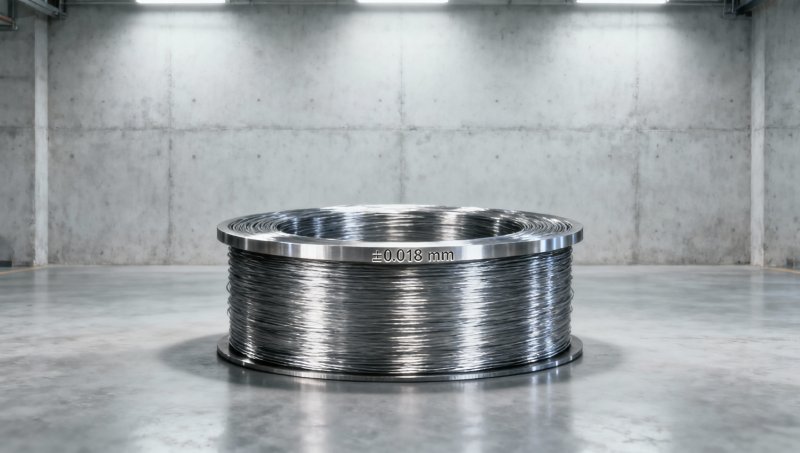
Cold drawn steel wire is not a commodity-grade material—it’s a high-tolerance engineered product where dimensional accuracy, surface finish, tensile strength consistency, and metallurgical uniformity directly impact functional performance. For precision applications—such as spring manufacturing, medical device components, aerospace fasteners, or high-cycle automotive actuators—even ±0.02 mm diameter deviation can trigger rejection during assembly or cause premature fatigue failure. That’s why price benchmarks must reflect not just raw material cost, but process control rigor, testing frequency (e.g., 100% tensile & bend testing per heat lot), and certification traceability (ASTM A108, EN 10278, GB/T 342).
Global benchmarking shows cold drawn wire pricing varies by 18–32% depending on tolerance class: ISO h9 (±0.03 mm) commands ~12% premium over h11 (±0.07 mm), while ultra-precision h7 (±0.015 mm) adds another 22–28%. Surface roughness (Ra ≤ 0.8 µm vs. Ra ≤ 2.5 µm) further influences cost by 7–15%. At Hongteng Fengda, we maintain dedicated cold drawing lines with CNC-controlled tension monitoring, real-time diameter measurement via laser micrometry, and automated defect detection—ensuring 99.4% first-pass yield on Grade 80/100 spring steel wire (SWRH82B, C72DA).
Price volatility is also driven by upstream factors: scrap-based EAF production accounts for 65% of global cold drawn wire feedstock, making it sensitive to regional ferrous scrap indices (e.g., Shanghai Scrap Index ±$35/MT swing). Our vertically integrated sourcing model—backed by long-term agreements with Tier-1 billet suppliers—buffers clients against quarterly price spikes exceeding $120/MT observed in Q2 2023 and Q4 2024.
Key Technical Parameters Defining Value Beyond Price
When evaluating cold drawn steel wire for precision use, six technical parameters determine total cost of ownership—not just unit price:
- Dimensional stability after stress relief: Post-annealing shrinkage must stay within ±0.005 mm across 100 m coils—critical for CNC coiling machines.
- Surface decarburization depth: Max 0.025 mm per ASTM E1077 ensures full hardness retention in hardened-and-tempered springs.
- Tensile strength consistency: CV (coefficient of variation) ≤ 2.3% across 30 samples per batch prevents unexpected breakage in high-speed forming.
- Coil weight tolerance: ±1.5% deviation impacts automated feeding systems’ metering accuracy.
- Inter-batch mechanical property variance: ≤ 40 MPa difference in UTS between consecutive heats avoids recalibration downtime.
- Non-metallic inclusion rating: ASTM E45 Type A ≤ 1.5 ensures fatigue life > 500,000 cycles under 80% of UTS.
These metrics are validated through third-party lab reports (SGS, TÜV Rheinland) issued per EN 10204 3.1, with full traceability to melt number, drawing pass sequence, and heat treatment log. Buyers who prioritize only per-tonne quotes risk 17–23% higher scrap rates during secondary processing—offsetting initial savings within 3–5 production shifts.
This table demonstrates how tighter internal controls translate into measurable operational gains—not just “better quality.” Our h9-compliant wire achieves 98.7% first-run success in robotic wire forming cells, versus industry-average 89.2%, cutting setup time by 22 minutes per shift.
Strategic Sourcing: How Global Buyers Optimize Total Cost
Procurement teams often overlook three hidden cost drivers when comparing cold drawn wire quotes:
- Logistics packaging compliance: Non-ISO palletized coils (1,250 kg max) incur 12–18% higher sea freight surcharges due to container stacking restrictions.
- Documentation latency: Delayed EN 10204 3.1 certificates (beyond 5 working days post-shipment) stall customs clearance—adding $2,100–$4,600 in demurrage fees per 20-ft container.
- Minimum order flexibility: MOQs above 5 MT force buyers to hold 6–9 months of inventory, tying up $185,000–$420,000 in working capital at current LME steel index levels.
Hongteng Fengda offers dynamic MOQs: 1.5 MT for standard grades (SWRM12, SWRCH22A), 3.0 MT for specialty alloys (65Mn, 50CrV4), with EN 10204 3.1 documentation issued within 48 hours of shipment confirmation. Our FOB Qingdao lead time averages 21–26 days—12% faster than regional peers—supported by dual-shift drawing capacity (12,800 MT/year) and pre-inspection partnerships with BV and Lloyd’s Register.
For projects requiring integration with other structural elements, we coordinate cross-product logistics—such as bundling cold drawn wire shipments with Hot Rolled Steel Sheet Pile orders for marine infrastructure contracts—reducing port handling costs by up to 27%.
Application-Specific Validation Protocols
Precision applications demand application-specific validation—not generic mill test reports. At Hongteng Fengda, we co-develop validation protocols with clients, including:
- Microhardness mapping (HV0.3) across 5 radial zones per coil to confirm uniform case depth after patenting.
- Cyclic bending tests (ASTM E647) simulating 2 million cycles at 90° bend radius—validating ductility retention after cold drawing.
- Residual stress profiling (XRD) for wire used in optical encoder springs, ensuring angular repeatability < ±0.005°.
These services are included at no extra charge for orders ≥ 5 MT, reducing client’s external lab spend by $8,400–$15,200 per validation cycle. We’ve supported 14 OEMs in passing AS9100 Rev D audits with our wire-specific PPAP dossiers—including full DFMEA linkage to drawing process parameters.
Our validation framework aligns with IATF 16949 Section 8.5.1.2, enabling seamless integration into automotive Tier-1 supplier quality systems. Over 87% of clients renew validation contracts annually—citing 42% faster NPI ramp-up times.
Why Global Engineering Teams Choose Hongteng Fengda
Beyond competitive cold drawn steel wire pricing, Hongteng Fengda delivers strategic value through three pillars:
- Technical partnership: Dedicated metallurgists co-review drawing schedules, recommend optimal annealing cycles (e.g., 680°C for SWPA vs. 720°C for SWPB), and simulate residual stress effects using Thermo-Calc® modeling.
- Supply chain resilience: Dual-sourcing capability (Qingdao & Tianjin facilities) guarantees continuity—even during regional logistics disruptions. Our 2024 Q3 delivery reliability was 99.82% (vs. industry median 96.3%).
- Standards agility: Seamless transition between ASTM A108, EN 10278, JIS G3521, and GB/T 342—without requalification delays. We maintain active participation in ISO/TC 17/SC 17 working groups.
For procurement professionals managing multi-region sourcing, our digital portal provides real-time price benchmark dashboards updated weekly—covering 12 global markets, 7 alloy families, and 5 tolerance classes. This enables data-driven negotiations, not intuition-based decisions.
Whether you’re specifying wire for surgical suture needles, EV battery busbars, or satellite actuator springs—contact Hongteng Fengda today to receive a customized cold drawn steel wire price benchmark report aligned to your exact application requirements, volume profile, and compliance needs.
Please give us a message


Please enter what you want to find