Cold Rolled Steel Sheet in Coil is widely used in construction, manufacturing, and packaging thanks to its smooth finish, precise thickness, and reliable strength. From steel wire for construction and coil coated steel to metal packaging equipment and tin can production line applications, it supports diverse industrial needs. This article explores its key uses, performance advantages, and sourcing value for global buyers and project decision-makers.
For engineers, procurement teams, quality managers, and project owners, cold rolled steel sheet in coil is not just a basic material. It directly affects forming accuracy, coating performance, downstream processing efficiency, and total project cost. In global sourcing, buyers also need to evaluate tolerance consistency, standard compliance, lead time, and supplier coordination ability.
As a structural steel manufacturer and exporter from China, Hongteng Fengda supports international buyers with stable production, customized steel solutions, and quality control aligned with ASTM, EN, JIS, and GB requirements. Understanding where cold rolled coil performs best and how to specify it correctly can reduce rework, lower sourcing risk, and improve manufacturing reliability across multiple sectors.
What Makes Cold Rolled Steel Sheet in Coil Valuable in Industrial Use
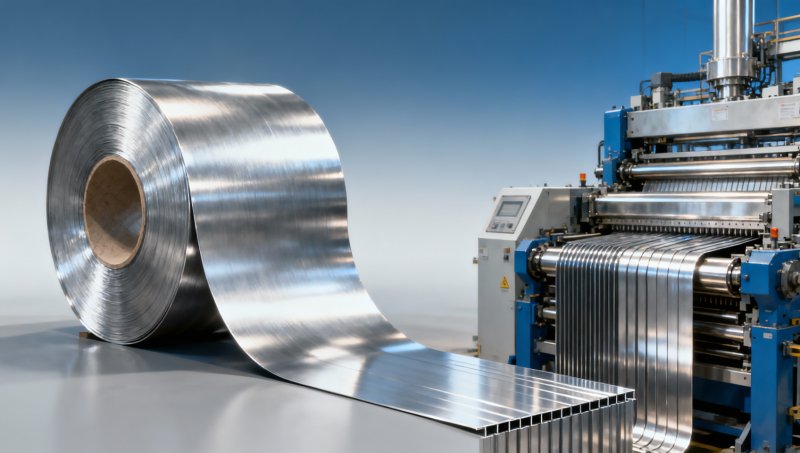
Cold rolled steel sheet in coil is produced by processing hot rolled steel through room-temperature rolling. This reduces thickness with tighter control and creates a smoother surface. In many industrial applications, thickness tolerance may be controlled within narrower ranges than standard hot rolled material, which is critical for stamping, bending, roll forming, and coating lines.
The main value lies in 4 practical advantages: better dimensional accuracy, improved surface finish, more consistent mechanical behavior, and higher suitability for secondary processing. For factories running automated equipment, even a small deviation in flatness or thickness can lead to waste, tool wear, or line stoppage. That is why many buyers select cold rolled coil for parts that require repeatability over hundreds or thousands of units.
Compared with rougher steel forms, cold rolled steel sheet in coil is often preferred where painting, coating, lamination, or precision forming is required. Typical thickness ranges in commercial supply may start from below 1.0 mm and extend to several millimeters depending on end use. For packaging, appliance components, office equipment, or formed profiles, this level of control is often more important than simply choosing the lowest material price.
Key performance factors buyers usually assess
- Surface condition for painting, plating, or direct visible use
- Thickness tolerance and width accuracy for automated processing
- Coil weight and inner diameter compatibility with production equipment
- Mechanical consistency for bending, stamping, and roll forming
- Standard compliance for export projects and regulated end markets
Another important point is production planning. In export projects, material is rarely ordered in isolation. Buyers may need cold rolled coil together with angle steel, channels, beams, or custom cold formed profiles. Working with a supplier that understands both structural steel and downstream fabrication requirements can simplify communication, shorten coordination time by 1–2 weeks in some projects, and lower mismatch risk between materials and fabrication drawings.
The table below summarizes the industrial characteristics that make cold rolled coil a common choice for manufacturers and project teams.
The key takeaway is that cold rolled coil delivers value when downstream precision matters. Its benefits become especially visible in medium- to high-volume production, where a 1%–3% reduction in scrap or rework can outweigh a modest increase in raw material cost.
Key Uses Across Construction, Manufacturing, and Packaging
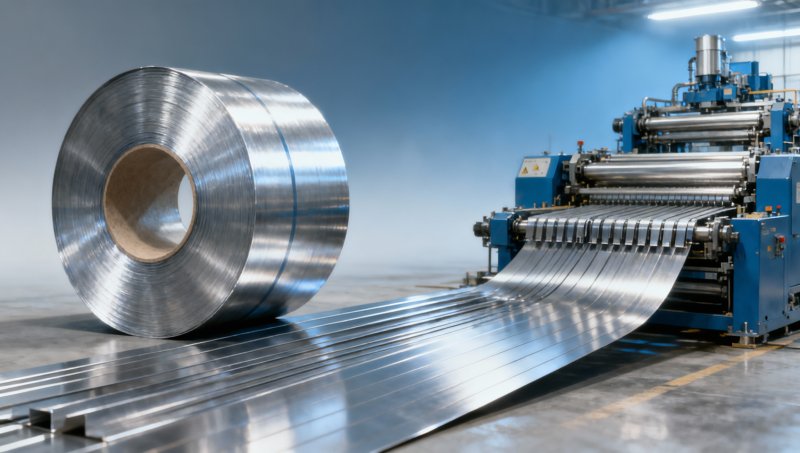
Cold rolled steel sheet in coil serves a broad range of steel-related applications because it balances formability, surface quality, and process efficiency. In construction, it is often used as a base material for light gauge components, partition systems, ducts, ceiling frames, cable trays, door reinforcement parts, and cold formed steel profiles. These uses require stable dimensions so that installation teams can maintain alignment and reduce on-site adjustments.
In manufacturing, the material is common in appliance panels, cabinets, electrical enclosures, office furniture, shelving, and machine covers. Operators value it because it feeds smoothly through slitting, stamping, and bending lines. For plants running 8-hour, 16-hour, or even 24-hour production cycles, uniform coil quality helps maintain tooling life and predictable output.
Packaging is another important field. Coil coated steel, tin-related components, and parts used in metal packaging equipment all depend on steel sheet quality. When material is used in a tin can production line or similar packaging system, surface finish and thickness consistency matter for printing, coating adhesion, seam integrity, and forming quality. Minor variation can affect both appearance and sealing reliability.
Application categories that frequently require cold rolled coil
- Construction support parts such as studs, channels, and formed accessories
- Industrial components for cabinets, housings, equipment covers, and panels
- Steel wire for construction and intermediate products requiring stable sheet input
- Coated steel products where paint or laminate adhesion depends on surface quality
- Packaging systems including can-making parts and metal container production equipment
Selection should always match the end use. For example, a buyer sourcing material for visible appliance panels may prioritize surface grade and oiling condition, while a buyer for roll-formed structural accessories may focus more on yield behavior, flatness, and coil width tolerance. A practical specification process usually covers at least 5 points: thickness, width, surface finish, mechanical requirement, and final processing route.
The following table shows how common applications align with performance priorities and purchasing focus.
For B2B buyers, this means the same material category can serve very different performance targets. The best sourcing result comes from linking the steel specification directly to the downstream production line, not just the generic product name on a quotation sheet.
How to Evaluate Material Specifications and Alternatives
Technical evaluation is where many projects either gain efficiency or create hidden risk. A low quoted price is not always the best option if the material creates extra trimming loss, unstable forming, or coating defects. Procurement and engineering teams should assess at least 6 checkpoints before approval: grade, thickness tolerance, surface finish, mechanical properties, applicable standards, and packaging method.
In some projects, cold rolled carbon steel is the right choice because cost control and formability are the main priorities. In other environments, especially where corrosion resistance, hygiene, or high-temperature exposure matters, stainless steel plate or sheet becomes more suitable. A practical inserted comparison is 316 Stainless Steel Plate, which is used in chemical, food industry, medical equipment construction, agriculture, ship parts, and transport-related applications.
This stainless material contains molybdenum at about 2%–3%, which improves resistance to pitting and corrosion. Typical technical indicators include tensile strength of at least 520, yield strength of at least 275, elongation around 55%–60%, hardness up to 183HB or 100HRB, and density of 7.98. Available thickness can range from 0.3 mm to 200 mm, with common surface finishes such as BA, 2B, NO.1, NO.4, HL, and 8K.
When cold rolled carbon steel is usually preferred
- Large-volume manufacturing where forming efficiency and cost per ton are primary concerns
- Indoor or controlled environments where corrosion exposure is limited
- Projects requiring slitting, bending, or stamping with standard downstream processes
- Applications where coating or painting will provide the main surface protection
When a corrosion-resistant option should be considered
If the steel will contact moisture, acidic media, food processing environments, or elevated temperatures, teams should compare lifecycle cost rather than only initial purchase price. The second mention of 316 Stainless Steel Plate is relevant here because it is effective in acidic environments and helps resist corrosion caused by acetic acid, hydrochloric acid, and similar exposure conditions. That makes it suitable for selected industrial systems where ordinary cold rolled carbon steel would need extra protection or more frequent replacement.
The practical lesson is that material evaluation should follow service conditions. For a project life of 5–15 years, choosing the wrong substrate can increase maintenance frequency, coating failure risk, and replacement cost. Technical teams, finance approvers, and end users should therefore review both processing needs and environmental demands before final approval.
Sourcing Criteria for Global Buyers and Project Teams
Global procurement of cold rolled steel sheet in coil requires more than a product comparison. Buyers need to evaluate the supplier’s manufacturing scope, quality control process, export coordination, and customization capability. For construction and industrial projects, a delayed or inconsistent steel batch can affect installation schedules, labor planning, and customer delivery commitments across 2–3 linked departments.
A reliable supplier should be able to clarify grade options, provide mill test documentation where applicable, explain tolerance control, and confirm packaging suitable for sea freight. In many export transactions, packaging quality is not a minor issue. Poor coil protection can result in edge damage, moisture exposure, or surface contamination during a 20–40 day shipping cycle, especially on routes to North America, Europe, the Middle East, or Southeast Asia.
Hongteng Fengda supports buyers not only with structural products such as angle steel, channels, steel beams, and cold formed profiles, but also with customized solutions that help align steel supply with actual project needs. This matters when procurement teams want to reduce supplier fragmentation and simplify quality communication under ASTM, EN, JIS, or GB frameworks.
Checklist before placing a cold rolled coil order
- Confirm thickness, width, coil weight, and acceptable tolerance range in writing
- Define end use such as forming, stamping, coating, or packaging line processing
- Request standard reference and inspection items required by the destination market
- Check production lead time, shipment schedule, and partial delivery options if needed
- Agree on packing details, rust protection method, and claim handling procedure
The table below can be used internally by procurement teams, technical evaluators, and business decision-makers to compare suppliers in a structured way.
This type of evaluation is especially useful for distributors, project managers, and financial approvers. It shifts the discussion from unit price alone to total sourcing reliability, which is often the more meaningful cost factor over a full project cycle.
Common Risks, FAQ, and Practical Selection Advice
Even experienced buyers can make avoidable mistakes when purchasing cold rolled steel sheet in coil. The most common issues include under-specifying tolerance, ignoring packaging details, using the wrong surface condition for coating lines, and treating all steel coils as interchangeable. In reality, a mismatch between steel characteristics and downstream processing can create measurable loss within the first production batch.
A practical decision process should involve 3 linked teams: technical evaluation, procurement, and end-use operations. This helps ensure the selected material fits forming equipment, final application conditions, and delivery scheduling. For larger industrial orders, it is also wise to confirm acceptance criteria before shipment instead of handling all disputes after arrival.
Below are frequent questions raised by project owners, distributors, and manufacturers during sourcing and implementation.
How do I choose the right cold rolled coil thickness?
Start from the end-use load, forming method, and assembly tolerance. For light formed parts, thinner gauges may improve weight control and processing speed. For equipment panels or structural accessories, buyers should also consider stiffness, deflection, and fastener compatibility. Confirm whether the line can handle the selected gauge without cracking, springback issues, or excessive tool pressure.
What is a reasonable lead time for export orders?
Lead time depends on specification complexity, quantity, and production loading. Standard material may move faster, while customized width, OEM processing, or mixed orders with multiple steel items can require longer planning. Buyers should separate production lead time from sea transit time and allow buffer time for inspection, booking, and customs documentation.
Which mistakes most often increase total cost?
The top cost drivers are usually rework, reject rates, urgent resupply, and equipment inefficiency rather than headline material price. A coil that is slightly cheaper but causes unstable feeding, coating defects, or higher scrap can cost more over 1 month or 1 quarter of production. That is why total value should be reviewed across quality, delivery, processing fit, and after-sales response.
Practical advice for safer purchasing
- Match steel specification to the exact downstream process instead of buying by generic category only
- Request clear confirmation on standards, tolerance, and packing before payment approval
- Coordinate technical and commercial review in the same decision cycle to avoid revisions
- For repeat orders, track defect patterns and delivery performance over at least 3 shipments
Cold rolled steel sheet in coil remains a highly practical material for construction, manufacturing, and packaging because it combines processing precision with broad application flexibility. For buyers seeking stable supply, controlled quality, and customized support from China, working with an experienced structural steel manufacturer can improve both sourcing efficiency and project execution. If you need help selecting steel specifications, comparing application options, or planning a tailored order, contact Hongteng Fengda to get product details and a customized solution.
Please give us a message


Please enter what you want to find