When fabrication depends on precision, repeatability, and a clean visual finish, cold rolled steel sheet stands out as a practical material choice. Its smoother surface, tighter thickness control, and dependable forming behavior help reduce processing variation, improve fit-up, and support better downstream quality in bending, welding, coating, and assembly.
Why cold rolled steel sheet matters in fabrication
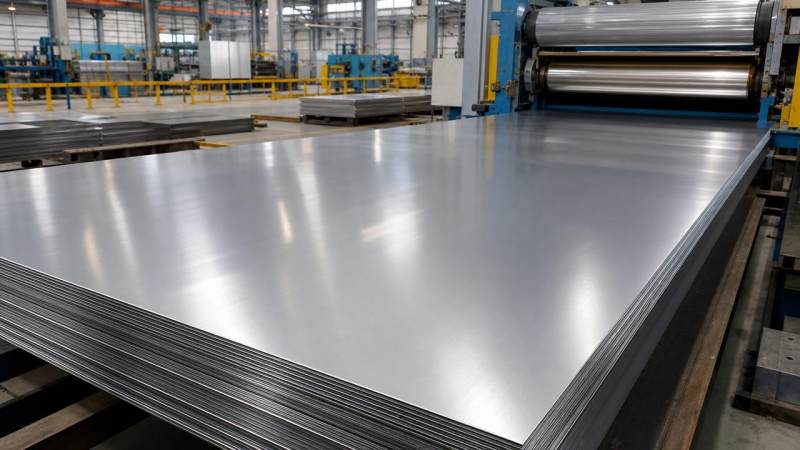
In steel fabrication, small dimensional differences often create larger production problems. A sheet that varies too much in thickness or flatness can affect blanking, bending angles, hole alignment, and surface finishing.
That is why cold rolled steel sheet is widely used for cabinets, brackets, enclosures, panels, light structural parts, and formed components that need a more controlled result than hot rolled material usually provides.
For day-to-day shop use, the value is simple. Better consistency means fewer adjustments at the machine, fewer rejects during forming, and less rework before painting, plating, or final assembly.
What defines this material in practical terms
Cold rolled steel sheet is produced by further processing steel after hot rolling. The material is rolled at near room temperature to improve dimensional accuracy, surface finish, and mechanical consistency.
This does not mean every cold rolled sheet behaves the same way. Grade, temper, processing route, and finishing condition all influence how the sheet cuts, bends, and performs in service.
In fabrication settings, three points usually deserve the closest attention:
- surface quality for appearance and coating performance
- tolerances for process stability and fit
- formability for bending, stamping, and shaping
Surface quality affects more than appearance
A smoother surface is one of the clearest reasons to select cold rolled steel sheet. It is easier to inspect, easier to clean, and often better suited for painted or plated finishes.
Surface quality matters not only for visible parts. It also affects friction in forming, consistency in welding preparation, and the final performance of coatings used for corrosion protection.
Typical issues to watch include scratches, roll marks, oil residue, edge damage, pitting, and waviness. Even minor defects can become more visible after powder coating or thin-film painting.
A practical inspection routine should check both the face and the edge condition. Edge burrs or local dents may seem minor at receiving, but they often create trouble during feeding and bending.
What to verify before processing
Tolerances are where process stability begins
Tight tolerances are often the hidden advantage of cold rolled steel sheet. Thickness variation, width control, and flatness directly influence part accuracy, especially in repeat production.
If a sheet runs slightly thicker than expected, bend deduction can change. If flatness is inconsistent, laser cutting tables, press brakes, and automated lines may need repeated correction.
This is especially important where multiple fabricated parts must align without force. Good tolerance control saves time during assembly and reduces the need for slot enlargement or manual adjustment.
Reliable suppliers usually document compliance with ASTM, EN, JIS, or GB requirements. Hongteng Fengda, as a structural steel manufacturer and exporter from China, works with these major standards across different product categories and custom orders.
That broader manufacturing discipline matters even when the application is not highly decorative. Consistent production, traceable quality control, and dependable lead times reduce risk across fabrication schedules.
Formability decides whether the sheet works in the shop
Good formability means the material can be bent, drawn, stamped, or shaped without cracking, severe springback, or surface tearing. For many fabricated parts, this matters more than nominal strength alone.
Cold rolled steel sheet is often selected because it gives a better balance between dimensional control and forming performance. Still, actual behavior depends on grade selection, bend radius, direction of bend, and tooling condition.
A common mistake is choosing a stronger grade without reviewing the forming requirement. Higher strength may support load demand, but it can also increase springback and reduce allowable forming severity.
In practical use, it helps to compare material certification with a sample bending trial before full production. That small step often prevents scrap during the first batch.
Signs that formability needs closer review
- cracking on outer bend surfaces
- unexpected springback after forming
- surface scoring from tooling contact
- variation between coils or batches
- difficulty holding repeatable angles
Different applications need different reading of steel performance
Not every fabricated part demands the same balance of properties. A painted electrical enclosure may prioritize surface finish, while a bracket with multiple bends may focus on formability and angle consistency.
For light structural assemblies, tolerance and weld preparation may matter most. For visible consumer-facing components, even minor surface marks can become unacceptable after finishing.
This is also why material selection should not happen in isolation. Cutting method, lubrication, tooling wear, storage condition, and finishing route all affect how cold rolled steel sheet performs in real production.
A useful comparison comes from broader steel project work. In civil and water-retaining applications, the material focus shifts from thin-sheet formability to structural section performance, corrosion environment, and installation efficiency.
For example, Hot Rolled Steel Sheet Pile is used in retaining wall and water retaining wall systems, where U Sheet Pile sections can be freely combined into a continuous, tight barrier.
Those products may use grades such as S275, S355, S390, S430, SY295, SY390, and ASTM A690, with standards including EN10248, EN10249, JIS5528, JIS5523, and ASTM.
With customizable dimensions and single lengths extending beyond 80 meters, they solve a different problem than cold rolled steel sheet, yet the same sourcing logic applies: match steel properties to the job, not just the price.
How to judge a suitable cold rolled steel sheet
A practical review should begin with the part itself. Thickness, bend geometry, visible finish requirements, joining method, and operating environment all influence what sheet specification will actually work.
Then compare the material data with shop conditions. A sheet that performs well in one facility may behave differently if tooling radius, lubrication, or feeding equipment changes.
The following points are usually worth confirming before release:
- required standard and grade
- thickness tolerance and flatness range
- surface class for visible or coated parts
- forming radius and expected springback
- weldability and coating compatibility
- batch consistency and mill documentation
This kind of checklist supports better communication between design, production, and supply teams. It also reduces the chance of choosing cold rolled steel sheet by habit rather than by actual process need.
A more reliable next step
Cold rolled steel sheet delivers its value when surface quality, tolerances, and formability are evaluated together. Looking at only one property can lead to avoidable issues once fabrication begins.
A clearer approach is to define the part requirement first, then compare sheet grades, standards, and processing expectations against actual shop conditions. Sample trials, documentation review, and supplier consistency all matter.
Where projects include both fabricated sheet parts and larger structural steel needs, working with a supplier that understands standards, customization, and export execution can simplify planning and reduce downstream uncertainty.
The most useful next move is to build a simple evaluation sheet for each application: finish requirement, tolerance limit, forming demand, and delivery consistency. That turns material selection into a repeatable decision, not a guess.
Please give us a message


Please enter what you want to find