Choosing between cold rolled and hot rolled steel can directly affect product performance, cost, and processing efficiency. For technical evaluators, understanding the practical uses of cold rolled steel sheet is essential when surface finish, dimensional accuracy, and tighter tolerances matter. This article explains where cold rolled steel sheet delivers clear advantages and when it is the better choice for industrial and structural applications.
When does cold rolled steel sheet make more technical sense?
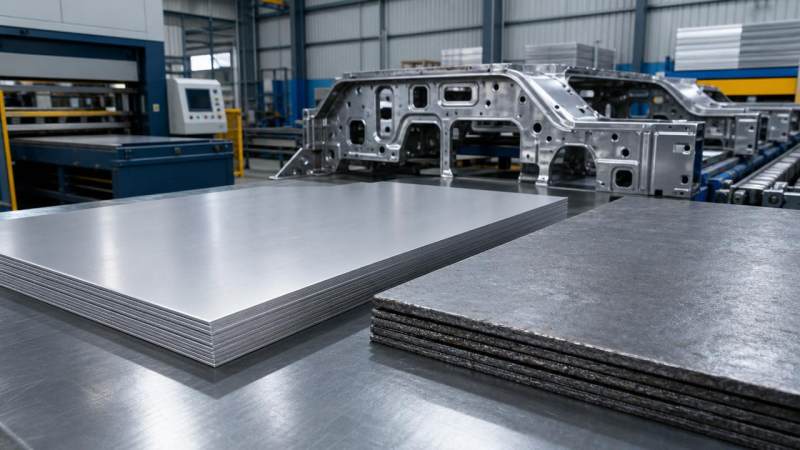
Cold rolled steel sheet is produced by further processing hot rolled steel at room temperature. That additional rolling stage improves thickness consistency, surface quality, and dimensional control. For technical assessment teams, these differences are not cosmetic details. They often determine whether downstream forming, welding, coating, and assembly will run smoothly or create avoidable variation.
In practical sourcing, the question is not whether one material is universally better. The real issue is fitness for use. Cold rolled steel sheet is typically selected when the end product requires a clean appearance, close tolerances, repeatable bending performance, or predictable behavior in automated fabrication lines.
Hot rolled steel remains valuable for many heavy structural and cost-sensitive uses. However, when part geometry, coating adhesion, or visible finish affects acceptance criteria, cold rolled material often reduces total production risk even if the initial purchase price is higher.
Key reasons technical evaluators prefer cold rolled material
- Better surface finish for painting, powder coating, plating, and decorative applications where scale or roughness can cause rework.
- Tighter thickness and width consistency, which supports precision stamping, laser cutting, roll forming, and automated assembly.
- Improved flatness and cleaner edges in many supply programs, helping reduce fixture adjustment and secondary correction.
- More stable appearance for exposed components used in appliances, panels, cabinets, shelving, and equipment covers.
Cold rolled steel sheet vs hot rolled steel: what actually changes in use?
The table below highlights the decision points most relevant to engineers, buyers, and technical evaluators comparing cold rolled steel sheet with hot rolled steel in fabrication and project delivery.
The table shows why total manufacturing cost should be reviewed instead of purchase price alone. In many projects, cold rolled steel sheet lowers scrap, reduces sanding or pickling, improves coating consistency, and shortens setup time. Those savings can offset the higher base material price.
Use hot rolled steel when these conditions dominate
- The part is hidden inside a structure and visual finish has no commercial value.
- Broad tolerances are acceptable and machining will remove surface irregularities later.
- The project is tonnage-driven and material cost is the primary control factor.
Which applications benefit most from cold rolled steel sheet?
Application suitability is one of the fastest ways to judge material choice. The following matrix helps technical evaluators decide when cold rolled steel sheet adds measurable value in production and field performance.
For purely load-bearing sections such as standard beams, channels, or large structural members, hot rolled products often remain the logical option. But for sheet-based fabricated parts, especially where finish and precision influence acceptance, cold rolled steel sheet usually performs better across the full process chain.
A related example for anti-slip floor applications
Not every sheet application calls for a plain cold rolled surface. In transportation, construction platforms, machinery zones, and shipbuilding walkways, patterned plate can be more appropriate. A good example is A36 Patterned steel plate, which is supplied for anti-skid and decorative uses where grip and durability are more important than a smooth finish.
This product range commonly covers materials such as A36, Q235B, 235JR, S235, SS400, and related grades, with thickness from 2-8mm, width from 600mm-1800mm, and length from 2m-12m or as required. For equipment surrounds and floor areas, patterned surfaces can improve safety while still meeting common export and inspection expectations under standards such as ASTM, DIN, JIS, BS, GB/TC, ISO, SGS, and BV.
What technical properties should you verify before specifying cold rolled steel sheet?
Selecting cold rolled steel sheet is not only about choosing the process route. It also requires a disciplined review of grade, mechanical performance, tolerance needs, finishing method, and fabrication sequence. Technical evaluators should confirm the following points before releasing a purchase decision.
Core specification checks
- Confirm the required steel grade and reference standard, such as ASTM, EN, JIS, or GB, based on the destination market and end-use requirement.
- Review thickness range and tolerance carefully. Small tolerance improvements can significantly affect bending radius, fit-up, and fastener alignment.
- Check whether the part will be painted, galvanized, plated, or powder coated, because surface preparation expectations differ by finish route.
- Match the material to the fabrication process, including stamping, laser cutting, welding, roll forming, or CNC bending.
- Clarify coil, sheet, or cut-to-length supply, since logistics and production efficiency may change with packaging format.
When the material will enter an international project, traceability and document readiness are also important. Technical teams should request mill test documentation, standard references, and any agreed inspection points before mass production begins.
How should procurement teams evaluate cost beyond the material price?
Cold rolled steel sheet often appears more expensive in direct price comparison, but many technical buyers now review total conversion cost rather than invoice cost alone. That approach is especially useful when delivery windows are tight and production disruption is expensive.
A lower-priced hot rolled sheet may require extra descaling, grinding, straightening, or coating preparation. It may also increase rejection risk in visible products. By contrast, cold rolled steel sheet can support faster throughput, cleaner finish quality, and more stable dimensional results.
Typical cost factors to compare
- Material unit price per ton or per sheet.
- Surface preparation time before painting or coating.
- Scrap and rework rates caused by tolerance variation.
- Machine setup losses in stamping or automated bending lines.
- Delivery reliability and supply continuity for repeated orders.
What should technical evaluators ask a steel supplier before approval?
Supplier capability matters as much as material choice. A technically acceptable grade can still create project risk if the supplier cannot maintain consistent tolerances, stable lead times, or export documentation. The checklist below is useful during supplier assessment for cold rolled steel sheet and related structural steel products.
For global buyers, Hongteng Fengda brings practical value because its business is built around structural steel manufacturing and export. The company supplies angle steel, channel steel, steel beams, cold formed steel profiles, and customized structural components, while supporting projects that require stable production, controlled quality, and dependable delivery coordination across multiple regions.
That matters when a project involves not just one material line, but a package of fabricated or standardized steel products. A supplier that understands specification mapping, OEM requirements, and export execution can reduce sourcing complexity for technical evaluators.
Common mistakes when choosing cold rolled steel sheet
Mistake 1: focusing only on yield strength
Mechanical strength matters, but many failures in procurement come from ignoring finish quality, flatness, tolerance, or forming behavior. A technically strong material can still be the wrong choice if it creates coating defects or assembly misalignment.
Mistake 2: assuming hot rolled and cold rolled are interchangeable
They may share similar base chemistry in some cases, but their process history changes surface and dimensional performance. Interchangeability should never be assumed without reviewing part function and downstream operations.
Mistake 3: not aligning specification with end market standards
For exported products, document format and standard references can affect approval, customs handling, and project acceptance. Technical evaluators should align grade, testing expectations, and paperwork with the target market before ordering.
FAQ: practical questions buyers ask about cold rolled steel sheet
Is cold rolled steel sheet always better for fabrication?
No. It is better for many precision, appearance-sensitive, and coating-sensitive parts, but not always for heavy structural or low-cost applications. The right choice depends on tolerance demand, finish requirement, processing route, and budget target.
Which industries most often prefer cold rolled steel sheet?
It is widely used in manufacturing sectors that require clean surface quality and dimensional repeatability, such as cabinets, appliances, storage systems, transport components, equipment housings, and precision fabricated sheet metal parts.
What should I check before requesting a quotation?
Prepare the required grade, thickness, width, sheet or coil format, surface expectation, processing method, destination standard, order quantity, and target delivery date. Clear technical input improves quotation accuracy and reduces revision time.
Can one supplier support both precision sheet and structural steel sourcing?
Yes, and that can simplify coordination. When a manufacturer also supplies channels, beams, angle steel, cold formed profiles, and customized structural components, project teams can manage fewer vendors and align quality and lead-time expectations more effectively.
Why work with a structural steel manufacturer and exporter with broad product capability?
Technical evaluation is rarely isolated to one sheet grade. Many projects combine sheet parts, structural sections, cold formed components, and custom fabrication. Working with a supplier that understands these interfaces helps reduce design mismatch, procurement delays, and communication gaps.
Hongteng Fengda supports global construction, industrial, and manufacturing projects with standardized products and OEM solutions. Its manufacturing focus, quality control discipline, and export support are relevant to buyers who need consistent supply, international standard alignment, and practical response on drawings, dimensions, and delivery planning.
Contact us for specification review and sourcing support
If you are evaluating cold rolled steel sheet for a current project, you can contact Hongteng Fengda for targeted support rather than a generic quotation. Our team can help review grade selection, sheet thickness, dimensional tolerance, surface expectations, and whether hot rolled or cold rolled material is more suitable for your fabrication route.
You can also discuss delivery schedules, OEM dimensions, related structural steel products, documentation needs under ASTM, EN, JIS, or GB references, and sample or drawing-based assessment. For buyers managing cost pressure, qualification risk, and complex application scenarios, that early technical review can shorten decision time and improve sourcing confidence.
Please give us a message


Please enter what you want to find