When comparing steel materials for structural and industrial applications, understanding the differences between cold rolled coil and hot rolled steel is essential for accurate technical evaluation. From dimensional precision and surface finish to strength, formability, and cost, each option offers distinct advantages. This article outlines the key performance differences to help engineers, buyers, and project decision-makers choose the right steel solution for specific requirements.
Why a Checklist Matters When Comparing Cold Rolled Coil and Hot Rolled Steel
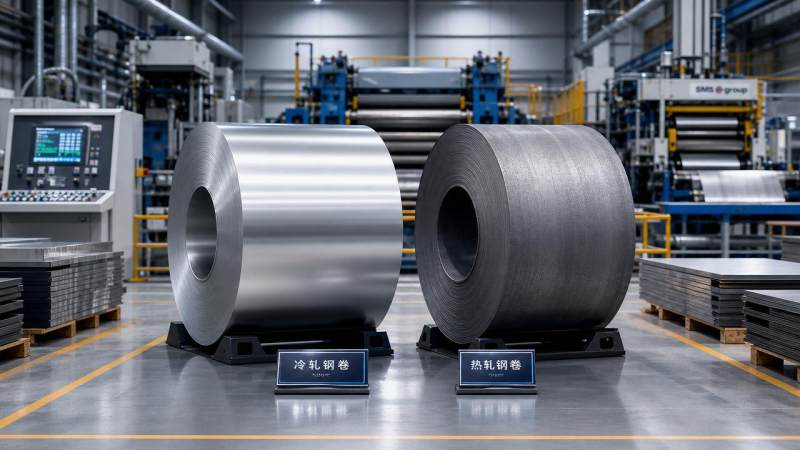
A direct price comparison rarely tells the full story. Cold rolled coil and hot rolled steel differ in processing route, tolerance, finish, and downstream performance.
Using a checklist prevents specification errors. It also helps reduce rework, coating issues, fabrication delays, and unnecessary material cost across steel selection decisions.
For structural steel supply, the right evaluation method should connect material properties with forming, welding, finishing, corrosion exposure, and final service conditions.
Core Checklist: Key Performance Differences to Review
- Check dimensional tolerance first, because cold rolled coil usually offers tighter thickness and width control than hot rolled products.
- Compare surface finish carefully, since cold rolling produces a smoother and cleaner surface suitable for painting, plating, and visible applications.
- Review strength and hardness values, as cold rolling typically increases yield strength and hardness through work hardening.
- Evaluate ductility and formability, because hot rolled steel may remain easier for heavy forming and structural shaping in thicker sections.
- Confirm flatness requirements, especially for fabrication lines where precise feeding, stamping, or roll forming affects production stability.
- Measure edge condition and coil consistency when the material will be slit, blanked, or processed into exact-profile components.
- Assess scale and oxide presence, since hot rolled steel often carries mill scale that may require extra cleaning before coating.
- Estimate total processing cost rather than base price alone, including pickling, leveling, machining, finishing, and scrap risk.
- Match corrosion protection needs with post-treatment plans, especially if the steel will be galvanized, painted, or used outdoors.
- Verify applicable standards such as ASTM, EN, JIS, or GB to align material performance with project and export requirements.
1. Processing Route and Its Effect on Performance
Hot rolled steel is processed above recrystallization temperature. It is shaped while softer, then cooled, which makes production efficient for larger sections and thicker gauges.
Cold rolled coil starts from hot rolled material and undergoes further rolling at or near room temperature. This secondary process improves precision, surface quality, and mechanical consistency.
2. Surface Finish and Appearance
One major advantage of cold rolled coil is its refined surface. It usually appears smooth, bright, and uniform, which supports decorative use and high-quality coating adhesion.
Hot rolled steel commonly shows scale, roughness, and slight surface variation. For hidden structural applications, this may be acceptable. For exposed parts, extra finishing is often necessary.
3. Tolerance, Flatness, and Dimensional Stability
Cold rolled coil is preferred where exact thickness, flatness, and repeatable dimensions matter. This is especially important in stamping, appliance parts, cabinets, panels, and precision fabrication.
Hot rolled products can vary more after cooling. That variation may not affect heavy construction, but it can create issues in automated lines and close-fit assemblies.
4. Strength, Hardness, and Formability
Because of strain hardening, cold rolled coil often provides higher yield strength and a harder surface. This improves resistance to deformation in many manufactured components.
However, increased hardness may reduce ductility in some grades. Hot rolled steel can be a better option for applications requiring significant bending, deep shaping, or thick-section processing.
Application-Based Comparison for Real Steel Projects
Precision Fabrication and Industrial Manufacturing
Choose cold rolled coil when the part needs stable dimensions, clean edges, and a quality surface. Typical examples include enclosures, light-gauge profiles, shelving, ducts, and machine covers.
If corrosion resistance is also required, a galvanized solution may be more practical than bare substrate plus separate coating operations. In such cases, Steel Coil Galvanized can support both surface quality and service life. Common grades include DX51D+Z, SGCC, and S350GD+Z, with thickness from 0.12mm to 3.5mm and width from 600mm to 1500mm.
Structural and Heavy-Duty Construction
Use hot rolled steel for frames, supports, base structures, and large welded components where section size, weldability, and economy are the priority.
In these applications, small surface imperfections or broader tolerances are usually acceptable. Material efficiency and fabrication practicality often outweigh cosmetic performance.
Outdoor Exposure and Corrosion-Prone Environments
Base steel selection should consider the final protective system. Cold rolled coil performs well when further treated, while galvanized coil adds immediate corrosion protection through zinc coating.
Zinc acts as a barrier between the environment and steel, and it sacrifices itself first when damage occurs. That makes galvanized material useful for roofing, cladding, doors, ducts, and formed sections.
Commonly Overlooked Risks in Material Selection
Ignoring Total Conversion Cost
A lower hot rolled purchase price can become less competitive after descaling, pickling, grinding, and repainting. Compare finished-part cost, not only raw coil cost.
Assuming All Cold Rolled Coil Grades Behave the Same
Mechanical performance varies by grade, temper, and downstream treatment. Always verify yield strength, tensile strength, and elongation against the forming or structural requirement.
Overlooking Coating Compatibility
If painting, powder coating, or galvanizing is planned, surface cleanliness and roughness matter. Cold rolled coil generally reduces preparation steps and improves coating uniformity.
Missing Standard and Export Compliance
Global projects often require ASTM, EN, JIS, or GB compliance. Confirm grade equivalency, mill test data, and dimensional standards before production or shipment begins.
Practical Selection Advice
- Define the final use first, including appearance, load, forming depth, welding, and exposure conditions.
- Specify required tolerances early, especially for automated fabrication or multi-part assembly.
- Request mechanical data and coating details instead of relying only on generic grade names.
- Compare raw material cost with downstream processing cost and reject-rate risk.
- Source from suppliers with stable production, export experience, and standard-compliant quality control.
For projects needing reliable structural steel supply, customized profiles, and internationally compliant products, strong manufacturing control makes a measurable difference in quality consistency and delivery performance.
Hongteng Fengda, a structural steel manufacturer and exporter from China, supplies angle steel, channel steel, steel beams, cold formed steel profiles, and customized steel components for global construction and industrial use.
Conclusion and Next Step
Cold rolled coil stands out in precision, surface finish, and consistency. Hot rolled steel remains valuable for heavier sections, broader tolerance applications, and cost-sensitive structural work.
The best choice depends on processing route, dimensional demand, finishing needs, corrosion exposure, and total fabricated cost. Use this checklist to review technical requirements before confirming the grade.
If the application requires both formability and corrosion resistance, review galvanized coil options, coating class, and applicable standards before placing the order. A clear specification at the start saves time, cost, and production risk later.
Please give us a message


Please enter what you want to find