For technical evaluators seeking efficient structural solutions, cold formed steel angle offers a strong balance of lightweight performance, dimensional accuracy, and cost control. Widely used in modern construction and industrial applications, it helps reduce dead load while maintaining reliable strength and fabrication flexibility. Understanding its benefits is essential when comparing material options for projects that demand durability, compliance, and efficient sourcing.
Why cold formed steel angle fits lightweight structural scenarios
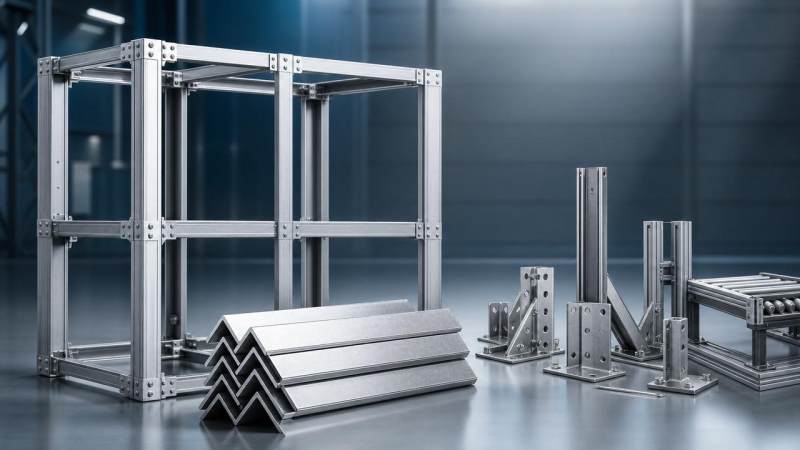
Lightweight structures do not share one single requirement. Roof framing, modular buildings, supports, racks, and equipment frames all behave differently under load.
That is why cold formed steel angle should be judged by scenario, not by name alone. Geometry, coating, thickness, and fabrication tolerance all matter.
Compared with heavier hot rolled sections, cold formed steel angle often supports faster installation, easier handling, and reduced transport weight.
In projects where dead load affects foundation size or lifting limits, these benefits can directly improve project economics.
Hongteng Fengda, a structural steel manufacturer and exporter from China, supplies angle steel, channels, beams, cold formed profiles, and OEM structural parts under ASTM, EN, JIS, and GB standards.
How demand changes across real application environments
The value of cold formed steel angle becomes clearer when the service environment is defined early. Indoor dry applications need different protection than outdoor exposed systems.
Some projects prioritize appearance and tight dimensional control. Others focus on corrosion resistance, connection efficiency, or high-volume repeatability.
A correct selection process usually starts with five questions:
- What load type dominates: static, dynamic, wind, or vibration?
- Is weight reduction important for transport or erection?
- Will the section be bolted, welded, punched, or cut repeatedly?
- What corrosion exposure level will the structure face?
- Which standard and tolerance level must the supplier meet?
These questions help determine whether cold formed steel angle is the most efficient option, or whether a different section should be combined with it.
Typical scenarios where cold formed steel angle creates measurable value
1. Light building frames and secondary support systems
In purlin supports, wall bracing, edge framing, and connection members, cold formed steel angle performs well because of its low self-weight and easy fabrication.
Projects often benefit from simpler site handling. Smaller pieces can be moved quickly, especially where crane access is limited or installation windows are short.
2. Modular buildings and prefabricated units
Modular systems depend on repeatable dimensions. Cold formed steel angle supports this need through consistent profiles and predictable connection interfaces.
When modules travel long distances, every kilogram matters. Reduced structural weight can improve shipping efficiency without sacrificing assembly performance.
3. Equipment frames, racks, and industrial supports
For machinery bases, shelving frames, cable supports, and utility skids, cold formed steel angle offers a practical mix of stiffness and processing convenience.
In these scenarios, hole positioning, straightness, and cut accuracy usually affect assembly speed more than raw section weight alone.
4. Outdoor infrastructure with coating requirements
Outdoor support members need more than strength. They must resist corrosion through appropriate surface treatment and design detailing.
In some supporting assemblies, a complementary product such as Galvanized Round Steel may be selected for pins, connectors, rods, or ancillary components requiring galvanized protection.
Key benefits of cold formed steel angle in lightweight structures
The core advantage of cold formed steel angle is not only lower mass. It is the combination of performance factors that improves total project efficiency.
- Lower dead load, helping reduce supporting demand.
- Good dimensional accuracy for prefabricated assemblies.
- Efficient punching, cutting, and forming during fabrication.
- Flexible use in bracing, frames, trims, and support members.
- Potential savings in freight, handling, and installation labor.
A well-specified cold formed steel angle can also improve consistency across repeated production batches, which matters for export projects and standardized assemblies.
Scenario-based comparison: what different applications really need
How to choose the right cold formed steel angle for each case
Selection should move from use conditions to technical details. This avoids overdesign in simple applications and underperformance in demanding ones.
- Define service environment and expected design life.
- Confirm section size, thickness, and mechanical requirements.
- Check fabrication methods, including welding and punching.
- Match the coating system to exposure conditions.
- Review compliance with ASTM, EN, JIS, or GB standards.
- Verify supplier consistency, inspection, and lead time capability.
Cold formed steel angle performs best when the section is engineered as part of the whole system, not treated as an isolated component.
Common mistakes when evaluating cold formed steel angle
A frequent mistake is focusing only on price per ton. Lightweight structures should be evaluated by installed cost, handling effort, and fabrication waste.
Another mistake is assuming all cold formed steel angle products provide the same tolerance or coating quality. Supplier capability can vary significantly.
Projects also sometimes overlook local buckling behavior in thin sections. Good design practice must consider actual load paths and connection details.
Corrosion planning is often delayed too long. In exposed conditions, galvanized or otherwise protected systems should be decided before fabrication begins.
Where related accessories are needed, galvanized ancillary materials such as Galvanized Round Steel can support long-term durability in coordinated assemblies.
What a reliable supply partner should support
For global steel sourcing, technical support should extend beyond simple quotation. Consistency, documentation, and production control are equally important.
- Stable manufacturing capacity for repeat orders
- Quality control aligned with international standards
- Customization for OEM drawings and special dimensions
- Clear inspection records and traceable material data
- Reliable export packaging and lead time management
Hongteng Fengda supports construction, industrial, and manufacturing projects with structural steel products designed for dependable export supply and practical application needs.
Next-step guidance for evaluating project fit
If a project targets lower dead load, faster assembly, and reliable dimensional consistency, cold formed steel angle deserves serious consideration.
Start by reviewing drawings, loading conditions, coating expectations, and connection methods. Then compare total installed value rather than material weight alone.
The right cold formed steel angle solution can reduce sourcing risk, support compliance, and improve execution efficiency across lightweight structural applications.
For projects needing standard sections or customized structural steel support, a detailed technical inquiry is the fastest path to a suitable specification and dependable supply plan.
Please give us a message


Please enter what you want to find