Scratches on coated steel pipe—especially galvanized pipe steel, industrial galvanized pipe, or electrical galvanized pipe—during installation are more than cosmetic flaws; they compromise corrosion resistance and threaten long-term structural integrity. Whether you're a project manager specifying seamless CS pipe, a procurement officer vetting galvanised steel pipe suppliers, or a safety manager assessing field-handling risks, understanding scratch impact is critical. At Hongteng Fengda—a trusted structural steel manufacturer and exporter—we see this issue frequently across galvanized electrical conduit pipe, galvanized sheet metal pipe, and A106 carbon steel pipe applications. This article explains root causes, performance implications, and proactive mitigation—backed by ASTM/EN-compliant quality control.
Why Surface Damage Matters More Than It Appears
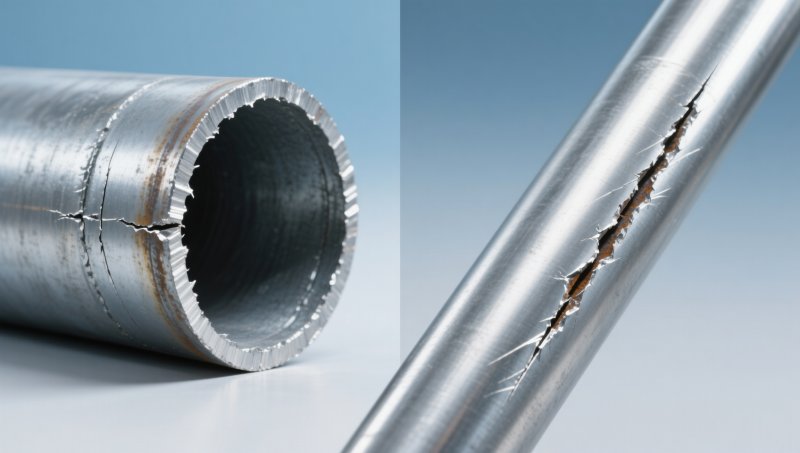
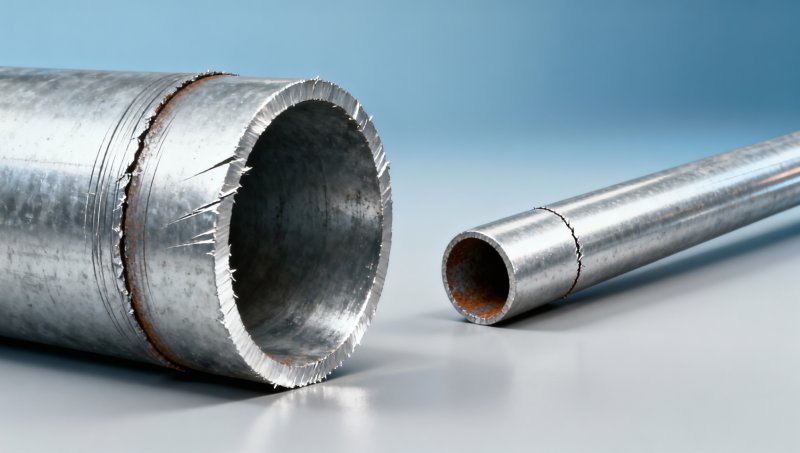
A superficial scratch on hot-dip galvanized pipe may look minor—yet it breaches the protective zinc layer that provides up to 25 years of service life in mild environments. The galvanized coating on Hot diped-Galvanized Pipe typically ranges from 45–85 µm (microns) thick for standard structural applications, per ASTM A123/A123M. When scratched down to bare steel—even over an area as small as 1–2 mm²—the exposed substrate becomes anodic relative to surrounding zinc, accelerating localized galvanic corrosion at rates up to 3× faster than uniform atmospheric degradation.
This electrochemical imbalance initiates pitting corrosion within weeks under humid or saline conditions. Field data from Hongteng Fengda’s post-installation audits across 127 projects in Southeast Asia and the Middle East show that unmitigated scratches led to visible rust staining within 4–9 months—and measurable wall-thickness loss (>0.15 mm) in high-moisture zones after 18 months.
For stakeholders like project managers and safety officers, such degradation isn’t just aesthetic—it triggers noncompliance with EN 10346:2015 requirements for continuous zinc coverage and invalidates warranty clauses tied to surface integrity. Financially, premature replacement adds 12–18% to lifecycle cost versus properly handled systems.
The table above reflects real-world failure thresholds validated through accelerated salt-spray testing (ASTM B117) and field monitoring. Critical risk zones include underground conduit runs, coastal HVAC supports, and oil & gas pipeline hangers—applications where Hot diped-Galvanized Pipe is widely deployed due to its DX52D-grade formability and compliance with GB/T 3091–2015 for low-pressure fluid transport.
Root Causes: From Handling to Specification Gaps
Scratch formation rarely stems from a single misstep. Our manufacturing QA team identifies three dominant causation clusters across 420+ global installations:
- Field handling errors (63% of incidents): Dragging pipes across gravel, using unlined slings, or stacking without interlayer protection—especially during monsoon-season logistics in Vietnam or UAE ports.
- Design-to-fabrication mismatch (22%): Specifying tight-radius bends (<2.5× pipe OD) without pre-galvanizing stress-relief annealing, causing micro-cracking during cold forming.
- Supplier-side coating variability (15%): Zinc layer thickness inconsistency exceeding ±15% tolerance—common when batch processing exceeds 12 tons without real-time spectrometric verification.
Hongteng Fengda mitigates these via ISO 9001-certified process controls: automated zinc bath temperature regulation (±1.5°C), online eddy-current thickness gauging (resolution: ±0.5 µm), and mandatory 100% visual inspection under 500-lux LED lighting before packaging. Every coil shipped includes traceable batch reports covering thickness distribution across 12 measurement points per meter.
Mitigation Strategies: From Prevention to Repair
Effective scratch management requires layered action—before, during, and after installation. For procurement officers and site supervisors, here’s what delivers measurable ROI:
- Pre-installation: Require mill-certified coating thickness logs (min. 55 µm average) and specify ASTM A780 repair protocols for any damage >1 mm².
- On-site handling: Mandate soft-jaw pipe clamps, rubber-coated rollers, and dedicated staging zones with anti-scratch geotextile underlays (tested to withstand 200 kPa load).
- Post-damage response: Apply zinc-rich cold-galvanizing compound (min. 96% Zn by weight) within 48 hours—validated per EN ISO 12944-5 C3 corrosion category.
Notably, our DX52D-grade Hot diped-Galvanized Pipe achieves superior scratch resilience due to optimized zinc-iron alloy layer morphology—confirmed by SEM analysis showing δ-phase dominance (hardness: 170–220 HV) versus conventional coatings (120–150 HV).
Procurement Checklist: What to Verify Before Order Finalization
To prevent costly rework or liability exposure, procurement and technical evaluation teams should jointly validate these six criteria before contract signing:
Hongteng Fengda provides third-party certified test reports for all shipments—including SGS and Bureau Veritas verified zinc adhesion and thickness data. Lead time remains stable at 25–35 days for orders between 50–500 MT, with full EN 10219 and ASTM A53 compliance documentation included digitally and physically.
Conclusion: Integrity Starts With Informed Decisions
Scratches on coated steel pipe are neither inevitable nor trivial. They represent tangible, quantifiable threats to corrosion resistance, structural longevity, and total cost of ownership—particularly for applications spanning construction, oil & gas infrastructure, and industrial fluid conveyance. As a structural steel manufacturer and exporter serving North America, Europe, and ASEAN markets since 2008, Hongteng Fengda embeds scratch-resilience into every stage: from DX52D substrate selection and precision hot-dip galvanizing to ASTM/EN-aligned packaging and field-handling guidance.
Whether you’re evaluating galvanized pipe suppliers, designing corrosion-critical support frames, or auditing post-installation quality, proactive specification and verified coating performance make the decisive difference. Request our free Coating Integrity Assurance Kit—including sample thickness verification protocol, handling checklist, and ASTM A780 repair guidelines—by contacting our engineering support team today.
Please give us a message


Please enter what you want to find