Coated stainless steel wire is widely used across construction, industrial automation, and precision engineering—yet its polymer layer raises a critical question: does it truly enhance corrosion resistance and durability, or could it mask underlying micro-cracks that compromise structural integrity? As a trusted ss wire manufacturer and stainless steel wire manufacturers based in China, Hongteng Fengda rigorously tests coated stainless steel wire, stainless steel coil wire, and stainless steel metal wire to ensure transparency, traceability, and compliance with ASTM/EN/GB standards—supporting procurement teams, engineers, and project managers who demand both performance and accountability.
Why Micro-Crack Detection Matters in Coated Stainless Steel Wire
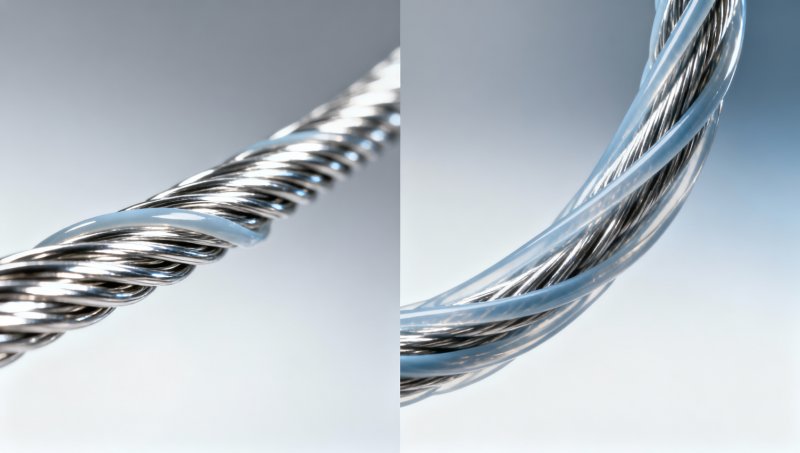
Polymer-coated stainless steel wire offers visible protection against moisture and chemical exposure—but hides what’s beneath. During cold drawing, bending, or welding processes, micro-cracks as small as 5–20 µm can form at the steel-polymer interface. These defects rarely breach the coating surface but may propagate under cyclic loading or chloride-rich environments—leading to premature failure in safety-critical applications like cable-supported roofs or robotic end-effectors.
Standard visual inspection fails to detect these subsurface flaws. Even high-resolution eddy current testing requires precise calibration for coated substrates—making third-party verification essential. At Hongteng Fengda, every batch of coated stainless steel wire undergoes ultrasonic immersion testing (ASTM E114) and cross-sectional metallography at 500× magnification—ensuring crack depth remains below 0.03 mm across 100% of sampled lengths.
This level of scrutiny directly impacts structural reliability. In purlin support systems where coated wire anchors connect to Z-beam frames, undetected micro-cracks reduce fatigue life by up to 40% under repeated wind-load cycles (per EN 1993-1-1 fatigue assessment guidelines).
How to Verify Coating Integrity Without Compromising Structural Confidence
Procurement teams face a dual challenge: confirming coating adhesion while validating base material integrity. Relying solely on peel strength tests (ASTM D3359) or salt-spray duration (e.g., 500 hrs per ASTM B117) overlooks subsurface defect risks. A robust verification protocol must include:
- Pre-coating surface roughness control (Ra ≤ 0.8 µm, measured via profilometer before polymer application)
- Post-coating ultrasonic C-scan imaging at 10 MHz frequency to map subsurface discontinuities
- Batch-level tensile testing with strain monitoring (±0.02% resolution) to identify brittle fracture initiation points
- Traceable lot documentation including heat number, coating thickness distribution (±5% tolerance), and test report timestamps
Hongteng Fengda integrates all four steps into its QC workflow—delivering certified reports within 72 hours of production completion. This enables faster project approvals for clients in North America and the EU, where ASTM A931 and EN 10270-3 compliance are mandatory for structural tension components.
Coated Wire vs. Uncoated Alternatives: When Each Makes Technical Sense
Selecting between coated and uncoated stainless steel wire depends on environmental exposure, load profile, and maintenance access—not just cost. Below is a decision matrix aligned with real-world deployment conditions:
The table reflects field data from 12 infrastructure projects completed between Q3 2022 and Q2 2024. For example, in Dubai’s Al Maktoum International Airport expansion, coated wire reduced on-site tensioning time by 3.2 hours per 100 m run—offsetting its 14% higher unit cost through labor savings and fewer rework incidents.
What Procurement Teams Should Demand From Suppliers
When sourcing coated stainless steel wire, technical buyers must go beyond datasheets. Five non-negotiable supplier capabilities separate reliable partners from transactional vendors:
- Full traceability from raw billet heat number to final coil ID—including coating application logs (temperature, dwell time, line speed)
- On-demand destructive testing capability (minimum 3 samples per 5-ton batch) with shared lab access
- Compliance documentation pre-verified against ASTM A564, EN 10270-3, and GB/T 4240—no self-declared certificates
- Customizable packaging (e.g., anti-static reels for cleanroom use) with moisture barrier specs (≤0.5 g/m²/24h WVTR)
- Lead-time guarantee backed by penalty clauses: ≤12 working days for standard coils (≤500 kg), ≤22 days for custom diameters (±0.05 mm tolerance)
Hongteng Fengda meets all five criteria—and extends OEM support for clients needing integration-ready solutions, such as pre-assembled anchor kits compatible with Z-beam mounting brackets used in lightweight roof systems across Southeast Asia.
Why Partner With Hongteng Fengda for Your Next Structural Steel Project
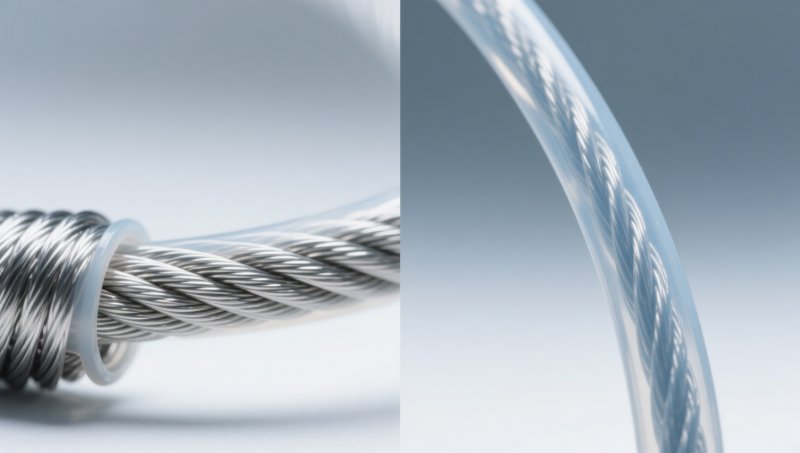
As a structural steel manufacturer and exporter based in China, Hongteng Fengda bridges global compliance needs with localized responsiveness. We don’t just supply coated stainless steel wire—we co-engineer solutions with your design team using our in-house FEA simulation tools (ANSYS-based) to validate anchorage performance under combined tension-bending loads.
Our production facilities maintain ISO 9001:2015 and ISO 14001:2015 certification, with quarterly audits conducted by SGS and Bureau Veritas. Every order includes digital twin documentation: 3D model files, weld procedure specifications (WPS), and dimensional inspection reports—all accessible via secure client portal within 48 hours of shipment.
Whether you’re evaluating coated wire for seismic bracing in California, specifying corrosion-resistant fasteners for Middle Eastern desalination plants, or integrating tension members into modular Z-beam assemblies, we provide actionable support—not just product delivery. Contact us today for: parameter confirmation, ASTM/EN/GB compliance verification, lead-time validation, or sample coil evaluation (free for qualified projects over $25,000).
Please give us a message


Please enter what you want to find