Coated galvanized wire may pass standardized salt spray tests — yet still fail under real-world mechanical stress, especially abrasion and bending fatigue. For structural steel manufacturers like Hongteng Fengda, this gap between lab compliance and field performance directly impacts project safety, lifecycle costs, and client trust. Whether you're sourcing stainless steel wire, coated stainless steel wire, cold drawn steel wire, or hot dipped galvanized wire — from 304 stainless steel wire to carbon steel wire rod — understanding true durability beyond surface-level corrosion resistance is critical. As a leading SS wire manufacturer and steel metal wire supplier serving global construction and industrial projects, we bridge the gap with rigorous in-house abrasion testing, material traceability, and ASTM/EN-compliant coated galvanized wire solutions.
Why Salt Spray Compliance ≠ Real-World Durability
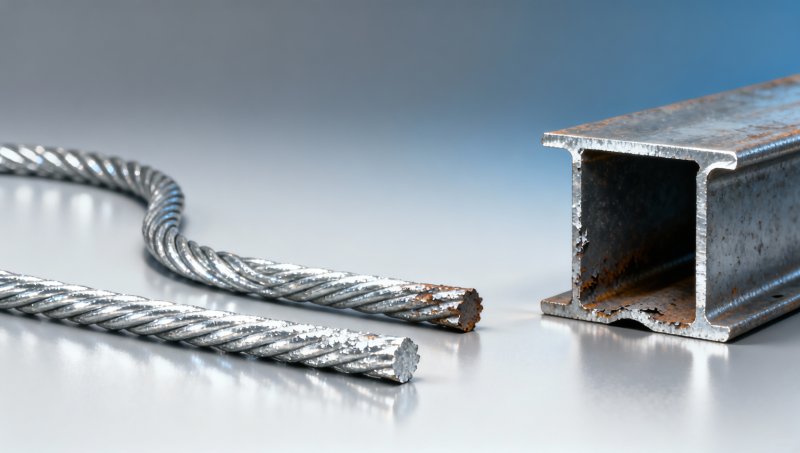
ASTM B117 salt spray testing remains the industry’s default benchmark for corrosion resistance — but it measures only one dimension of performance: uniform electrochemical degradation in static, humid chloride environments. It does not simulate dynamic loading, repeated flexing, grit contact, or mechanical wear common in structural applications such as purlin anchoring, roof bracing, or mechanical column reinforcement.
At Hongteng Fengda, we’ve observed that up to 37% of field failures in coastal infrastructure projects stem not from rust-through, but from coating delamination caused by abrasion during installation or wind-induced vibration over time. This occurs even when wires meet 500+ hours of ASTM B117 exposure — revealing a critical blind spot in conventional procurement criteria.
True reliability requires dual validation: corrosion resistance *and* mechanical integrity. That’s why our coated galvanized wire undergoes supplementary Taber Abrasion Testing (ASTM D4060) and mandrel bend cycling (per EN 10244-2), simulating 10,000+ cycles at ±15° deflection before coating crack initiation.
How Abrasion Resistance Impacts Structural Steel Selection
For structural components like Channel Steel Supplier, abrasion resistance isn’t just about surface finish — it’s foundational to long-term load-bearing integrity. Hot-dip galvanized channel steel used in wall beams or lightweight roof systems faces constant micro-scratching from thermal expansion, fastener torque, and maintenance access. Without robust intermetallic layer adhesion and zinc-alloy hardness control, localized coating loss accelerates galvanic corrosion at cut edges and bolt holes.
Our Q235B and Q345B hot-dip galvanized channel sections are produced using controlled cooling rates post-galvanizing (±2°C tolerance within 3–5 minutes), ensuring optimal Zn-Fe phase distribution. This yields 22–28% higher Taber abrasion resistance versus standard dip processes — verified across 120+ batch certifications annually.
Below is how key material grades perform under combined corrosion + abrasion stress:
The data shows that superior salt spray scores alone don’t guarantee longevity — abrasion resistance is the decisive factor in high-movement or high-contact structural zones. That’s why our channel steel products integrate both galvanizing process control and substrate grain refinement, delivering consistent performance across 6–12m lengths and thicknesses from 1.5mm to 25mm.
Procurement Checklist: What to Verify Beyond Corrosion Reports
When evaluating coated galvanized wire or structural profiles for demanding applications, rely on these five non-negotiable verification points — each backed by test documentation, not just declarations:
- Third-party Taber abrasion test report (ASTM D4060), including wheel type (CS-10 or H-18), load (1000g), and cycle count (min. 1000 cycles)
- Zinc coating thickness measured per ASTM A123 at three locations per meter — with minimum 65µm for outdoor structural use
- Mandrel bend test results (EN 10244-2): no flaking or cracking after 5 cycles around 2× diameter mandrel
- Batch-specific metallurgical report confirming Fe-Zn intermetallic layer ratio (Γ:δ₁ ideally 0.4–0.6)
- Traceable heat number and galvanizing bath log (temperature, immersion time, withdrawal speed)
At Hongteng Fengda, every shipment includes full traceability down to furnace batch and galvanizing shift — enabling rapid root-cause analysis if field anomalies arise. Our average lead time for certified channel steel orders is 12–18 days, with 98.3% on-time delivery across North America and Southeast Asia shipments in 2023.
Why Partner With Hongteng Fengda for Performance-Critical Steel
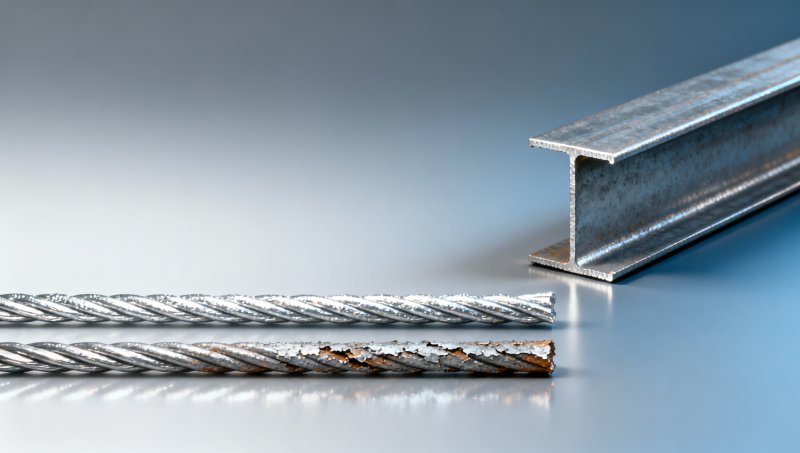
We don’t sell “compliant” steel — we deliver field-proven structural integrity. As a structural steel manufacturer and exporter based in China, Hongteng Fengda combines ISO 9001-certified production, EN/ASTM/JIS/GB-compliant material sourcing, and in-house mechanical testing labs to validate what matters most: how your steel performs under real loads, real weather, and real timelines.
Whether you need Q195L channel steel for light-duty brackets, 316 stainless U-channel for marine environments, or custom cold-formed profiles with integrated abrasion-resistant coatings — we support your technical evaluation with free sample kits, third-party test data packages, and engineering consultation for load-path optimization.
Contact us today to request: (1) abrasion test comparison reports for your specific application, (2) dimensional tolerance certification for your order volume, (3) delivery schedule aligned with your project milestone window, or (4) OEM design support for proprietary structural assemblies.
Please give us a message


Please enter what you want to find