Choosing the right steel plate for construction is no longer a simple thickness decision. Load demands, service conditions, and compliance expectations are changing together.
When project safety and lifecycle cost depend on material performance, selecting the right steel plate for construction becomes a strategic technical judgment.
Plate grade, yield strength, weldability, corrosion resistance, and dimensional tolerance all influence whether a structure performs as designed.
This guide explains current selection trends, key drivers, and practical evaluation methods for comparing steel plate for construction with greater confidence.
Load-based selection is becoming more precise across modern construction
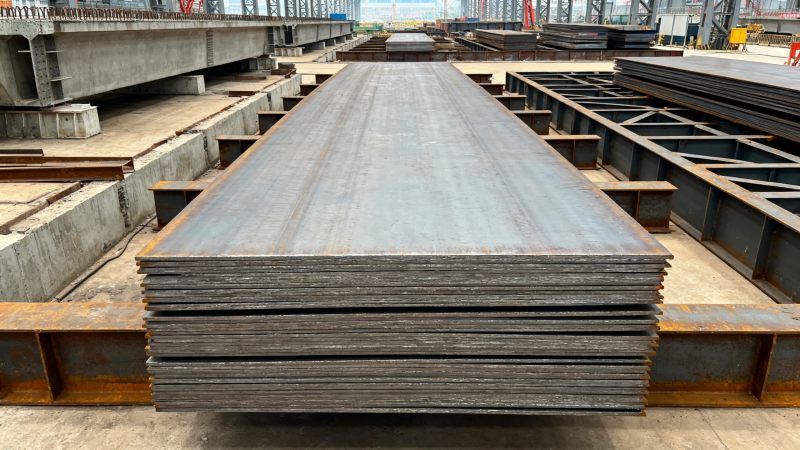
Construction design is moving toward tighter structural optimization. That shift changes how engineers and buyers evaluate steel plate for construction.
In the past, extra thickness often compensated for uncertainty. Today, weight efficiency, code alignment, and fabrication performance matter much more.
This means plate choice is increasingly tied to actual load cases, including static loads, dynamic loads, impact exposure, and fatigue risk.
For beams, base plates, stiffeners, bridge parts, equipment supports, and heavy frames, a suitable steel plate for construction must match both design calculations and site realities.
Why this matters now
Projects are larger, schedules are shorter, and structural systems are often more specialized. Wrong material choices create rework, welding problems, and inspection delays.
At the same time, international sourcing requires closer attention to ASTM, EN, JIS, and GB equivalence, especially for exported steel structures.
Several clear signals are reshaping steel plate decisions
The market shows a strong shift from general purchasing toward application-led material matching. The following factors are driving that change.
Main drivers behind these shifts
- More accurate structural modeling reduces tolerance for overdesign.
- Fabrication shops prefer materials that cut, form, and weld consistently.
- Harsh outdoor and coastal projects demand better anti-corrosion performance.
- Cross-border projects require reliable standard matching and documentation.
- Budget pressure encourages lifecycle thinking instead of lowest initial price.
Load, use, and environment should be evaluated together
A steel plate for construction should never be selected by thickness alone. The real decision starts with the type of force the member will carry.
1. Static load conditions
Columns, base plates, platforms, and equipment frames often face stable, predictable loading. Here, yield strength and bearing performance usually guide selection.
For these uses, common carbon structural plates may be sufficient if corrosion, temperature, and welding demands remain moderate.
2. Dynamic or fatigue-related loading
Bridges, crane structures, transport infrastructure, and machinery supports face repeated stress cycles. Fatigue resistance becomes more important than nominal strength alone.
In such cases, notch toughness, welding quality, and crack control may influence the right steel plate for construction more than low purchase price.
3. Corrosive or exposed service environments
Outdoor structures, marine-related facilities, substations, and roadside systems need protection against moisture, salt, and pollution.
In these applications, plate systems are often paired with galvanized accessories, support members, or corrosion-resistant structural elements.
For example, round supporting components used in towers, protection systems, and structural assemblies may require hot-dip galvanized durability.
A related option is Galvanized Round Steel, used in power towers, communication towers, highways, street light poles, and building steel structure components.
Its tensile strength of 570–820 MPa, galvanized finish, and broad standard compatibility support long anti-corrosion life in exposed structural systems.
Material properties now influence more business stages than before
The impact of material selection extends beyond engineering. It affects production, transport, installation, inspection, and future maintenance.
Effects across project stages
- Design stage: Better grade matching can reduce unnecessary weight.
- Procurement stage: Correct standards reduce substitution and approval risk.
- Fabrication stage: Stable chemistry improves welding and forming consistency.
- Installation stage: Dimensional accuracy lowers fit-up delays on site.
- Operation stage: Corrosion resistance and toughness improve service life.
This broader impact explains why technical reviews are becoming more detailed, especially for exported structural steel and infrastructure applications.
What deserves closer attention when comparing plate options
A practical comparison method helps narrow choices quickly while keeping performance risks visible.
Core checkpoints
- Load category: Confirm static, dynamic, impact, or fatigue exposure.
- Required strength: Check yield strength, tensile strength, and design reserve.
- Thickness range: Match section demand without excessive dead weight.
- Weldability: Review carbon equivalent and fabrication suitability.
- Service environment: Consider humidity, chemicals, salt, and temperature.
- Standard compliance: Verify ASTM, EN, JIS, or GB requirements.
- Tolerance and flatness: Important for cutting, assembly, and bolted contact.
- Traceability: Mill test certificates and inspection records should be complete.
A simple evaluation framework
Future-ready decisions will balance compliance, durability, and sourcing stability
The best steel plate for construction is rarely the cheapest or the strongest in isolation. It is the option that fits the real structural purpose.
As construction systems become more performance-driven, material reviews should combine engineering data with fabrication practicality and environmental durability.
Reliable structural steel supply also matters. Consistent quality control, standard compliance, and stable delivery reduce interruption across international projects.
For any steel plate for construction, a sound next step is to compare load case, environment, required standard, and expected service life in one checklist.
That approach helps improve technical accuracy, reduce sourcing risk, and support safer, more efficient construction outcomes over the full project lifecycle.
Please give us a message


Please enter what you want to find