Selecting the right ASTM steel beam for high-rise buildings is critical when wind loads govern structural performance, safety, and long-term reliability.
For technical evaluation, section size alone is never enough. Material grade, stiffness, fabrication quality, coating strategy, and delivery consistency all affect project outcomes.
This guide answers common questions about choosing an ASTM steel beam for high-rise buildings under demanding wind conditions.
What makes wind load design different in high-rise steel structures?
Wind loading becomes more complex as building height increases. Lateral force, vibration, drift, and connection stress often control design more than gravity loads.
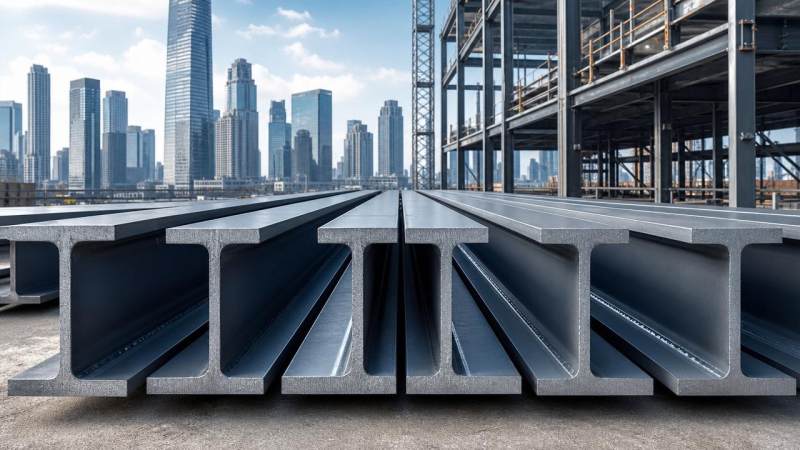
An ASTM steel beam for high-rise buildings must resist not only bending strength demands, but also serviceability limits linked to occupant comfort and façade protection.
Tall structures experience fluctuating pressure, torsion, and cyclic effects. These conditions can amplify local weaknesses in beam geometry, weld zones, or support details.
Because of this, engineers often review:
- section modulus and moment of inertia
- lateral-torsional buckling resistance
- deflection under service wind load
- connection rigidity and load path continuity
- material toughness and dimensional tolerances
The best ASTM steel beam for high-rise buildings supports both ultimate strength and stable long-term performance in dynamic environments.
Which ASTM standards matter when choosing steel beams for tall buildings?
ASTM compliance helps confirm predictable chemistry, mechanical properties, and manufacturing quality. However, different ASTM standards serve different structural purposes.
Commonly referenced beam materials include ASTM A36, ASTM A572, ASTM A992, and other grades depending on regional design practice.
For many building frames, ASTM A992 is widely preferred for W-shapes because it offers balanced strength, weldability, and ductility.
When reviewing an ASTM steel beam for high-rise buildings, verify these points:
- yield strength and tensile strength range
- chemical composition consistency
- impact on welding procedure qualification
- mill test certification availability
- section tolerance compliance
Standards alone do not guarantee suitability. They must match the structural analysis, seismic and wind code requirements, and fabrication method.
How do you evaluate beam size, stiffness, and section type for wind-controlled design?
A common mistake is choosing beams only by strength. In high-rise frames, stiffness often becomes equally important because excessive drift damages cladding and interior systems.
The selected ASTM steel beam for high-rise buildings should be checked for load combinations, frame interaction, and floor diaphragm behavior.
Important sizing factors include:
- moment demand from wind overturning effects
- story drift limits
- unbraced length between restraints
- composite action with slabs if applicable
- weight impact on transport and erection
Wide flange beams are common, but built-up sections may be considered for very high demand zones or unusual geometry.
In exposed environments, corrosion control around bracing, ties, and accessory components also matters. In some support assemblies, Hot Dipped Galvanized Steel Wire can assist with temporary fastening, packaging, barrier use, or auxiliary site applications where flexibility and corrosion resistance are useful.
That product typically uses low carbon steel, with wire diameter from 0.25 mm to 5.0 mm and tensile strength from 350 to 550 Mpa.
Its zinc coating, ductility, and bright finish support construction and industrial handling needs, though it is not a substitute for primary beam design.
What fabrication and quality checks reduce risk for an ASTM steel beam for high-rise buildings?
High-rise projects magnify small quality issues. Camber error, flange deviation, poor weld preparation, and inconsistent hole placement can disrupt alignment across multiple floors.
A reliable ASTM steel beam for high-rise buildings should come from controlled production with traceable inspection records.
Review the following before order confirmation:
- mill certificates and heat traceability
- dimensional inspection reports
- welding qualifications and NDT capability
- surface condition and coating preparation
- packing method for export protection
Consistency between batches is especially important when multiple beam lots are delivered over a phased construction schedule.
Manufacturing capability also affects project certainty. Stable lead times reduce crane idle periods, site congestion, and re-sequencing costs.
Hongteng Fengda supplies structural steel products from China with modern production facilities and strict quality control.
Its product range includes angle steel, channel steel, steel beams, cold formed profiles, and customized structural components under ASTM, EN, JIS, and GB standards.
For international projects, this combination supports technical compliance, production stability, and dependable delivery planning.
How can you compare suppliers for tall-building beam projects?
Price matters, but supplier comparison should focus on total project risk. The cheapest beam may create expensive delays if documentation or fabrication quality falls short.
When evaluating an ASTM steel beam for high-rise buildings, compare suppliers across technical, operational, and export support dimensions.
A supplier serving North America, Europe, the Middle East, and Southeast Asia often has stronger experience with documentation and standard alignment.
What are the most common mistakes when selecting ASTM beams for wind loads?
Many issues come from incomplete evaluation rather than wrong intent. Avoiding these mistakes improves both safety and procurement efficiency.
Another frequent error is ignoring supply reliability. Even a technically acceptable ASTM steel beam for high-rise buildings can become a project problem if delivery is unstable.
Early coordination between design data, shop detailing, and logistics creates better outcomes than correcting issues after fabrication starts.
What is the best next step before placing an order?
Prepare a clear technical checklist. Include grade, section list, wind-related performance expectations, tolerances, coating requirements, testing, and shipment sequencing.
Then request documentation that proves the proposed ASTM steel beam for high-rise buildings matches those requirements in practice, not only in quotation language.
Useful pre-order documents include:
- beam grade and section confirmation
- sample mill test certificates
- inspection workflow
- production schedule
- export packing plan
- reference project capability if available
Choosing an ASTM steel beam for high-rise buildings is not just about material purchase. It is a decision about structural reliability, fabrication accuracy, and schedule protection.
With experienced structural steel manufacturing support, consistent quality control, and international standard compliance, beam sourcing becomes more predictable and far less risky.
If your project requires steel beams, channels, angles, cold formed profiles, or customized structural components, a technically aligned supplier can help move the design into efficient execution.
Please give us a message


Please enter what you want to find