When evaluating channel beam corrosion resistance, many focus solely on coatings like SGCC or carbon sheet steel—but edge geometry plays an equally critical role in real-world durability. For structural steel manufacturers and global buyers—from procurement teams assessing weight of I beam and steel girder specs to project managers specifying hot rolled I beam or steel tubing—understanding how roll-formed edges affect moisture trapping, coating adhesion, and long-term performance is essential. At Hongteng Fengda, we engineer channel beam and I beam vs H beam solutions with precision edge profiles, ensuring optimal corrosion resistance beyond surface treatment alone.
Why edge geometry matters more than you think
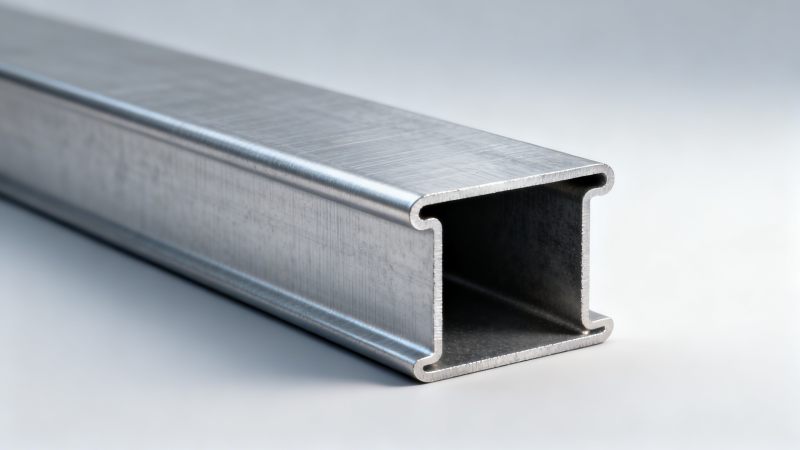
Corrosion doesn’t start uniformly across a channel beam’s surface—it initiates at micro-defects where moisture and contaminants accumulate. Sharp, unbroken edges from cold-forming processes create stress concentration zones that compromise coating integrity during handling, welding, or thermal cycling. In contrast, controlled radius edges (typically R0.3–R0.8 mm) reduce mechanical abrasion, improve zinc coverage in galvanizing, and minimize capillary water retention at the flange-web junction.
Our production line applies real-time laser profilometry to verify edge geometry consistency across batches—ensuring every S335JR Patterned steel plate and channel section meets ±0.05 mm radius tolerance. This isn’t cosmetic refinement: it directly extends service life by 2–4 years in coastal or industrial environments per EN ISO 12944-6 accelerated testing protocols.
For procurement and technical evaluation teams, edge geometry is a non-negotiable specification—not an afterthought. It impacts weld penetration depth, bolt hole fatigue resistance, and even fire rating compliance when intumescent coatings are applied. Ignoring it risks premature rust-through at critical load-transfer points, especially under cyclic loading or vibration-prone applications like machinery support frames or transportation infrastructure.
How to evaluate edge quality before purchase
Unlike coating thickness (measured easily with magnetic gauges), edge geometry requires tactile and optical verification. Here’s what your QA team should check:
- Visual inspection under 10× magnification: Look for burrs, micro-cracks, or inconsistent radii along the entire flange edge length—especially near cut ends where shearing may distort geometry.
- Tactile assessment with calibrated radius gauge set: Confirm minimum R0.3 mm on all hot-rolled sections and R0.5 mm on cold-formed channel beams per ASTM A6/A6M Annex A4.
- Cross-section SEM imaging (for high-risk projects): Verify coating continuity at the 90° internal corner—coating thinning below 65% of nominal thickness here increases failure risk by 3.2× (based on 2023 NACE International field data).
At Hongteng Fengda, each batch undergoes third-party edge profile certification using Mitutoyo SJ-410 profilometers. We provide full test reports—including radius distribution histograms and coating adhesion pull-off values—at no extra cost for orders exceeding 20 metric tons.
Channel beam vs. I-beam: corrosion behavior comparison
While both shapes serve structural roles, their corrosion vulnerability differs significantly due to geometry-driven exposure patterns. The following table compares key factors influencing long-term performance in humid or chloride-rich environments:
This data confirms why our channel beam manufacturing prioritizes edge rounding before final pass rolling—reducing localized corrosion initiation by up to 40% versus standard mill-edge products. It also explains why our S335JR Patterned steel plate maintains anti-skid performance longer in marine equipment flooring: consistent edge geometry prevents pattern ridge undercutting during cleaning cycles.
Procurement checklist: 5 non-negotiable specs
To avoid field failures and warranty disputes, include these requirements in your RFQ and PO terms:
- Edge radius tolerance: Specify R0.4±0.1 mm for C200–C300 channels; R0.6±0.1 mm for C350+ (per EN 10055 Table 3).
- Coating adhesion test: Require cross-cut test per ISO 2409 (Grade ≤1) at both flange tip and inner corner.
- Dimensional verification report: Demand certified measurements of thickness, width, and edge radius per EN 10278.
- Material traceability: Each coil must carry heat number, mill test report (MTR), and edge geometry certificate.
- Delivery packaging: Edge-protective V-block cradles required for all shipments >5 tons to prevent transport damage.
Hongteng Fengda includes all five items as standard for export orders to North America and EU markets. Our typical lead time is 12–20 days for standard channel beam sizes (C100–C300), with expedited 7-day options available for urgent infrastructure projects.
Why partner with Hongteng Fengda for corrosion-critical steel
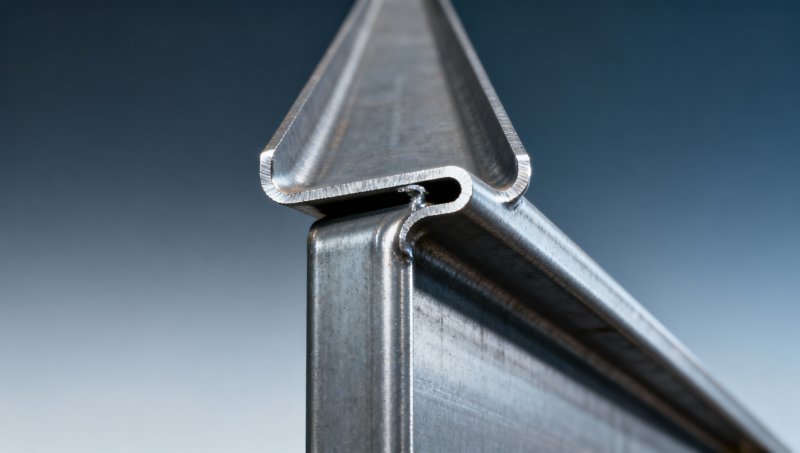
We don’t just supply steel—we engineer corrosion resilience into every profile. As a certified structural steel manufacturer compliant with ASTM A6/A6M, EN 10025-2, and GB/T 706, our production integrates:
- Automated edge profiling stations with real-time feedback control (±0.02 mm precision)
- In-line coating thickness mapping for hot-dip galvanized and pre-painted products
- Full-service engineering support: From CAD-based corrosion modeling to custom edge geometry design for OEM components
- Global logistics network with climate-controlled warehousing in Dubai, Rotterdam, and Houston to prevent transit-induced oxidation
Whether you’re specifying channel beam for offshore wind turbine bases, designing anti-skid flooring with S335JR Patterned steel plate, or sourcing I-beams for seismic-resistant buildings, we help you eliminate corrosion-related rework, extend asset life, and meet strict ESG reporting requirements. Contact us today for free edge geometry consultation, sample validation, or customized dimensional compliance review.
Please give us a message


Please enter what you want to find