When evaluating carbon wire for structural or industrial applications, corrosion resistance isn’t just about material composition—it’s critically revealed by surface finish. As a leading structural steel manufacturer and exporter from China, Hongteng Fengda supplies high-performance carbon wire, cold drawn wire, galvanized wire, and steel wire coils—each tailored to meet ASTM, EN, and GB standards. Whether you’re a procurement specialist sourcing mild steel wire, a project manager specifying angle carbon steel, or a quality engineer assessing galvanized metal mesh sheets, understanding how surface treatments like galvanizing, galvannealing, or passivation impact longevity is essential. This article decodes what the finish really tells you—and why it matters for durability, safety, and total cost of ownership.
Why Surface Finish Is the Real Indicator of Corrosion Resistance
Carbon steel inherently lacks natural corrosion resistance. Its vulnerability accelerates in humid, saline, or acidic environments—common across construction sites in Southeast Asia, coastal infrastructure in the Middle East, and industrial zones in North America. While base chemistry (e.g., C ≤ 0.25%, Mn 0.3–0.9%) sets baseline strength, real-world service life hinges on how effectively the surface barrier resists electrochemical degradation.
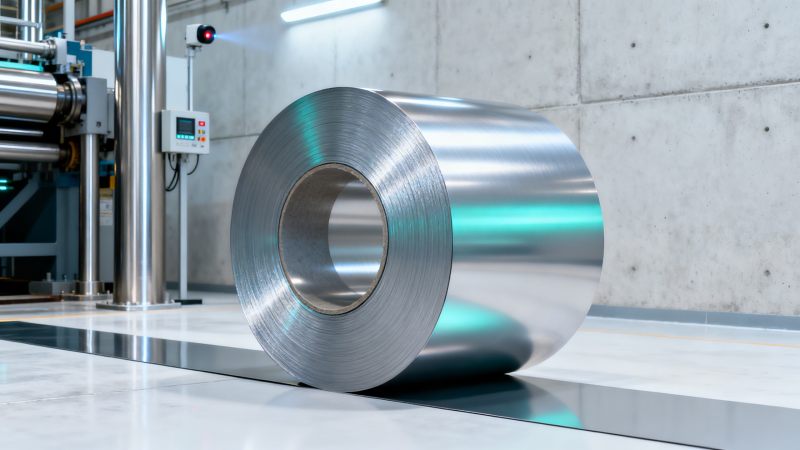
A mill-scale finish offers only temporary protection—typically failing within 3–6 months under outdoor exposure. In contrast, controlled metallurgical coatings such as aluminum-zinc alloy layers provide multi-year performance with predictable decay rates. For example, DX53D Galvalume Steel Coil achieves up to 5× longer rust-free life than standard hot-dip galvanized steel in atmospheric testing per ASTM B117 salt-spray protocols.
This distinction directly impacts maintenance cycles, lifecycle cost, and safety-critical failure thresholds—especially for load-bearing components like roof purlins, exhaust ducting, or appliance housings where post-installation access is limited or costly.
How Different Finishes Perform Across Key Applications
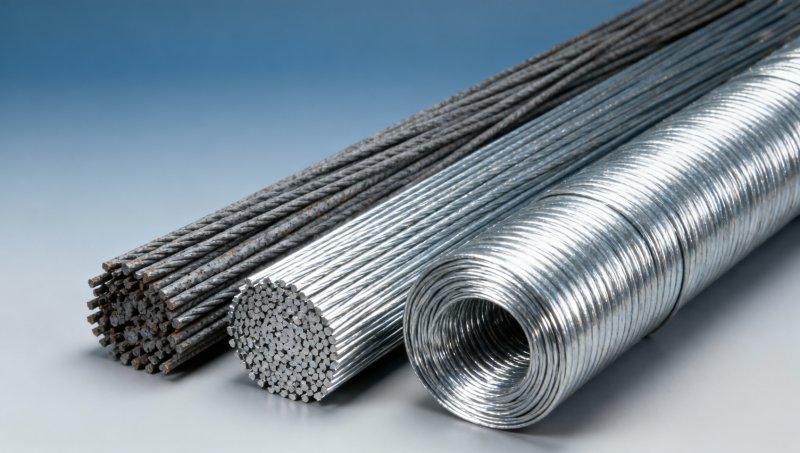
Not all carbon wire finishes deliver equal value across use cases. Selection must align with environmental severity, mechanical stress, and regulatory compliance—not just price per ton. Below is a comparative overview of common surface treatments used in structural and industrial steel products:
The data shows that Galvalume® outperforms HDG not only in corrosion resistance but also in heat reflectivity (≥65% solar reflectance) and paint adhesion—critical for pre-painted roofing systems. That’s why DX53D Galvalume Steel Coil is increasingly specified for projects demanding both durability and aesthetic consistency over 20+ years.
What Engineers Should Check Before Approving a Finish
- Verify coating mass: ≥100 g/m² for Al-Zn (DX53D), ≥60 g/m² for standard HDG
- Confirm yield strength range: 270–300 MPa ensures adequate forming without cracking during roll-forming or stamping
- Validate elongation after fracture: ≥24% guarantees ductility for bending and welding prep
- Cross-check certification alignment: GB/T 2518, ASTM A792, JIS G3321, and EN 10346 all apply to DX53D-grade coils
Procurement Checklist: 5 Non-Negotiables for Carbon Wire Buyers
Procurement professionals face tight margins, compressed timelines, and complex compliance requirements. To avoid rework, delays, or field failures, prioritize these five evaluation criteria before finalizing any carbon wire order:
- Coating Uniformity: Measured via XRF spectroscopy—deviation >±5% across width indicates risk of premature edge corrosion
- Base Material Traceability: Full mill test reports (MTRs) confirming low-carbon steel grade and chemical composition (C, Mn, P, S)
- Dimensional Tolerance: Thickness variation ≤±0.02 mm for 0.4–1.2 mm coils; critical for automated feeding lines
- Delivery Consistency: Stable production capacity supporting repeat orders every 4–6 weeks without MOQ increases
- Logistics Readiness: Pre-staged export documentation (CO, FORM E, CIQ), FOB Shanghai or Ningbo ports, 7–15 day lead time for standard specs
Hongteng Fengda maintains ISO 9001-certified quality control at every stage—from coil annealing and tension leveling to final packaging. Every batch undergoes tensile testing, coating thickness verification, and visual inspection against EN 10142 acceptance criteria.
Why Global Buyers Choose Hongteng Fengda for Surface-Critical Steel Solutions
Structural steel buyers don’t just compare specs—they assess risk mitigation, supply continuity, and technical partnership depth. Hongteng Fengda delivers measurable advantages beyond catalog numbers:
We support your team with free technical consultation—including cross-standard equivalency mapping (e.g., DX53D vs. ASTM A792 Type 2), sample dispatch within 3 working days, and OEM labeling for private-brand distribution. Whether you need 5 tons for a Dubai warehouse fit-out or 500 tons for a U.S. prefab housing rollout, our scalable production ensures zero compromise on quality or schedule.
Next Steps for Your Project
Ready to validate surface finish performance for your next application? Contact Hongteng Fengda today for:
- Free DX53D Galvalume Steel Coil sample (up to 3 kg, shipped within 72 hours)
- Technical review of your drawing/spec sheet for formability and corrosion modeling
- Competitive quotation with full compliance documentation and port-of-discharge options
- Dedicated account support for multi-country delivery coordination
Let’s ensure your carbon steel performs exactly as engineered—not just on paper, but for decades in the field.
Please give us a message


Please enter what you want to find