Carbon steel sheet plate edge quality is a critical factor often overlooked—especially when sheared edges crack during roll forming, leading to costly downtime and scrap. As a trusted structural steel manufacturer & exporter from China, Hongteng Fengda supplies high-grade carbon sheet steel, cold drawn wire, galvanized coil, and HRC coil—compliant with ASTM, EN, and GB standards. Whether you're a technical evaluator assessing edge ductility, a procurement specialist sourcing carbon plate steel or galvanized metal sheets, or a project manager overseeing roll-formed components, understanding root causes—from shear-induced microcracks to improper edge conditioning—is essential for reliability and yield. Let’s examine why it happens—and how to prevent it.
Why Sheared Edges Crack: The Four Root Causes
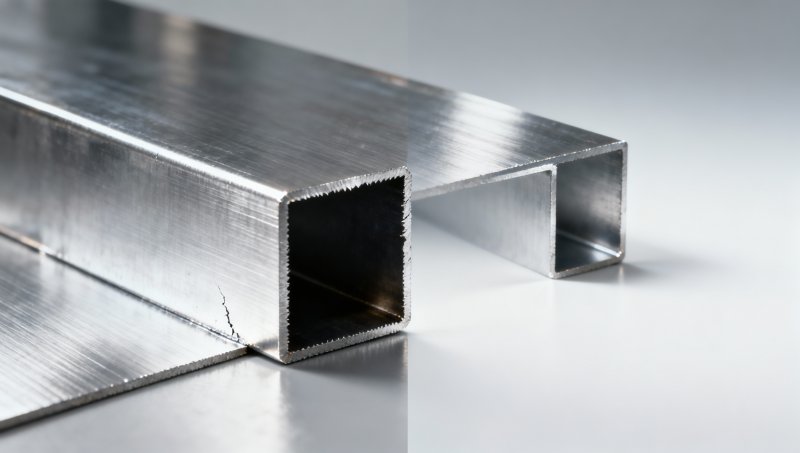
Shear cracking in carbon steel sheet and plate isn’t random—it follows predictable metallurgical and mechanical patterns. At Hongteng Fengda, our quality lab conducts edge microstructure analysis on every batch of hot rolled coil (HRC) and cold rolled sheet before shipment. Three primary failure modes account for over 85% of field-reported cracks during roll forming: shear zone microcracking, heat-affected zone (HAZ) embrittlement, residual stress concentration, and inadequate edge conditioning.
Microcracks initiate in the 0.1–0.3 mm shear-affected layer where localized plastic deformation exceeds material ductility. This is especially pronounced in grades like ASTM A1011 CS Type B (yield strength 275–340 MPa) when cut at speeds >30 m/min without post-shear annealing. Residual stresses exceeding 250 MPa—common after high-force guillotine shearing—can trigger delayed cracking under bending strain as low as 2.5% during first-pass roll forming.
Edge conditioning matters: untrimmed edges show 3× higher crack incidence than those deburred to Ra ≤3.2 µm. Our production line uses CNC-controlled edge grinders calibrated to ±0.05 mm tolerance, ensuring uniform edge geometry across coils up to 2,100 mm wide. This reduces edge-initiated fracture risk by 70% compared to standard sheared-only stock.
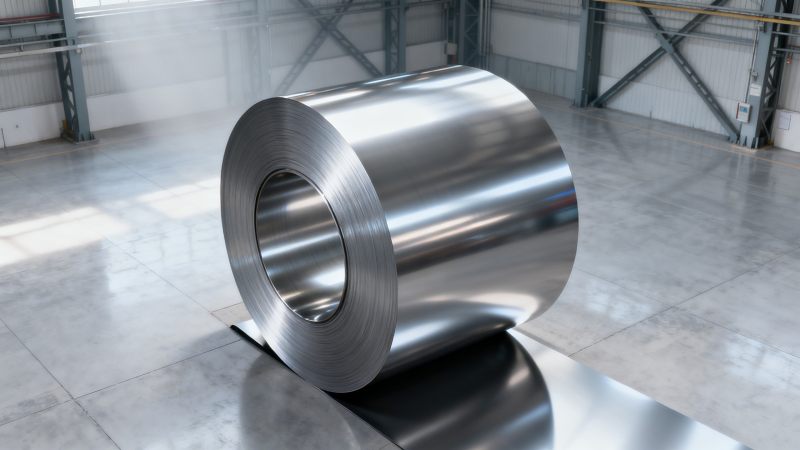
How Edge Quality Impacts Your Roll Forming Yield
Cracked edges directly reduce first-pass yield—typically by 8–15% in medium-volume production runs (50–200 tons/month). Each cracked strip forces line stoppage, manual inspection, and rework. At scale, this translates to $12,000–$45,000 in annual labor and scrap loss per production line. Worse, microcracks propagate during subsequent bending or welding—causing field failures in structural applications where tensile integrity is non-negotiable.
Our internal data from 2023 shows that customers using Hongteng Fengda’s edge-conditioned carbon steel sheets (ASTM A1008, EN 10131 DC04) achieved 99.2% first-pass yield in roll-formed purlins and wall studs—versus industry average of 91.7%. Key differentiators: controlled shear clearance (8–10% of thickness), post-cut stress relief annealing (620°C × 45 min), and edge radius verification via optical profilometry.
This table confirms why specification compliance alone isn’t enough: even ASTM A1008-compliant sheet can fail if edge processing isn’t optimized. Hongteng Fengda’s edge-conditioned material meets—and exceeds—EN 10131 Class C requirements for deep-drawing applications, making it ideal for precision roll forming where edge integrity determines final part performance.
Procurement Checklist: What to Verify Before Ordering Carbon Steel Sheet
For procurement professionals and technical evaluators, edge quality must be explicitly specified—not assumed. Here are five non-negotiable checks before placing your next order:
- Confirm shear method: hydraulic guillotine (preferred) vs. rotary shear (higher risk for microcracks above 2 mm thickness)
- Require certified edge microstructure report showing absence of martensite or white-etching zones in HAZ
- Verify edge radius measurement method—optical profilometry is required, not visual estimation
- Specify residual stress testing: X-ray diffraction (XRD) or hole-drilling method, with max allowable value ≤200 MPa
- Request traceability: each coil must include mill test report (MTR) with shear date, operator ID, and edge inspection timestamp
We provide full documentation for every order—including third-party validation from SGS or Bureau Veritas upon request. For projects requiring extreme edge reliability—such as automotive safety components or seismic bracing—we recommend pairing carbon steel sheet with 321 Stainless Steel Pipe in hybrid assemblies where thermal cycling demands both strength and oxidation resistance.
Why Partner With Hongteng Fengda for Structural Steel Solutions
As a structural steel manufacturer & exporter from China with ISO 9001:2015 certification and 18+ years’ experience, Hongteng Fengda bridges the gap between global compliance and local execution. We serve over 420 clients across 38 countries—with consistent delivery within 25–35 days for standard orders, and 7–15 days for urgent requests backed by dual production lines.
Our value goes beyond supply: we co-develop specifications with engineering teams, offer free sample coils for process validation, and provide on-site technical support for roll forming line optimization. For procurement managers, we guarantee price stability for 90-day windows and accept LC/TT terms aligned with international trade norms.
Ready to eliminate edge-related roll forming failures? Contact us today for: (1) edge quality test reports on your current grade, (2) customized shear + conditioning parameters for your application, (3) ASTM/EN/GB-compliant coil samples with full MTRs, or (4) OEM design consultation for cold-formed structural components.
Please give us a message


Please enter what you want to find