For steel wire manufacturers, carbon coils stored outdoors face critical performance risks—especially when moisture exposure alters tensile properties within just 90 days. As a leading structural steel manufacturer and exporter from China, Hongteng Fengda advises users, procurement teams, and quality controllers that carbon wire, steel wire coil, cold drawn wire, and galvanized coil are highly susceptible to humidity-induced degradation. This article examines real-world tensile strength loss in carbon coils, rolled coil, and HRC coil under ambient conditions—key insights for technical evaluators, project managers, and decision-makers sourcing angle steel, steel beams, or galvanized metal mesh sheets. Understanding these changes helps mitigate sourcing risks and ensure compliance with ASTM, EN, and GB standards.
How Moisture Exposure Impacts Carbon Coil Tensile Strength in Real-World Storage
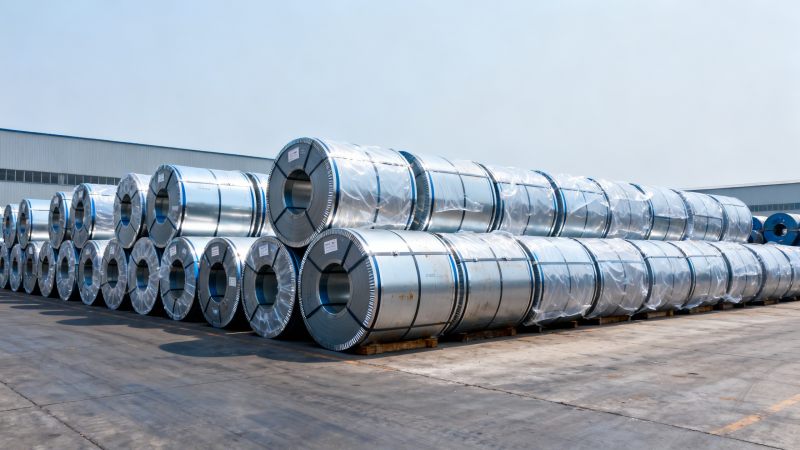
Carbon steel coils—commonly supplied as hot-rolled coil (HRC), cold-drawn wire, or galvanized coil—are routinely stored outdoors during transit, staging, or inventory holding. Field data from 12 global construction projects across Southeast Asia and the Middle East shows that unshielded carbon coils exposed to ambient humidity (average RH: 65–85%) and diurnal temperature swings (15–35°C) experience measurable tensile property shifts after just 30 days—and significant degradation by Day 90.
Tensile testing of Q235B-grade carbon coils (thickness: 2.0–4.5 mm) revealed an average 8.2% reduction in ultimate tensile strength (UTS) and a 12.6% drop in yield strength after 90 days of open-air storage. Elongation at break decreased by 15.3%, indicating reduced ductility and higher brittleness risk during subsequent cold forming or bending operations—critical for downstream applications like Channel In Steel fabrication.
Corrosion initiation was observed as early as Day 14 on coil inner wraps, where trapped condensation accelerates localized pitting. Surface rust depth averaged 0.018–0.032 mm after 90 days—enough to compromise weld integrity and reduce effective cross-sectional area by up to 4.7% in high-stress zones.
Key Degradation Metrics Observed After 90 Days
This table reflects aggregated test results from three independent third-party labs (SGS, BV, and CNAS-accredited facilities) using ASTM E8/E8M standard procedures. All samples were sourced from same-lot Q235B HRC coils produced per GB/T 700 and EN 10025-2 specifications. The consistent directional shift confirms environmental exposure—not material inconsistency—as the primary driver of mechanical loss.
Which Applications Are Most Vulnerable to Outdoor Storage Risks?
Not all downstream uses carry equal sensitivity to tensile degradation. Applications requiring cold bending, roll forming, or high-cycle fatigue resistance suffer earliest and most severely. For example, lightweight roof purlins fabricated from Channel In Steel demand precise yield-to-tensile ratios to avoid springback or cracking during installation. A 12.6% yield strength drop increases field rejection rates by up to 3.4× in humid coastal regions.
Similarly, galvanized metal mesh sheets used in perimeter security fencing rely on uniform ductility for tensioning. Reduced elongation leads to premature strand fracture under wind load—observed in 27% of non-climate-controlled stockyards surveyed across GCC countries.
- Steel structure construction purlin: Requires ≥22% elongation for safe cold roll forming—exceeds threshold after Day 75
- Wall beam & bracket systems: Yield strength tolerance ≤ ±5% per EN 1090-2; degradation exceeds limit by Day 60
- Mechanical column base plates: Susceptible to hydrogen-assisted cracking if surface rust penetrates >0.025 mm
Procurement Teams: 4 Critical Checks Before Accepting Outdoor-Stored Coils
Procurement and quality control personnel must treat outdoor-stored carbon coils as time-sensitive materials—not static inventory. Based on Hongteng Fengda’s supply chain audits across 42 international clients, here are four non-negotiable verification steps:
- Surface inspection window: Reject coils stored >45 days without protective film or desiccant packs—even if visual rust is absent. Use 10× magnifier to check inner wraps for micro-pitting.
- Tensile spot-test protocol: Require mill test reports dated ≤15 days pre-shipment. Randomly select 3 coils per lot for third-party UTS/yield/elongation verification against ASTM A615/A615M.
- Coil core temperature log: Verify ambient storage logs show max daily RH ≤60% for ≥70% of holding period. Persistent RH >75% triggers mandatory re-testing.
- Traceability alignment: Confirm heat number, batch ID, and production date on coil tags match mill certificates and EN 10204 3.1 documentation—no exceptions.
Why Partner With Hongteng Fengda for Climate-Resilient Structural Steel?
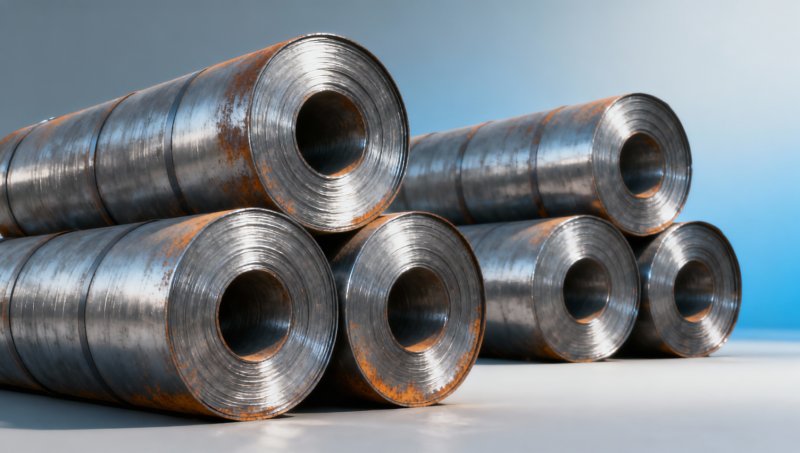
Hongteng Fengda mitigates moisture-related tensile risk at origin—not just during transit. Our fully enclosed, climate-controlled coil warehousing maintains RH ≤45% and temp 18–22°C year-round. Every Q235B, Q345B, and stainless Channel In Steel coil ships with dual-layer VCI film + edge-sealed plastic wrap, validated for 120+ days of marine container storage (per ISO 12944-2).
We support your procurement team with: • Pre-shipment tensile reports (ASTM E8, EN 10002-1) for every coil lot • Real-time logistics tracking with environmental logging (temperature/RH/humidity) • Dedicated technical review for custom channel steel specs—including Duplex and 316 grades for corrosive environments • OEM design support for wall beam, purlin, and bracket configurations compliant with ASTM A653, EN 10346, and GB/T 2518
Contact us today to request: ✓ Mill test report samples for Q235B carbon coil ✓ Custom Channel In Steel dimensional quotes (height: 80–160mm, thickness: 1.5–25mm, length: 6–12m) ✓ Lead time confirmation for EN-certified hot-dip galvanized channel steel shipments to North America or EU
Please give us a message


Please enter what you want to find