For project managers handling demanding construction and industrial builds, choosing the right structural material directly affects safety, cost, and schedule.
carbon steel h beam solutions are widely used in heavy load projects for their high strength, stable performance, and design flexibility.
Understanding where and why they work best helps buyers reduce sourcing risks and improve overall project efficiency.
Heavy load construction is shifting toward stronger and smarter section choices
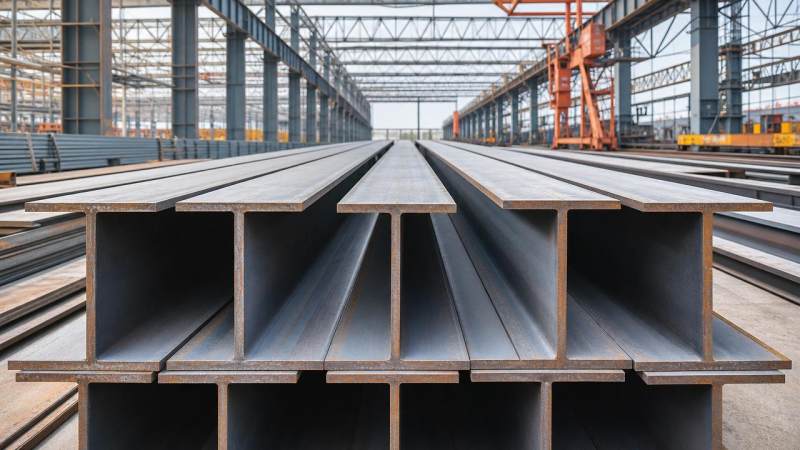
Across steel structure projects, design expectations are changing fast.
Larger spans, higher loads, tighter timelines, and stricter standards are now common in industrial and infrastructure work.
This shift is increasing interest in carbon steel h beam applications that balance load capacity, fabrication efficiency, and installation speed.
Compared with traditional sections, a carbon steel h beam offers a more optimized cross section for bending and compression performance.
That matters in projects where every ton, weld, and transport movement affects total cost.
At the same time, international sourcing has become more quality driven.
Buyers increasingly compare standards, steel grades, dimensional tolerances, and surface treatment before making final decisions.
For global construction and manufacturing projects, this has made carbon steel h beam selection a technical and strategic issue.
Demand signals show where carbon steel h beam use is growing fastest
The strongest demand growth appears in sectors where structural reliability and cost discipline must work together.
High-load application areas
- Industrial workshops with cranes, mezzanines, and heavy equipment foundations.
- Bridge structures requiring dependable bending resistance and stable long-span support.
- Shipbuilding and marine fabrication where strength and section efficiency are critical.
- Mechanical and manufacturing frames supporting repeated static and dynamic loads.
- Automobile chassis and special equipment structures needing predictable weight distribution.
These sectors favor carbon steel h beam products because the profile delivers strong directional performance without unnecessary material waste.
In practical terms, the section helps maintain structural safety while supporting leaner design and easier handling.
Why this matters now
Many heavy load projects now face pressure from volatile freight costs, shorter delivery windows, and tighter site coordination.
A carbon steel h beam can reduce complexity when the right grade, dimensions, and standard are selected early.
Several forces are driving the wider adoption of carbon steel h beam sections
The trend is not random.
It is being shaped by engineering, economics, and supply chain requirements at the same time.
This explains why carbon steel h beam solutions remain central in modern steel structure planning.
They serve not only as structural members, but also as tools for better project coordination.
Application performance depends on grade, dimensions, and standard matching
Not every heavy load project needs the same beam configuration.
Performance depends on load case, span, fabrication method, corrosion exposure, and regional code requirements.
For example, common material options include Q235, Q345B, Q460C, SS400, S275JR, S355JR, A572, and A992.
When corrosion resistance or special environments matter, galvanized or stainless steel versions may also be considered.
A useful reference in this category is H Girder.
It covers H-beam applications in mechanical manufacture, steel structure, shipbuilding, bridging, and automobile chassis.
Typical technical ranges include flange thickness from 8mm to 64mm and web thickness from 5mm to 36.5mm.
Available flange width can range from 50mm to 400mm, while web width may reach 100mm to 900mm.
Length is commonly supplied from 1m to 12m or as required for project needs.
Compliance with JIS G3101, EN10025, ASTM A36, ASTM A572, and ASTM A992 supports broader export suitability.
The real project impact appears across design, fabrication, transport, and installation
The value of carbon steel h beam use is not limited to structural calculation.
It also appears in execution stages that directly influence schedule reliability and budget control.
Design and engineering impact
- Supports efficient section selection for heavy load and long-span conditions.
- Improves strength use through optimized cross-sectional area distribution.
- Helps reduce overdesign when grades and dimensions are correctly specified.
Fabrication and logistics impact
- Simple construction features can streamline cutting, welding, and assembly.
- Reasonable strength-to-weight ratio may reduce transport burden.
- Custom lengths can lower site waste and secondary processing time.
For exported steel products, stable production and dimensional consistency are especially important.
That is why many buyers focus on manufacturing discipline as much as on nominal section size.
What deserves closer attention before choosing carbon steel h beam supply
As demand rises, selection mistakes usually come from incomplete technical alignment rather than from the material category itself.
Key checkpoints
- Confirm applicable design standard before comparing quotations.
- Match steel grade to loading, welding, and environmental conditions.
- Review flange and web thickness tolerance requirements.
- Check whether galvanizing or other surface treatment is necessary.
- Verify mill test documentation and inspection process.
- Assess supplier capacity for repeat orders and lead-time stability.
These checks help reduce common sourcing risks in carbon steel h beam procurement.
They also improve communication between engineering, purchasing, and site execution teams.
The next phase will favor suppliers that combine compliance, customization, and delivery reliability
Looking ahead, heavy load projects will likely demand more than standard stock availability.
The stronger market position will belong to suppliers that can adapt sections to real application needs.
Hongteng Fengda, as a structural steel manufacturer and exporter from China, fits this direction well.
Its focus on angle steel, channel steel, steel beams, cold formed profiles, and OEM structural components supports diverse project needs.
With modern facilities and strict quality control, it serves global projects requiring ASTM, EN, JIS, and GB aligned production.
A practical next step is to review carbon steel h beam choices against actual load scenarios
The best results come from comparing section options before drawings and orders are fully locked.
Review project loads, span conditions, environmental exposure, and delivery timing together.
Then confirm whether the selected carbon steel h beam grade and dimensions support both compliance and execution efficiency.
In heavy load construction, the right steel section is never just a material choice.
It is a decision that shapes safety, productivity, and long-term project value.
Please give us a message


Please enter what you want to find